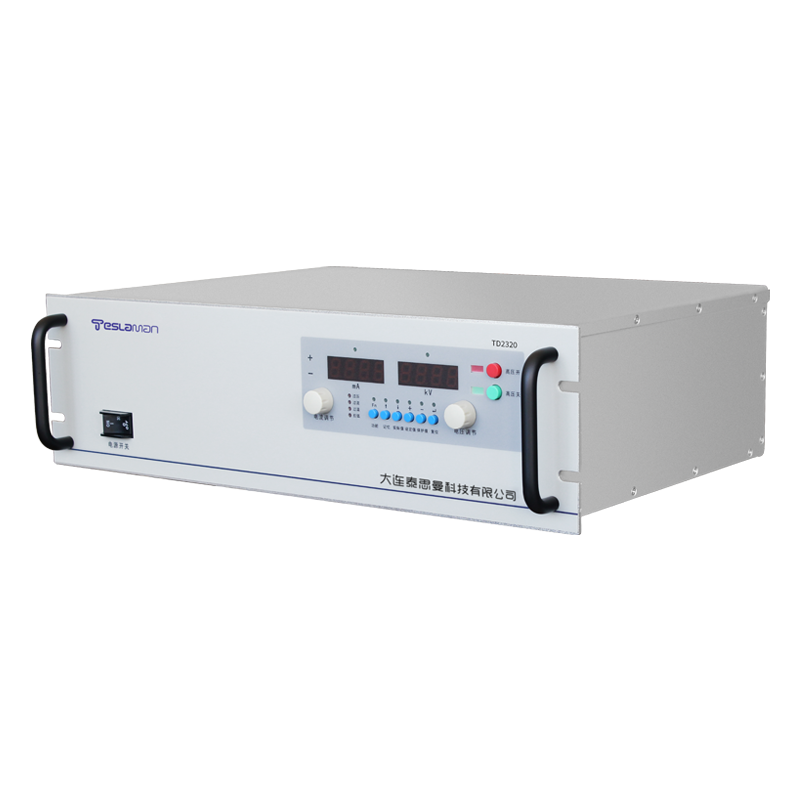
Ampoule Micro-Leak Detection High Voltage Excitation Power Supply
The integrity of sterile packaging, particularly for pharmaceutical ampoules containing injectable formulations, is non-negotiable. A microscopic breach, invisible to the human eye, can compromise sterility and lead to catastrophic product recalls. High-voltage, discharge-based leak detection has emerged as a highly sensitive, non-destructive test method for 100% inline inspection. The core of this technology is a specialized high-voltage excitation power supply that must generate a precisely controlled electrical stress field without causing dielectric breakdown of the intact glass, while simultaneously being sensitive enough to induce a detectable discharge through a sub-micron defect.
The principle relies on the Paschen curve phenomenon. A test electrode is placed near or in contact with the ampoule, which is filled with a conductive liquid (the product itself or a test medium) and acts as the ground electrode. A high voltage is applied, creating an intense electric field in the gap between the electrode and the glass wall. For an intact ampoule, the glass is an excellent dielectric, and the system remains below the breakdown threshold of the air/glass combination. However, if a micro-crack or capillary leak exists, it creates a microscopic channel filled with a gas (air) or liquid of different dielectric strength. At a specific applied voltage, the electric field strength within this channel exceeds its breakdown threshold, causing a localized Townsend discharge or a small spark. This discharge event is detected as a rapid current pulse or a radio frequency emission. The critical requirement for the power supply is to apply a voltage high enough to stress potential leaks into breakdown, but definitively below the breakdown voltage of the flawless glass structure, ensuring no false positives or damage to good product.
This demands a power supply with exceptional voltage stability and waveform control. The typical output is a DC voltage, often in the range of 10 kV to 30 kV, but its purity and stability are paramount. Any voltage spike or ripple riding on the DC level could inadvertently exceed the dielectric strength of the glass at its peak, causing a spurious breakdown and the erroneous rejection of a perfect ampoule. Therefore, these supplies heavily filter their output, often using multi-stage RC filters and linear post-regulation techniques to achieve ripple specifications well below 0.1% of the set voltage. The voltage setting itself must be precisely calibrated and stable over time and temperature, as a drift of even a few tens of volts can move the operating point from the safe detection window into a region that risks damaging good units or missing small leaks.
Furthermore, the detection mechanism requires the supply to have a fast current sourcing capability and sophisticated arc management. When a discharge occurs, the power supply must be able to deliver the initial surge current that forms the plasma channel within the leak—this is necessary for the discharge to be energetic enough for reliable detection. However, it must then immediately limit the current to prevent the discharge from escalating into a sustained arc that could carbonize the leak path (masking it for future tests) or thermally shock the glass. This is achieved through fast-acting, analog current-limiting circuits that respond within nanoseconds, effectively turning the supply into a constant-current source for the duration of the discharge event. After the event, the voltage must recover swiftly and smoothly to its setpoint to be ready for the next test cycle, which may occur hundreds of times per minute on a high-speed production line.
The integration of the power supply with the detection electronics is intimate. The supply often includes integrated discharge pulse detection circuitry. It monitors its own output current with a high-bandwidth, galvanically isolated sensor. When a current pulse with a specific amplitude and di/dt profile is detected, the supply generates a digital flag for the main inspection system. Some advanced systems use a dual-voltage approach: a lower "search" voltage to identify potential leaks with higher resistance, followed by a brief, higher-voltage "confirm" pulse for definitive classification, all orchestrated by the programmable power supply. The physical design is also critical for industrial environments. The high-voltage output stage and electrode connection must be designed to prevent corona discharge in the humid, sometimes wash-down conditions of a pharmaceutical packaging line. This involves smooth, rounded electrodes, proper creepage distances, and the use of dielectric fluids or coatings. In essence, the high-voltage excitation supply is the calibrated stimulus in a sensitive measurement system. Its performance defines the narrow window between reliable defect detection and product damage, making it a key component in ensuring the absolute integrity of life-critical pharmaceutical packaging.