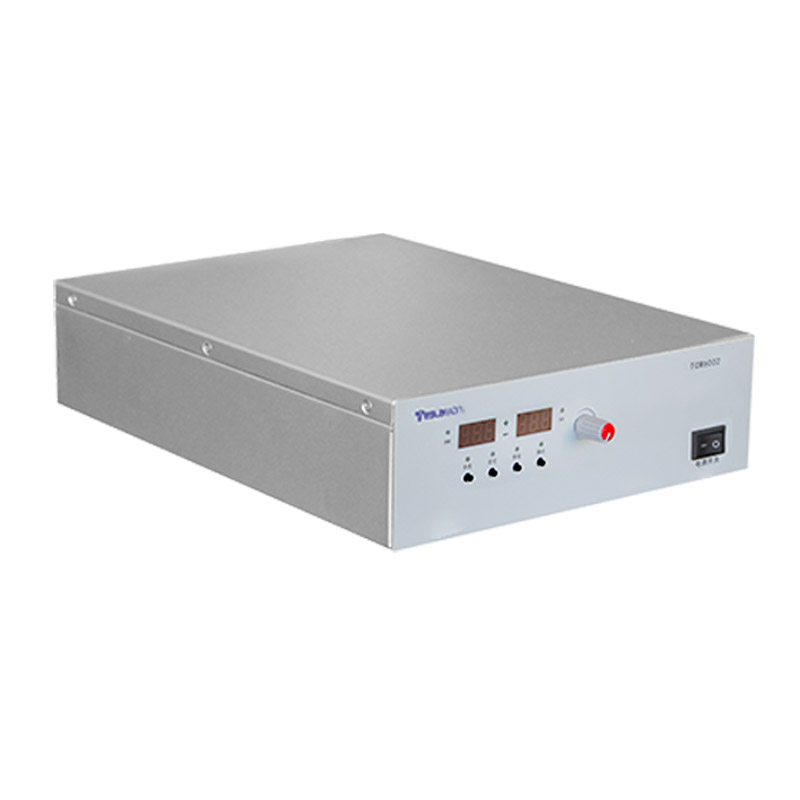
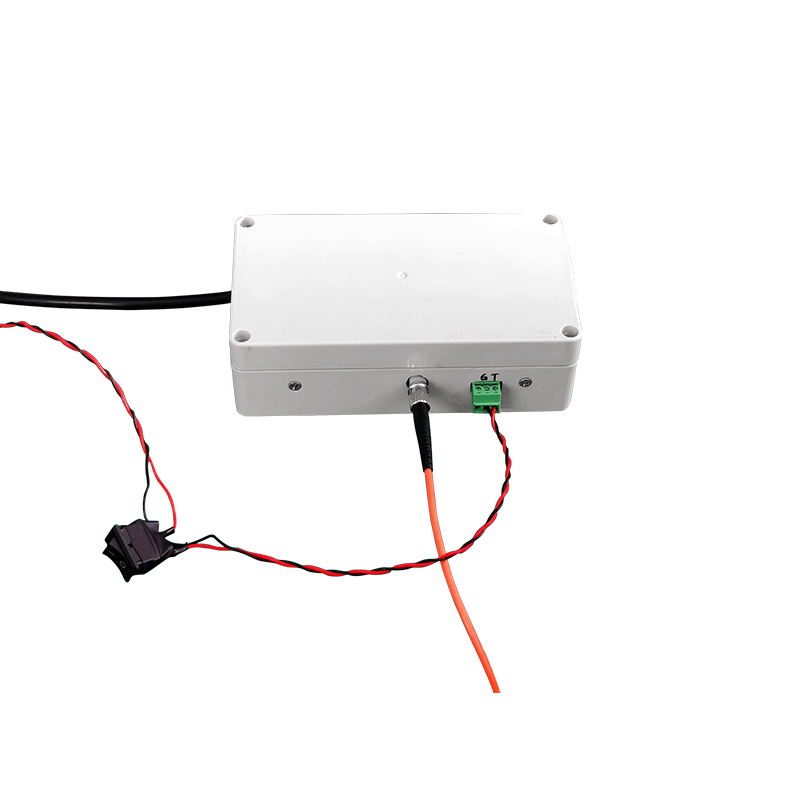
Vacuum Coating Ion-Assisted Deposition Bias Power Supply
Ion-Assisted Deposition (IAD) is a critical enhancement to vacuum coating processes, including thermal evaporation and sputtering. By subjecting the growing film to a concurrent flux of energetic ions during deposition, film properties such as density, adhesion, stress, and microstructure can be profoundly improved. This ion bombardment is typically achieved by applying a controlled electrical bias to the substrate holder. The power supply responsible for generating this bias potential—which can be DC, pulsed DC, or RF—is therefore not a peripheral component but a core process tool that directly defines the ion energy distribution and flux arriving at the substrate. The selection and design of this bias power supply are dictated by the specific material system being deposited and the desired film characteristics.
The simplest form is DC substrate bias. A negative DC voltage, typically in the range of -20V to -500V, is applied to the substrate holder (or the substrates themselves if conductive). This attracts positive ions from the plasma, accelerating them towards the growing film. The DC bias power supply must provide a stable, low-ripple negative voltage. The stability is crucial because the ion energy is directly proportional to the bias voltage. Fluctuations cause variations in the energy of bombarding ions, leading to non-uniform film densification and potentially variable stress. Furthermore, the supply must be capable of sinking the ion current collected by the substrate. This current can range from milliamps for a small research tool to several amperes for large-area industrial coaters. The supply therefore acts as a high-voltage, low-current sink. Its output impedance must be low to maintain a stable bias voltage despite changes in the collected ion current as the plasma density or substrate geometry varies.
However, DC bias has significant limitations, especially for insulating substrates or for depositing dielectric films. Positive charge builds up on the insulating surface, eventually repelling further ions and nullifying the bias effect. This is overcome by using pulsed DC or RF bias.
Pulsed DC bias applies a negative voltage in a square wave pattern. During the "on" time (negative pulse), ions are accelerated to the substrate. During the "off" time (zero or low voltage), electrons from the plasma are attracted to the substrate, neutralizing the positive charge that accumulated. This allows IAD on insulators. The pulsed DC bias supply must be a high-voltage, fast-switching amplifier. Key parameters are the pulse frequency (kHz range), duty cycle (e.g., 10-90%), and the rise/fall times of the pulse. Slow rise/fall times reduce the effective duty cycle for ion acceleration. The ability to independently control pulse amplitude, frequency, and duty cycle provides three powerful knobs for tailoring the ion bombardment: average energy, peak energy, and the ratio of ion flux to neutral flux. The supply must deliver these pulses into a highly reactive, capacitive load (the substrate holder and plasma sheath) without excessive ringing or overshoot, which could cause arcing.
For the most challenging dielectric films or for processes requiring very precise ion energy control, RF bias is employed. A radio frequency (typically 13.56 MHz) voltage is applied to the substrate holder through an impedance matching network. Due to the mass difference, ions cannot follow the RF field, but a DC self-bias voltage (V_dc) develops naturally on the substrate surface due to the different mobilities of electrons and ions. This V_dc is negative and is the potential that accelerates ions. An RF bias system consists of an RF generator (the power supply) and a matching network. The generator must provide stable RF power. The matching network is critical; it tunes the complex impedance of the plasma-loaded substrate electrode to 50 ohms, maximizing power transfer and protecting the generator. RF bias allows effective IAD on any surface and provides a more mono-energetic ion bombardment compared to pulsed DC, as the ions traverse the sheath during a nearly constant potential. The control variable is delivered RF power, which influences the plasma density at the substrate and the magnitude of the self-bias.
Beyond the basic mode, advanced IAD processes demand sophisticated control. In reactive deposition, the bias can influence the chemical composition of the film. Some systems use a hybrid approach, like DC bias with periodic high-voltage "ion etching" pulses, requiring a supply capable of switching between two distinct voltage levels. Closed-loop control is also emerging, where a sensor monitoring film stress (via substrate curvature) or optical properties provides feedback to automatically adjust bias power to achieve a target film state.
The bias power supply operates in a harsh environment. It is connected directly to the vacuum chamber and is exposed to plasma potentials and transient events like arcs. Robust isolation, effective filtering of line and output noise, and reliable arc protection circuits are mandatory. For RF systems, the matching network must be designed to handle the reflected power during plasma ignition and transients.
In summary, the IAD bias power supply is a precision ion energy controller. Its function is to impose a specific electrical potential on the substrate, thereby dictating the energy and sometimes the flux of ions participating in film growth. Whether a stable DC sink, a versatile pulsed amplifier, or a stable RF source with its matching network, its performance—in terms of voltage/power stability, waveform fidelity, control flexibility, and reliability—directly governs the efficacy of ion assistance. By enabling the fine-tuning of the ion bombardment conditions, this power supply is instrumental in moving vacuum coating from a simple condensation process to an engineered synthesis of high-performance optical, tribological, and functional thin films.