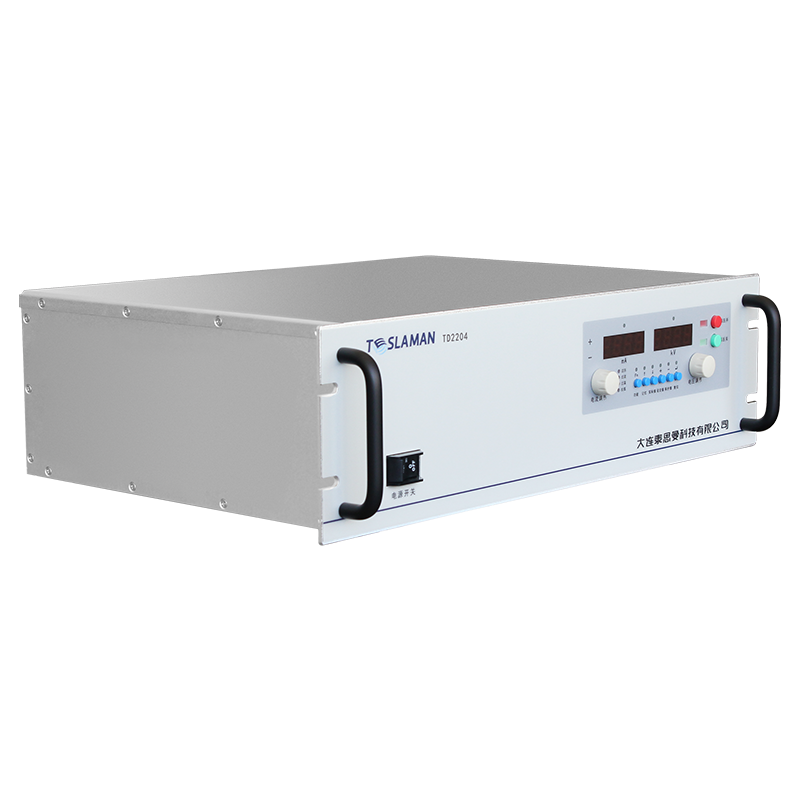
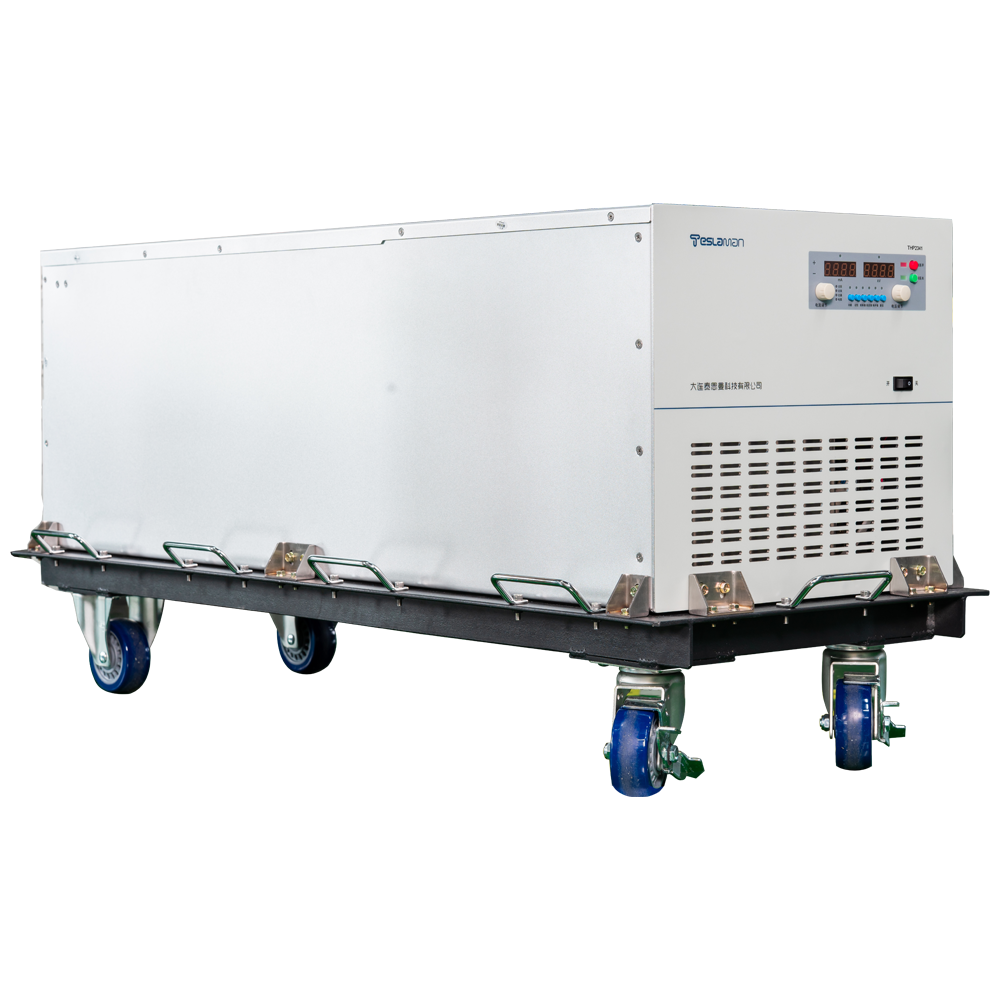
Electrospinning Solution Conductivity Adaptive Power Supply
Electrospinning is a versatile technique for producing polymer nanofibers by drawing a charged jet from a solution droplet using a high electric field. A critical, yet highly variable, parameter in this process is the electrical conductivity of the polymer solution. Conductivity influences jet initiation, stability, and the resulting fiber morphology. Solutions can range from highly conductive (aqueous solutions with salts) to highly resistive (organic solvents with certain polymers). A fixed high-voltage output, typically used in simple electrospinning setups, leads to inconsistent results when the solution changes. An adaptive power supply system dynamically adjusts its output parameters based on real-time process feedback, stabilizing the electrospinning jet and enabling reproducible fiber production from a wide range of materials.
The conventional setup applies a constant DC voltage (10-30 kV) to the spinneret (a needle or nozzle), with a grounded collector. With a fixed voltage, a change in solution conductivity drastically alters the process. A more conductive solution will draw higher current at the same voltage, potentially leading to multiple jet formation, bead defects, or even electrical breakdown. A less conductive solution may not initiate a stable Taylor cone at all at that voltage, requiring a higher electric field. The adaptive system replaces the constant voltage source with a closed-loop controller that regulates a key process variable. Two primary control modes have been developed: constant current control and constant jet stability control via impedance monitoring.
In constant current mode, the power supply regulates the total electrical current flowing from the needle to the collector. A high-voltage resistor in series with the output or a precision current transducer measures the current. The controller adjusts the output voltage to maintain a user-set current level. This mode is effective because, for a given needle geometry and working distance, the current is correlated with the charge density in the jet, which influences fiber diameter and quality. When a more conductive solution is used, the supply automatically reduces the voltage to maintain the set current, preventing runaway current and arcing. For a resistive solution, it increases the voltage to establish the necessary current flow to form a stable jet.
A more sophisticated approach involves monitoring the electrical impedance or the dynamic behavior of the current. In a stable electrospinning process, the current exhibits a specific noise signature. The onset of bead formation or jet instability produces characteristic fluctuations. The adaptive power supply can incorporate a fast feedback loop that analyzes the high-frequency content of the current signal. Using algorithms like root-mean-square (RMS) calculation of AC-coupled current or even Fourier analysis, the controller can detect the onset of instability and momentarily adjust the voltage (or switch to a pulsed voltage mode) to restore stability. This is a form of process-level feedback, directly targeting fiber morphology rather than just an electrical parameter.
The hardware requirements for such a supply are demanding. It must have a wide output voltage range (e.g., 5-50 kV) to accommodate different solutions. Its output stage must be capable of both sourcing and sinking current, as the electrospinning current, though primarily DC, can have transient components. The voltage adjustment must be smooth and rapid; a digitally controlled linear amplifier stage following a switching pre-regulator is a common architecture. The current measurement circuitry must be extremely sensitive (able to measure microamps accurately) and have a wide bandwidth to capture dynamic instability signatures, all while being isolated from the high-voltage output. Fiber-optic analog links or isolation amplifiers with high common-mode rejection are used to bring the measurement signal safely to the low-voltage control circuitry.
System integration includes user interface and recipe management. An operator can input a target solution conductivity, and the system can recall a pre-optimized set of control parameters (starting voltage, target current, stability algorithm coefficients) from memory. During operation, the system logs voltage, current, and stability metrics, providing valuable data for process validation. This adaptive capability transforms electrospinning from an artisanal, parameter-sensitive technique into a more robust and scalable manufacturing process. It allows for consistent fiber production when lot-to-lot variations occur in polymer or solvent quality, and it enables the exploration of novel material formulations without the need for exhaustive manual voltage re-optimization for each new solution, accelerating research and development in fields ranging from tissue engineering to advanced filtration.