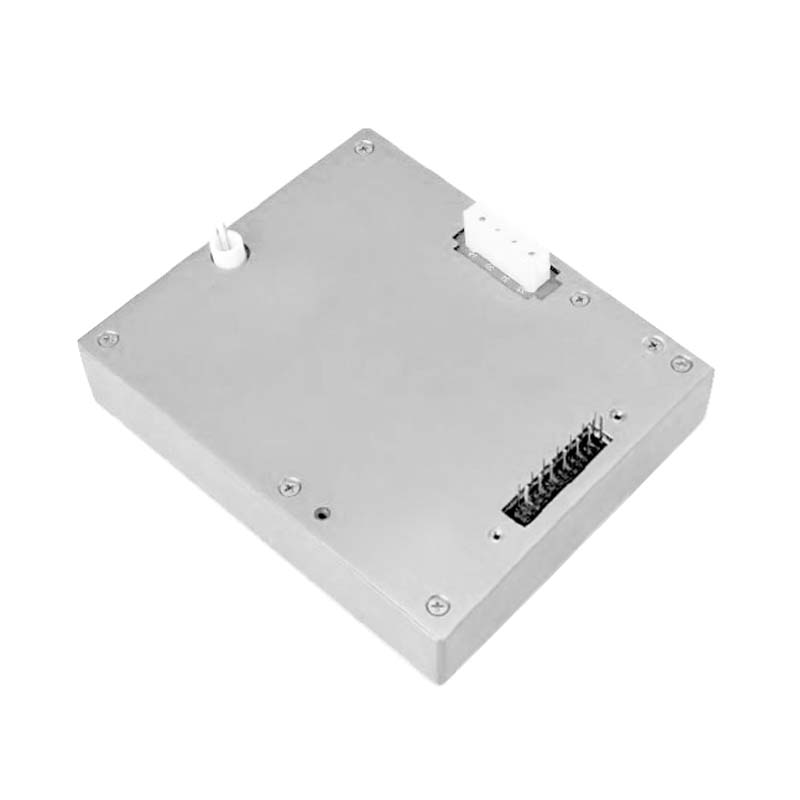
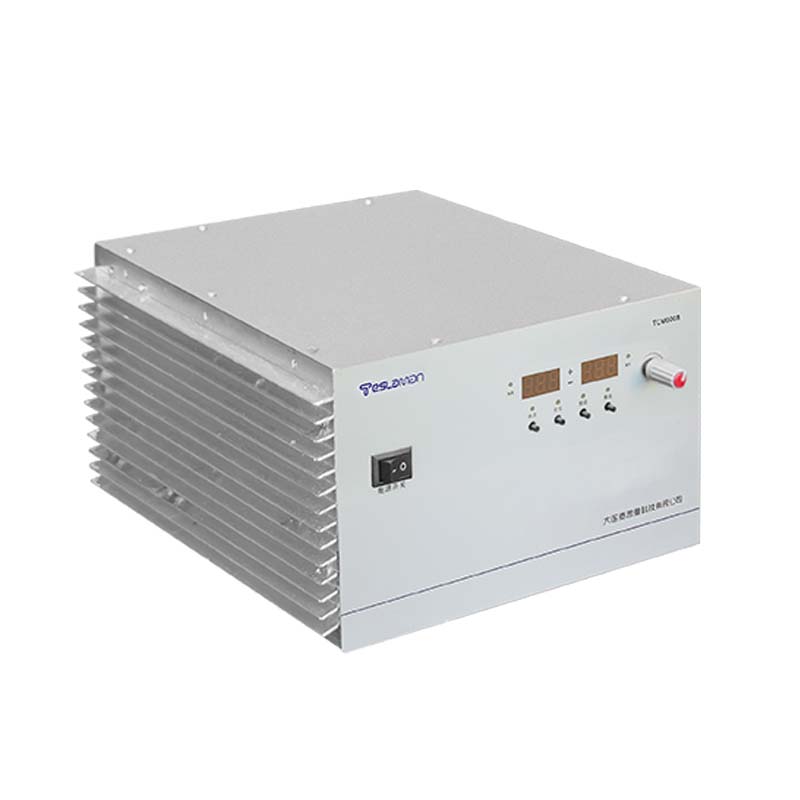
Channel Electron Multiplier Pulse Counting Mode Power Supply
Channel Electron Multipliers (CEMs) and Microchannel Plates (MCPs) operating in pulse counting mode are the detectors of choice for extreme sensitivity in measuring low fluxes of electrons, ions, UV photons, or X-rays. In this mode, each incident particle triggers a saturated avalanche within a single channel, producing an output charge pulse of nearly constant amplitude (typically 10^6 to 10^8 electrons) regardless of the initial particle's energy. These pulses are then amplified and discriminated by external electronics to produce a digital count. The stability and noise performance of the high-voltage power supply biasing the CEM are the dominant factors determining the detector's gain stability, dark count rate (noise), and maximum countable rate, making the supply design integral to achieving fundamental detection limits.
The CEM is a resistive, continuous-dynode channel shaped like a horn. A high voltage, typically between +2000V and +3000V, is applied between its input (cathode) and output (anode). This establishes a potential gradient along the channel's inner surface. An incident particle striking the wall near the input liberates a primary electron, which is accelerated down the channel, striking the wall and liberating secondary electrons, creating a geometrically multiplying avalanche. For pulse counting, the bias voltage is set high enough to drive the multiplication process into saturation or "space-charge limited" gain. In this regime, the cloud of electrons in the final stages of multiplication is so dense that it limits further growth by electrostatic repulsion, yielding a consistent output pulse size. The power supply's first and foremost requirement is exceptional voltage stability. A variation of just 0.1% (2-3 volts on a 2.5kV rail) can cause a 5-10% change in gain due to the exponential dependence of secondary emission yield on electron energy. Gain instability translates directly into pulse amplitude jitter, causing counts to be lost or noise to be registered if the pulses drift outside the fixed discrimination window of the counter.
Output noise and ripple are equally critical. Any AC component on the high-voltage DC output directly modulates the gain. Low-frequency ripple (e.g., 100/120 Hz from rectification) causes a periodic variation in pulse height. High-frequency switching noise (tens to hundreds of kilohertz) can introduce random timing jitter or even be coupled into the sensitive pulse preamplifier, creating spurious counts that increase the dark noise floor. Therefore, supplies for this application are almost exclusively linear-regulated or employ switching pre-regulators followed by low-noise linear post-regulators. The output ripple and noise are specified in the millivolt RMS range over a wide bandwidth. The use of low-noise voltage references (buried Zener diodes) and high-stability, low-temperature-coefficient resistors in the feedback divider is standard.
The CEM presents a dynamic and non-linear load. When a pulse occurs, a burst of charge (up to a few picocoulombs) is drawn from the bias supply at the output anode. The supply must be able to source this small transient current without a significant local droop in voltage, which would cause gain suppression for subsequent pulses arriving in quick succession. This defines the maximum linear counting rate. To mitigate this, a high-quality, low-inductance, and low-ESR capacitor is placed as close as possible to the CEM anode, acting as a local charge reservoir. The power supply's feedback loop must be designed to replenish this local capacitor smoothly without introducing noise. Furthermore, the CEM's resistive impedance (typically 10^8 to 10^9 ohms) means the standing DC current is small (microamperes), but it can change slowly as the detector ages or is exposed to high total counts, altering its resistance. The supply must operate stably into this high impedance without oscillation.
For the darkest backgrounds and highest sensitivity applications, such as in mass spectrometry of rare isotopes or astronomy, the dark count rate must be minimized. This is primarily a function of the CEM's intrinsic thermionic emission and background radiation, but it can be exacerbated by noise from the power supply. Special attention is paid to grounding and shielding. The high-voltage output cable is heavily shielded, and its return path is carefully managed to avoid ground loops that could inject noise into the preamplifier. In some configurations, the CEM housing and the preamplifier are floated at the high voltage, requiring the signal to be coupled out through a high-voltage capacitor or a pulse transformer, adding further constraints on the supply's interaction with this circuitry.
Advanced systems may employ active gain stabilization. A faint, stable reference source (like a light-emitting diode pulsed at a low rate) is directed at the CEM. The amplitude of the resulting pulses is monitored by the counting electronics. If the average pulse amplitude drifts, a feedback signal is sent to the power supply to minutely adjust its output voltage, locking the gain to the reference. This requires the supply to have a precise, low-noise analog programming input with fine resolution. In essence, the pulse counting mode power supply for a CEM is a metrology-grade voltage reference that happens to deliver milliwatts of power. Its design philosophy prioritizes absolute quiet and stability over power delivery capability, enabling the detector to function as a digital transducer that converts the arrival of single particles into a perfectly countable electrical event, pushing the boundaries of what is measurably faint.