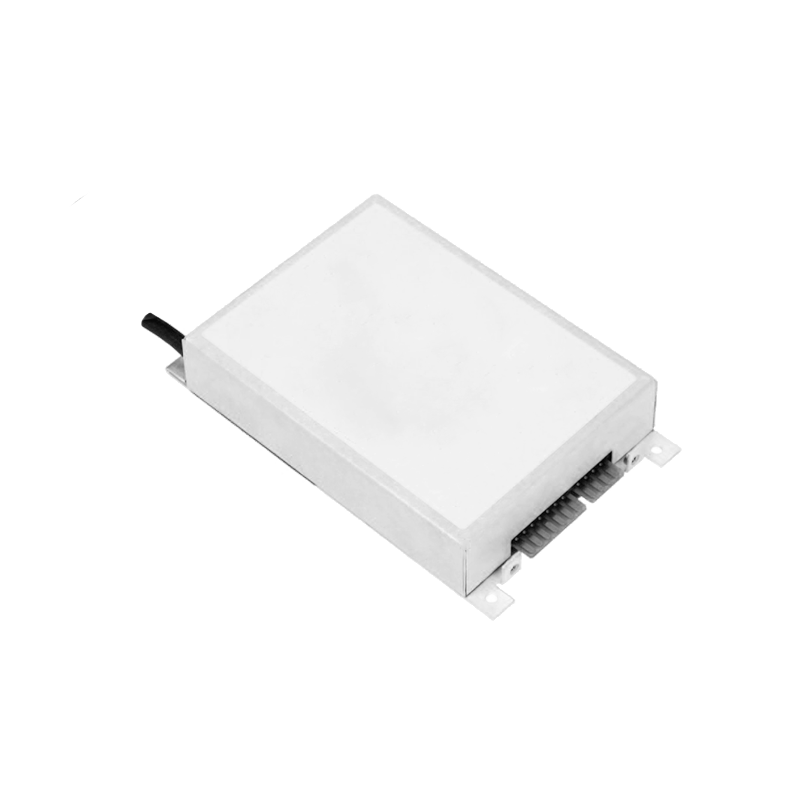
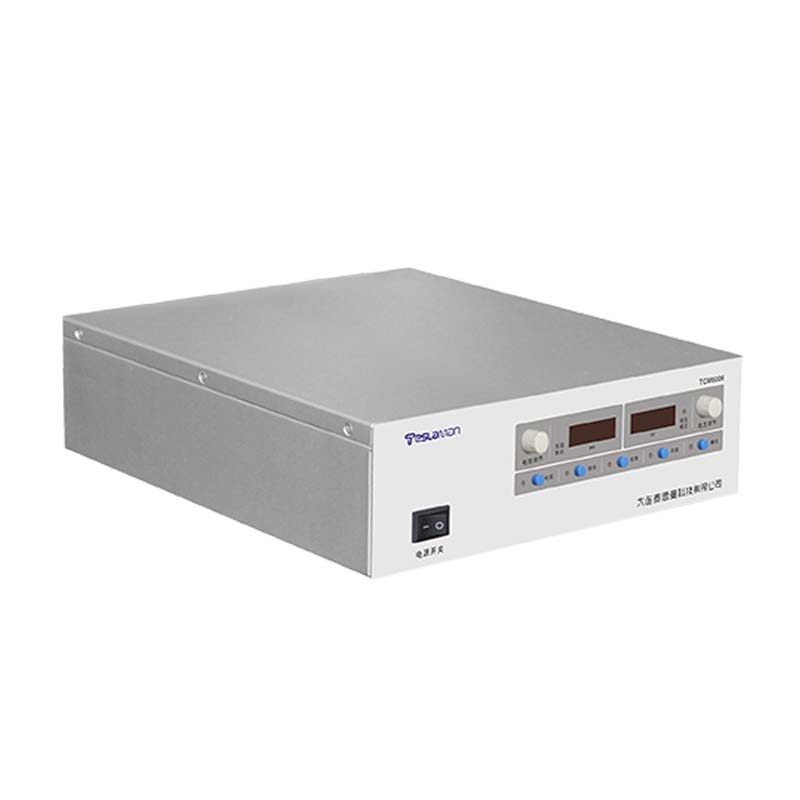
Electron Beam Selective Melting Preheating Power System
In the realm of additive manufacturing for high-value metals, Electron Beam Selective Melting (EBSM) stands apart due to its high build rates, excellent vacuum environment, and ability to process refractory materials. A critical, yet often underappreciated, subsystem that enables these advantages is the powder bed preheating system. Unlike laser-based systems, EBSM utilizes a defocused electron beam, driven by a specialized high-current, medium-voltage power supply, to raise the temperature of the entire powder layer to a precisely controlled level, typically just below the material's sintering point, prior to the focused melting scan. This preheating step is not merely a convenience; it is a fundamental process requirement that dictates part quality, residual stress, and production feasibility.
The technical demands on the preheating power supply are distinct from those of the main melting beam supply. While the melting beam requires a high-voltage (typically 60-120 kV), finely focused, and rapidly scanned beam for precise energy deposition, the preheating beam operates at a significantly lower accelerating voltage, usually in the 15-30 kV range. The key parameter is beam current, which can range from tens to over a hundred milliamps. This high-current, defocused beam is rastered in a fast, predictable pattern—often a simple serpentine or spiral—across the entire build area to deliver a uniform thermal flux. The power supply must therefore excel in high-current stability and dynamic control of beam parameters during large-area rastering, rather than in ultra-fine focus or extreme high voltage.
The architecture of the preheating power system is centered around a high-current electron gun. This gun typically uses a directly heated tungsten filament or a lanthanum hexaboride (LaB6) cathode capable of emitting the required high current without excessive degradation. The power supply for this gun comprises several interlinked modules. The filament supply provides a highly stable DC or low-frequency AC current to heat the cathode to emission temperature. Its stability is paramount, as fluctuations in filament temperature directly change electron emission, and thus the beam current. This supply often employs closed-loop current control with temperature compensation algorithms.
The core of the system is the accelerator supply. It applies the negative high voltage to the cathode and controls the beam current. For precise regulation of the high beam current, a dual-loop control strategy is common. An inner loop regulates the total emission current from the cathode (the "grid" or "bias" current), while an outer loop regulates the actual beam current arriving at the powder bed, measured by sensing the current flowing to the anode or the build platform. This ensures that variations in space charge effects or gun conditioning do not affect the delivered power to the powder. The accelerator supply must have a fast response to adjust the beam current as the raster pattern changes speed at the edges of the build area, maintaining constant power per unit area. This is often achieved with a switching regulator output stage capable of high-bandwidth modulation.
The deflection system for preheating also has unique requirements. The scanning pattern must be optimized for thermal uniformity, not for geometric fidelity. The power supplies driving the deflection coils (for magnetic deflection) or plates (for electrostatic deflection) must generate low-frequency waveforms (from a few Hz to several hundred Hz) with high linearity to avoid creating hot or cold spots in the raster pattern. Any non-linearity in the sawtooth or triangle waveforms translates directly into a variation in dwell time and thus local energy input. These supplies are synchronized with the beam current control; in some systems, the beam current is momentarily reduced during the fast flyback period of the scan to avoid over-heating the edges.
Integration with the overall machine control is critical. The preheat temperature is a key process parameter. A pyrometer or thermal camera measures the average powder bed temperature, providing feedback to a supervisory controller. This controller adjusts the setpoint for the preheating beam's power (a product of voltage and current) in real-time to maintain the desired temperature plateau, compensating for heat losses and the changing thermal mass as the part grows. This creates a closed-loop thermal management system where the high-voltage, high-current power supply acts as the final control element. Furthermore, the sequence is carefully choreographed: the preheating beam raises the layer temperature, then shuts off or reduces power as the focused melting beam begins its detailed scan, and then may resume to maintain inter-layer temperature stability. The reliability and precision of this preheating power system directly prevent issues such as powder smoking, reduce residual stresses to minimize part warping, and enable the processing of crack-prone alloys, making it an indispensable enabler of robust industrial EBSM production.