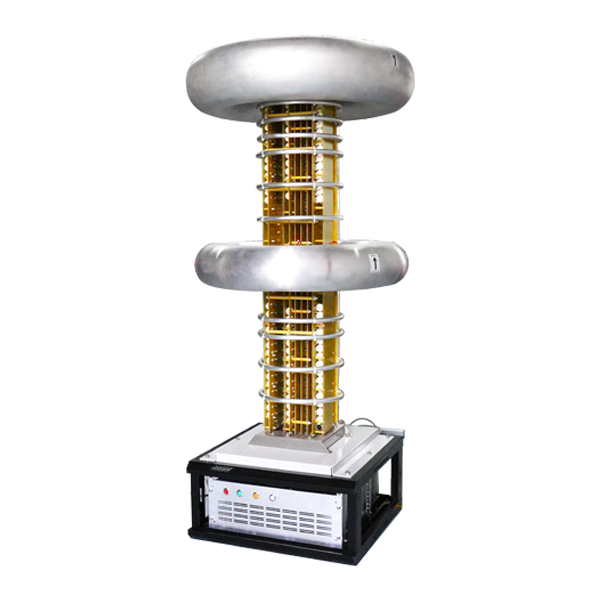
Proton Analysis High Voltage Power Supply Collision-Induced Dissociation
In analytical chemistry, particularly in tandem mass spectrometry (MS/MS), structural elucidation of molecules is achieved by fragmenting precursor ions and analyzing the resulting product ions. Collision-Induced Dissociation (CID) is a cornerstone fragmentation technique. While traditionally associated with quadrupole and ion trap mass spectrometers using neutral gas collision cells, the concept extends to other fundamental studies involving proton beams. In setups where a focused proton beam is used for analysis (e.g., in proton-induced X-ray emission or certain fundamental scattering experiments), a controlled dissociation or fragmentation of molecular targets by proton collision can be studied. The high-voltage power supply that generates and controls this proton beam is critical for defining the collision energy and, therefore, the dissociation pathways and efficiencies. Its performance dictates the resolution and reproducibility of such proton analysis CID experiments.
The fundamental parameter in any collision-induced process is the center-of-mass collision energy. For a proton (mass ~1 u) colliding with a target molecule (mass M), this energy is given by E_cm = E_lab [M/(M+1)], where E_lab is the kinetic energy of the proton in the laboratory frame. This lab-frame energy is directly determined by the potential through which the protons are accelerated: E_lab (in eV) equals the acceleration voltage (in V) times the proton's charge state (typically +1). Therefore, the high-voltage power supply's primary role is to provide a precisely defined and exceptionally stable acceleration voltage. To resolve fine details in dissociation thresholds or to reproducibly generate specific fragment ions, the energy spread of the proton beam must be minimal. This translates to a requirement for an acceleration voltage with ultra-low ripple and excellent long-term drift stability, often at the level of tens of parts per million. Any AC noise on the high voltage directly broadens the beam's energy distribution, smearing out the sharpness of dissociation resonance curves or appearance thresholds.
Beyond static voltage, many experiments require energy scanning. To measure a dissociation cross-section as a function of collision energy, the proton beam energy must be swept smoothly over a range, for instance, from 100 eV to 1000 eV. This requires the high-voltage supply to be programmable with fine resolution and to execute ramps with perfect linearity and speed control. Non-linearity in the ramp causes an incorrect energy axis in the collected data. Furthermore, the beam's focus and trajectory may change slightly with acceleration voltage due to chromatic effects in the ion optics. While these can be compensated, they place an additional burden on the stability and predictability of the voltage output—the supply's behavior during a dynamic sweep must be as well-characterized as its static performance.
The experimental setup for proton analysis CID often involves a differentially pumped collision cell containing a neutral gas target. The proton beam enters the cell, undergoes collisions, and the fragments (which may be ions, neutral radicals, or photons) are detected. The high-voltage supply must therefore be referenced correctly within a complex grounding scheme. The collision cell may be held at a different potential to extract charged fragments. The proton source (e.g., a duoplasmatron or an RF ion source) floats at the high voltage potential. The supply must provide not only the main acceleration voltage but also stable, low-noise bias voltages for the ion source extractor and focus lenses, all while floating at the main high potential. These auxiliary supplies require the same level of stability, as fluctuations can modulate the proton beam's current and emittance, indirectly affecting the collision energy resolution.
Beam current regulation is another critical factor. The dissociation yield is proportional to the proton flux for single-collision conditions. To ensure data is taken in the linear, single-collision regime, the beam current must be kept low and stable. A dedicated high-voltage supply or regulator for the proton source's anode or plasma electrode controls this current. Instability here causes fluctuations in signal intensity, increasing noise in the measured fragmentation spectrum. In pulsed beam experiments, where time-of-flight analysis is used for fragment detection, the timing and duration of the proton pulse are crucial. This requires a pulsed high-voltage beam gate or a modulated source supply, capable of producing clean, square pulses with fast rise/fall times and minimal jitter to synchronize with the detector's acquisition cycle.
For advanced studies, such as measuring the kinetic energy release of fragments, the energy definition of the incident proton beam becomes even more stringent. Any intrinsic energy spread convolutes with the fragment energy distribution, degrading the measurement. This pushes the requirements for the high-voltage supply toward monochromaticity levels typically associated with low-energy electron monochromators, involving sophisticated filtered and regulated designs.
In summary, the high-voltage power supply for proton analysis collision-induced dissociation is a precision energy-defining instrument. It is the cornerstone for establishing a well-characterized collision condition. Its specifications for voltage stability, ripple, programmability, and auxiliary bias control directly determine the energy resolution of the experiment, the signal-to-noise ratio of the fragmentation data, and the ultimate ability to derive accurate cross-sections or identify subtle features in dissociation pathways. It enables the translation of a macroscopic voltage setting into a microscopic picture of molecular bond breakage under controlled proton impact.