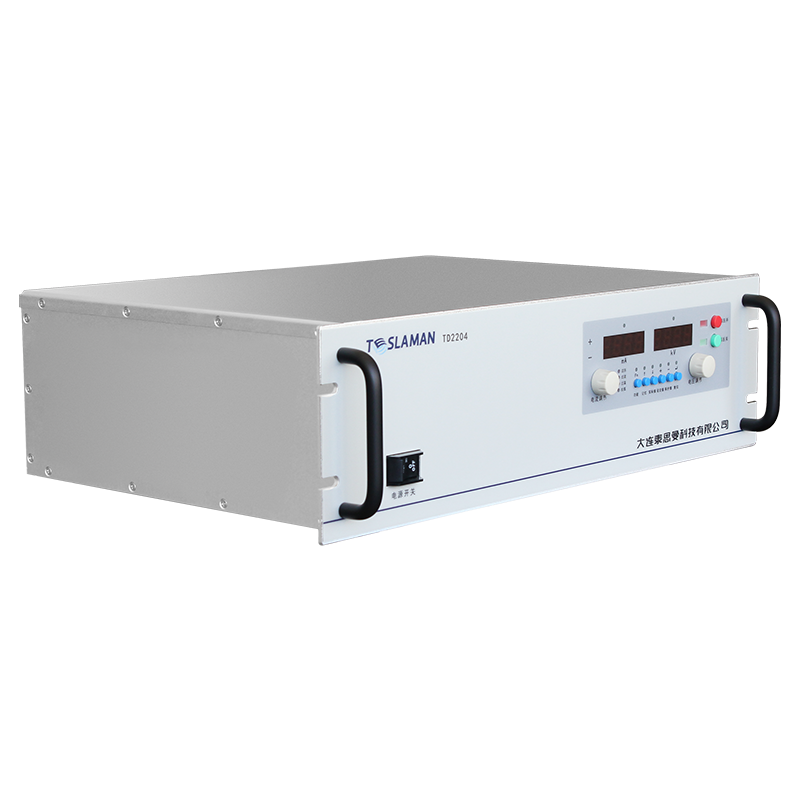
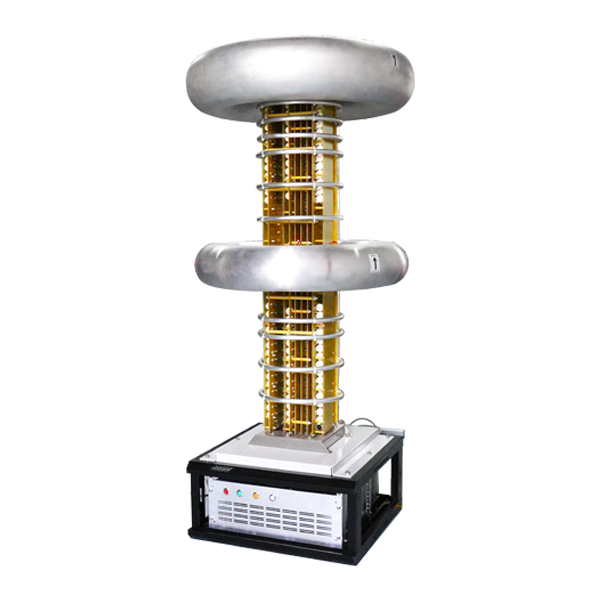
Ampoule Sealing Quality High Voltage Test Power Supply
The hermetic seal of a glass ampoule is a critical quality attribute for parenteral pharmaceuticals, ensuring sterility and stability over the product's shelf life. Non-destructive, high-voltage (HV) testing, often called dielectric withstand or spark testing, is a widely employed method for detecting microscopic leaks or weak points in the ampoule's seal and body. This test applies a controlled high voltage between an internal electrode (often a conductive fluid or a metal probe) and an external electrode surrounding the ampoule. An intact ampoule acts as a perfect insulator, sustaining the voltage. A defect with a microscopic air channel will ionize at a specific voltage, causing a detectable discharge current. The power supply system that generates, applies, and monitors this test voltage is therefore a key instrument for quality assurance, requiring a specific blend of voltage control, sensitivity, speed, and integration for automated production lines.
The core requirement for the test power supply is the generation of a precise, stable, and repeatable high-voltage waveform. The test methodology typically falls into two categories: a ramp-to-failure test or a fixed-voltage withstand test. In the ramp test, the voltage is increased linearly from zero until a breakdown occurs (indicating a defect) or until a predetermined pass voltage is reached without breakdown. This requires a power supply with programmable voltage ramping capability. The slew rate (volts per second) of the ramp must be highly consistent from test to test, as the breakdown voltage of a given defect can have a statistical distribution; a variable ramp rate would change the effective stress time and influence the measured breakdown value. The linearity of the ramp is also important for accurate defect characterization.
For the fixed-voltage withstand test, a specific voltage (typically 5-25 kV, depending on ampoule size and wall thickness) is applied for a defined duration (e.g., 1-3 seconds). Here, the stability and ripple performance of the power supply are paramount. Any AC ripple or noise on the DC output effectively creates peak voltages higher than the setpoint, which could cause the arcing of good ampoules (false rejects). Conversely, a drooping voltage might allow a marginal defect to pass undetected (false accept). The supply must act as a stiff voltage source, maintaining its output regardless of the minute leakage currents (often in the picoamp to nanoamp range) of a good ampoule.
The heart of the system is the discharge detection circuitry. Distinguishing a true defect discharge from electrical noise is the central challenge. A genuine breakdown in a microscopic channel typically has a fast rise time and a characteristic current pulse shape. The test power supply integrates a high-sensitivity, high-bandwidth current monitor, usually in the ground return path. This monitor must be able to detect current pulses in the microampere range against a background of noise. Sophisticated discrimination electronics analyze the pulse's amplitude, rise time, and integrated charge. A simple threshold detector may suffice for gross leaks, but for reliable detection of pinhole leaks, more advanced digital signal processing is used to differentiate a true spark from spurious events caused by static discharge or electromagnetic interference from nearby machinery.
Integration with the mechanical handling system dictates the speed and timing requirements. In an automatic inspection machine, ampoules are fed singly or in batches into a test station. The test sequence—insertion, application of internal electrode (e.g., flooding with conductive saline), high-voltage application, detection, electrode retraction, and sorting—must occur within a cycle time of a few seconds. The high-voltage power supply must therefore respond to trigger signals with minimal delay. Its output must rise to the test voltage rapidly but controllably to avoid overshoot. After the test, the energy stored in its output capacitance must be safely and quickly discharged to ensure the ampoule is at ground potential before handling. This requires active discharge circuits within the supply.
Safety and reliability are critical in a production environment. The system includes multiple interlocks: mechanical guards must be closed, the ampoule must be correctly positioned, and the internal electrode must be confirmed present before the high voltage can be enabled. The power supply itself must be fail-safe. Internal diagnostics continuously monitor its health; a failure in the voltage regulation or monitoring circuit must default to a safe state (output off). Furthermore, the test head and electrodes are designed with current-limiting resistors and, often, a series spark gap to protect the supply and limit the energy of any discharge, preventing shattering of the glass ampoule.
Advanced systems may incorporate adaptive testing or data logging. For process monitoring, the actual breakdown voltage of rejected ampoules can be recorded and trended. A downward trend in breakdown voltage could indicate a gradual deterioration in the sealing process. Some power supplies offer programmable test profiles that can adapt based on ampoule size or product code, received via communication from the production line's host controller.
In summary, the high-voltage test power supply for ampoule sealing quality is a specialized instrument of quality gatekeeping. It combines the functions of a precision high-voltage generator, a sensitive picosecond-event detector, and a high-speed industrial actuator. Its performance in delivering a consistent, clean test voltage and its acuity in discriminating true defects from noise directly determine the effectiveness of the leak detection process, ensuring that only perfectly sealed ampoules reach patients, thereby safeguarding both product efficacy and patient safety.