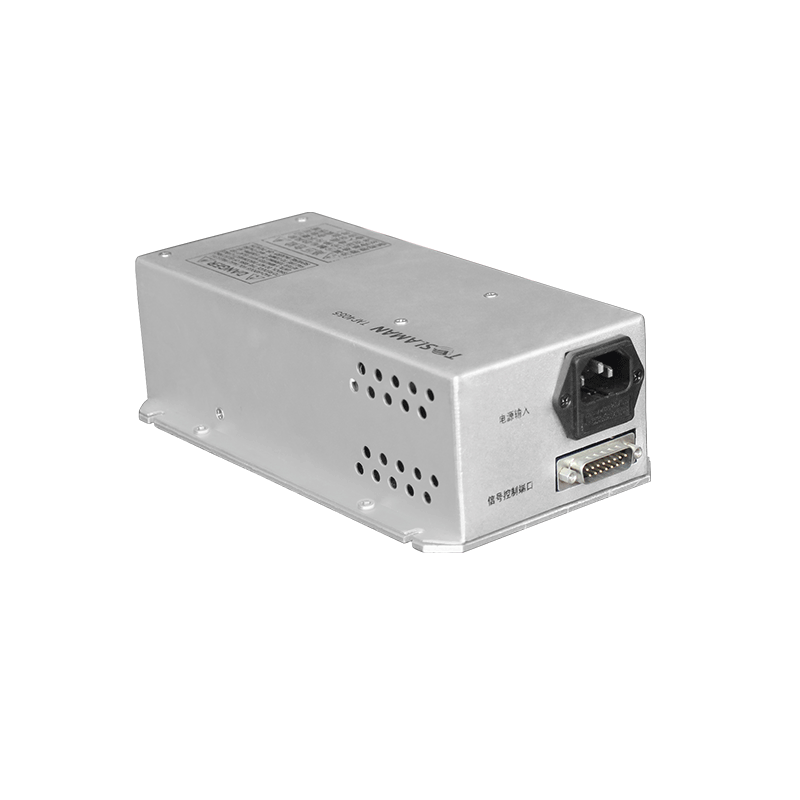
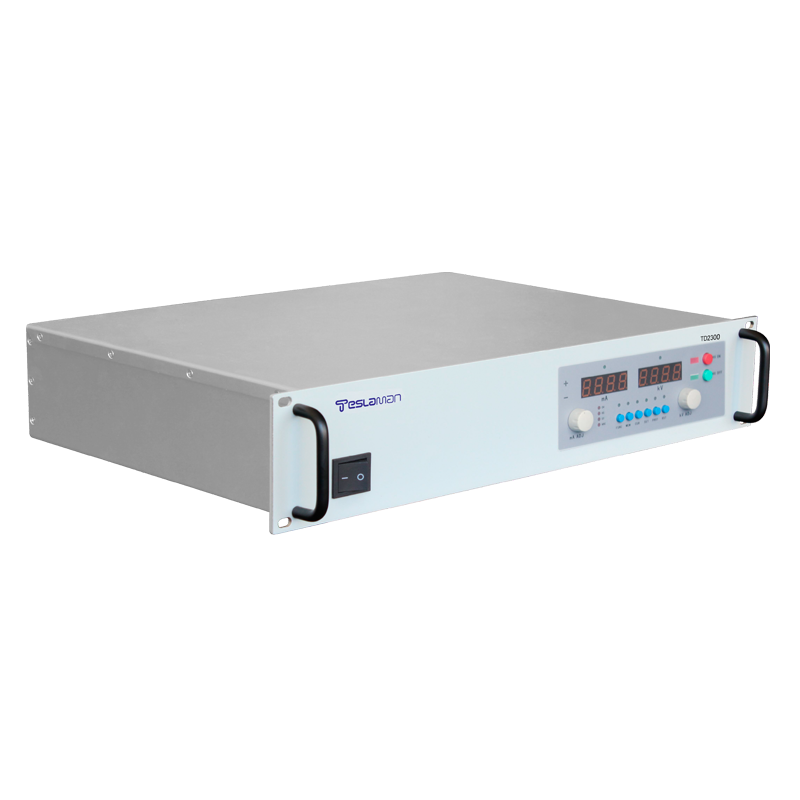
Portable Neutron Generator High Voltage Power Supply
The deployment of neutron-based techniques for field applications—such as contraband detection, landmine identification, mineralogical analysis, and well logging—demands compact, rugged, and reliable sealed-tube neutron generators. These devices, typically based on deuterium-deuterium (D-D) or deuterium-tritium (D-T) fusion reactions, require a sophisticated, multi-output high-voltage power supply system that is fully integrated into a portable package. This power system must be engineered to overcome the inherent conflicts between miniaturization, thermal management, high-voltage insulation, and operational stability in varying environmental conditions, all while ensuring absolute safety for the operator.
A portable neutron tube requires several distinct high-voltage and high-power circuits. The primary circuit is the ion accelerator, which applies a direct current potential of 80 to 150 kV to accelerate deuterium ions onto a target loaded with deuterium or tritium. The stability of this voltage directly influences the neutron yield and energy spectrum. Simultaneously, the ion source—often a Penning or radio-frequency type—requires a separate, stable discharge supply of several hundred to a few thousand volts to create and maintain the plasma from which ions are extracted. This source supply must be current-regulated and capable of pulsing at high frequency if the neutron output is to be pulsed. Additionally, the target may require a small bias voltage, and the system includes a high-voltage pulser for the ion source trigger or for a secondary electron suppression grid. Integrating these diverse, interdependent high-voltage rails into a package that can be carried by a single person or mounted on a small vehicle is a monumental engineering challenge.
The core design philosophy revolves around extreme power density and efficient thermal management. Traditional high-voltage transformers and capacitors are prohibitively large. The solution lies in high-frequency switching topologies, operating in the hundreds of kilohertz range. By increasing frequency, the size of magnetic components (transformers, inductors) and filter capacitors is drastically reduced. This necessitates the use of advanced magnetic materials (like ferrite or amorphous metal cores) and high-voltage, fast-recovery diodes. However, high-frequency switching increases switching losses and electromagnetic interference (EMI), requiring careful selection of wide-bandgap semiconductors (SiC or GaN) and meticulous layout to manage heat and contain noise. The entire high-voltage generation assembly is often potted in a thermally conductive, electrically insulating epoxy resin. This potting serves multiple purposes: it provides structural rigidity against shock and vibration, it eliminates air voids where corona discharge could initiate, and it helps conduct heat from the internal components to the external casing.
Thermal management is the primary limiter of performance and duty cycle. The power conversion process is not 100% efficient; losses manifest as heat within the potted module. In a sealed, portable unit, air convection is limited, and heat must be conducted through the potting compound and the metal housing to the environment. The design must ensure that the hottest internal component—often the high-voltage switching transistor or the rectifier diode—remains within its safe operating temperature during the intended mission profile (e.g., 10 minutes of continuous operation, or 1% duty cycle pulsing). This often involves integrating the power supply's heat sink into the neutron generator's overall cooling system, which may include passive fins or even a small, quiet fan.
Environmental robustness is non-negotiable. The system must operate reliably across a wide temperature range (-10°C to +50°C is typical), in high humidity, and while subjected to the shocks and vibrations of transport over rough terrain. This demands component derating, the use of conformal coatings on circuit boards, and mechanical designs that prevent connector loosening. Safety systems are paramount and must be failsafe. These include: internal current monitors to detect and shut down in case of an internal arc within the neutron tube; ground fault detection; interlocks that remove high voltage if the shielding is opened; and "dead-man" switches for the operator. The high-voltage outputs must be designed to limit stored energy, ensuring that even if contacted, the discharge cannot deliver a lethal shock.
Finally, the power supply must be "smart" and energy-efficient. It is typically powered by rechargeable lithium-ion battery packs. To maximize runtime, the supply employs power-saving modes, efficient standby states, and precise control over power consumption. A digital control interface allows the main system controller to command the neutron output level (by adjusting accelerator voltage), switch between continuous and pulsed modes, and receive diagnostic telemetry on supply health. In essence, the portable neutron generator high-voltage power supply is a masterpiece of integration, condensing the functionality of a laboratory rack-mount system into a shoe-box-sized, field-deployable module. Its performance defines the neutron yield stability, operational lifetime, and practical utility of the entire detection or analysis system in real-world, uncontrolled environments.