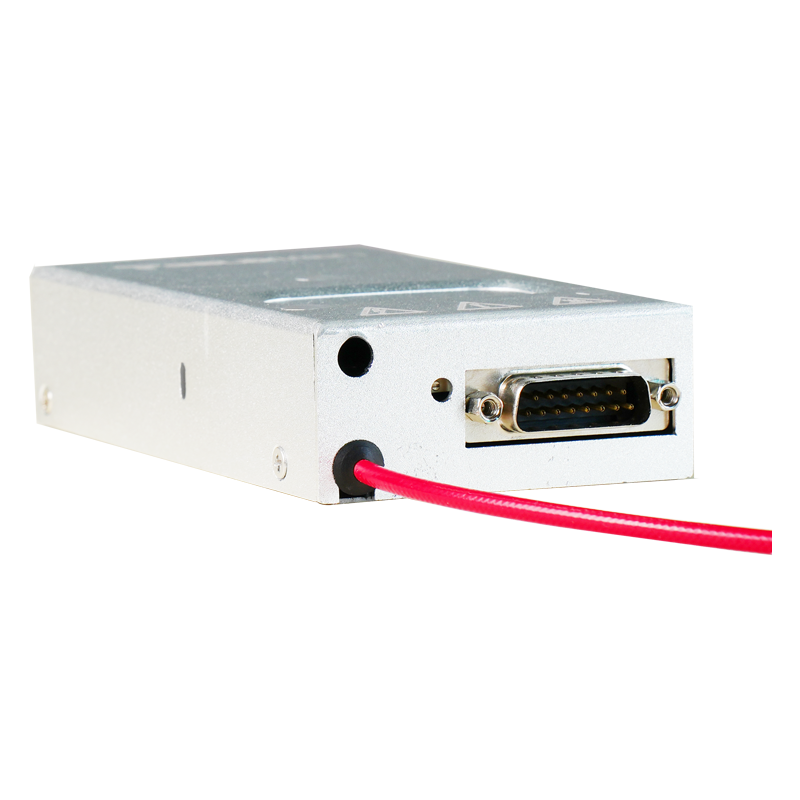
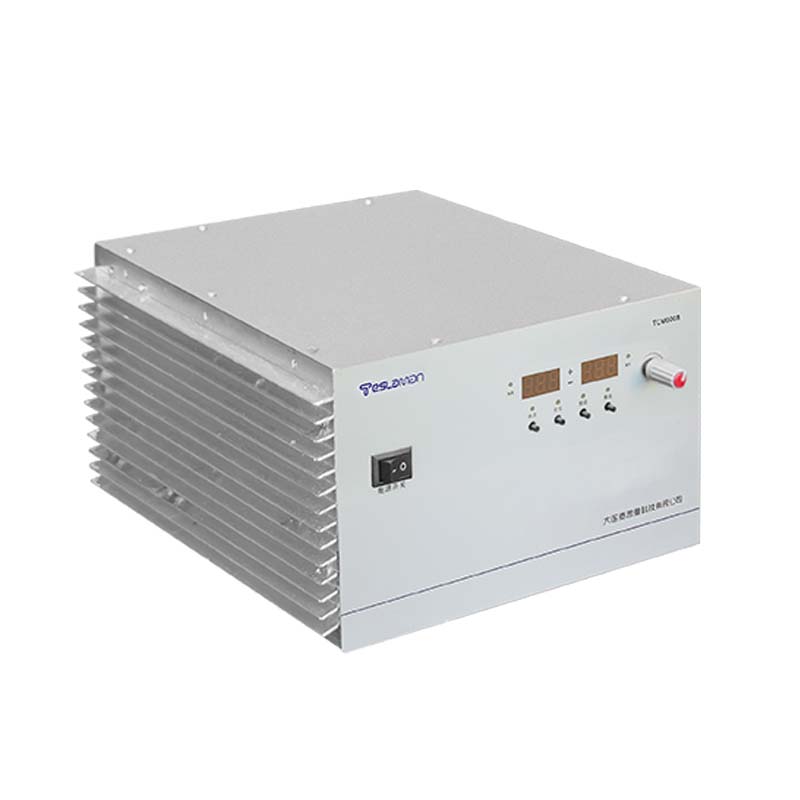
Coating Pulsed Power Supply for Thin Film Composition Gradient Control
The fabrication of advanced functional coatings often requires not a single material but a gradual transition from one composition to another—a composition gradient. This is critical in applications like thermal barrier coatings (transition from bond coat to ceramic), optical interference filters (graded refractive index), and wear-resistant layers (graded hardness). In physical vapor deposition (PVD) processes such as pulsed magnetron sputtering, the composition of the deposited film is determined by the relative arrival rates of the different target materials at the substrate. Pulsed power supplies, with their ability to modulate discharge parameters on a pulse-by-pulse basis, provide a powerful and direct means to dynamically control these arrival rates, enabling the precise synthesis of composition gradients along the film's growth direction.
The fundamental technique for gradient control is the synchronized modulation of multiple pulsed power supplies, each driving a different magnetron target. In a co-sputtering setup, two or more targets (e.g., Titanium and Chromium, or Silicon and Silicon Carbide) are powered independently. The average power delivered to each target dictates its sputtering rate, and thus the flux of that material toward the substrate. By programming a time-varying profile for the power delivered to each target, a corresponding gradient in film composition can be engineered. However, using average DC power for this results in slow, coarse control limited by the thermal inertia of the targets and the stability of the discharges. Pulsed power, particularly at high peak powers, allows for much finer and faster control.
The key is to operate in a regime where the film growth per pulse is sub-monolayer. In High Power Impulse Magnetron Sputtering (HiPIMS), the peak power density is so high that the plasma is highly ionized, but the average power (and thus the average deposition rate) is managed by the duty cycle (pulse width × repetition frequency). For gradient control, the repetition frequency is kept high (hundreds of Hz to kHz), but the energy per pulse—controlled by the pulse voltage, current, and width—is modulated. One sophisticated method is to keep the pulse parameters constant but vary the relative timing or frequency of pulses from each target. For a binary alloy A-B, one could use a time-division multiplexing approach. The power supply for target A fires a burst of N pulses, depositing a small amount of material A. Then it pauses, and the supply for target B fires M pulses. By gradually changing the ratio N/M over the total deposition time, the composition is graded from A-rich to B-rich. The pulsed nature ensures that the depositing species are well-mixed on an atomic scale due to the high adatom mobility between pulses.
An even more precise method involves real-time feedback control of the pulse parameters based on process diagnostics. For instance, an optical emission spectrometer (OES) can monitor the intensity of an emission line characteristic of a specific target material (e.g., a Titanium line) in the plasma. The intensity is proportional to the flux of that species being sputtered. The power supply control system uses this OES signal as feedback. To create a predetermined gradient profile, the system compares the measured Ti flux to the desired flux at that point in the process time. It then dynamically adjusts the pulse current or voltage for the Ti target to bring the flux into agreement. This closed-loop approach compensates for nonlinearities, such as the change in sputtering yield as the target erodes or the effect of reactive gas poisoning in reactive co-sputtering.
The technical demands on the pulsed power supplies are severe. They must have exceptionally stable and repeatable pulse-to-pulse energy delivery. Any jitter in pulse amplitude or width introduces noise into the composition profile. They must also respond rapidly to setpoint changes; transitioning from a pulse sequence for one target to another, or adjusting pulse parameters within a sequence, must happen with minimal dead time to avoid abrupt compositional interfaces. The supplies often need to support complex, pre-programmed waveforms for pulse amplitude, not just on/off control. Furthermore, in reactive processes to create graded oxides or nitrides, the pulsed supplies must manage arc suppression and stable operation in the transition zone, which is particularly challenging when the power is being constantly modulated.
The outcome of this precise orchestration is a coating with a composition that can be tailored as a function of thickness. This allows for the mitigation of internal stresses (by grading the coefficient of thermal expansion), the creation of diffuse interfaces that resist delamination, and the engineering of optical or electrical properties that vary continuously through the layer. The pulsed power supply system, therefore, acts as a dynamic compositional paintbrush, translating a digital gradient recipe into a physical reality at the atomic level, enabling the next generation of multifunctional, high-performance thin films.