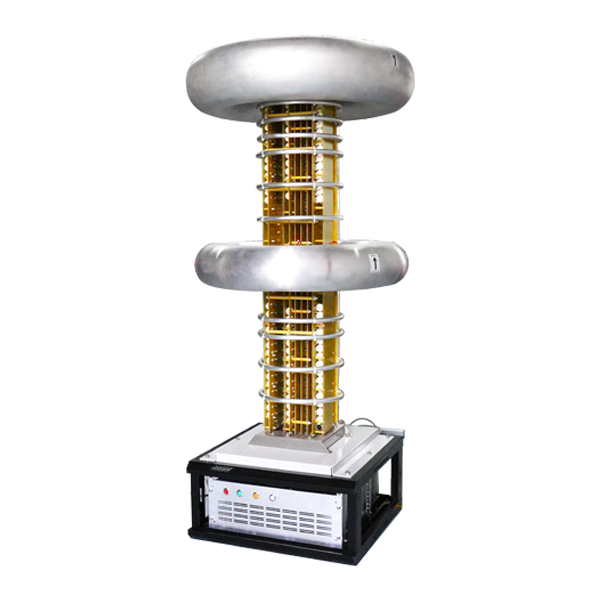
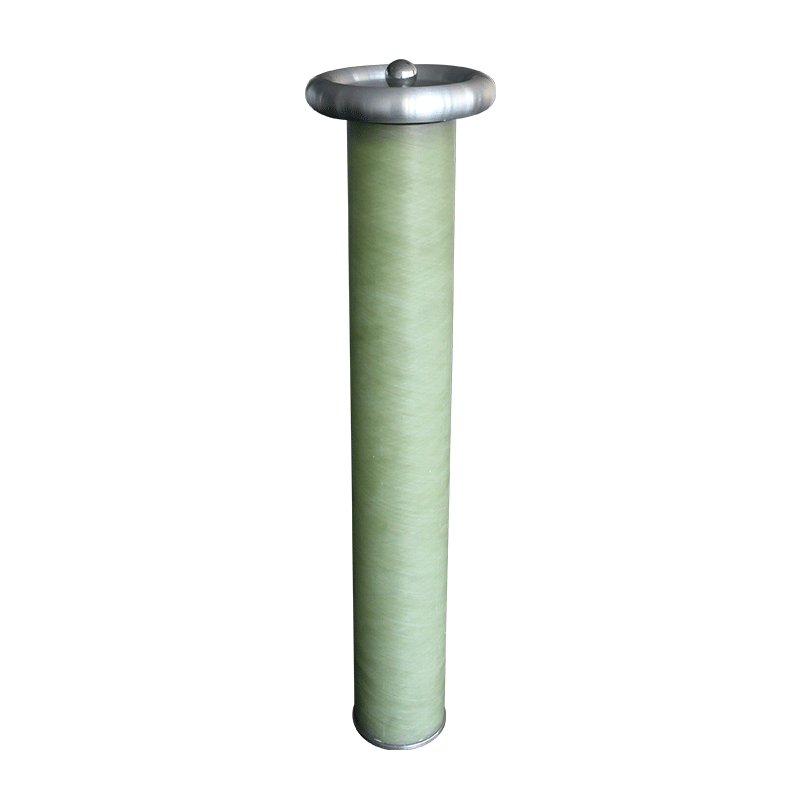
High-Voltage Drive Power Supply for Radio Frequency Quadrupole Accelerators
Radio Frequency Quadrupole (RFQ) linear accelerators serve as crucial injectors, efficiently bunching and accelerating low-energy ion beams to higher velocities. The heart of an RFQ's operation is its resonant cavity structure, which requires a high-power, high-voltage drive signal at radio frequencies, typically in the VHF range (e.g., 100-400 MHz) and with voltage amplitudes reaching tens of kilovolts across the quadrupole electrodes. The power supply that generates this drive, often a final-stage amplifier powered by a high-voltage DC rail, is a masterpiece of precision and stability engineering.
Its primary function is to establish a precise alternating electric quadrupole field within the cavity. Any deviation in the amplitude or phase of this RF field directly translates into beam quality degradation, causing increased emittance, particle loss, or unstable bunching. Consequently, the high-voltage DC supply feeding the RF amplifier must exhibit exceptionally low ripple and noise, typically specified at less than 0.01% of the set voltage. This is achieved through multi-stage filtering, often combining passive LC filters with active regulation circuits. The stability requirement extends to fast line and load regulation, as fluctuations in the mains input or changes in the RF amplifier's draw (due to beam loading effects) must be corrected within microseconds to maintain cavity field integrity.
A critical aspect is the interaction between the power supply and the resonant cavity. The cavity presents a dynamic load that varies with frequency, temperature, and beam current. Impedance matching networks are employed to maximize power transfer from the RF amplifier to the cavity, but the high-voltage DC supply must be robust enough to handle reflected power scenarios without entering protective shutdown or introducing instability. This often requires designs capable of sourcing and sinking current rapidly. Furthermore, the precise control of the cavity's resonant frequency via tuning mechanisms is often indirectly powered or controlled by auxiliary high-voltage supplies for piezoelectric actuators or motor drives.
Thermal management of the high-voltage power components, such as the oscillator tubes or solid-state RF amplifier modules and their associated high-voltage rectifiers, is a significant challenge. Power dissipation can reach megawatt levels in large systems. Liquid cooling, using deionized water, is standard, with meticulous attention paid to preventing any leakage or condensation that could lead to high-voltage breakdown. The entire high-voltage envelope is usually housed in a dielectric environment, such as SF6 gas or high-voltage insulation oil, which necessitates monitoring systems for gas pressure or oil quality and temperature.
System protection is layered and comprehensive. It includes not only standard overvoltage and overcurrent protection but also specialized arcs and sparks detection within the RF cavity and amplifier. An arc event, which is a sudden breakdown, demands that the high-voltage supply be cut off within a few microseconds to prevent damage to the expensive cavity vanes and electrodes. This ultra-fast protection relies on dedicated arc detector circuits that bypass slower digital controllers. Redundancy is also a key design principle, with critical sensor paths and even entire modulator modules often having backups to ensure accelerator uptime. The power supply's control system is fully integrated into the accelerator's timing and synchronization network, allowing precise control of RF pulse length, repetition rate, and amplitude for different operating modes, from continuous wave (CW) to complex pulsed structures required for specific experiments or medical therapy protocols.