High-Voltage Field for Efficient Orientation of Short Fibers in Electrostatic Flocking
Electrostatic flocking is a process for adhering millimeter-length fibers, typically nylon, rayon, or polyester, vertically onto a substrate coated with adhesive. The efficiency and quality of this orientation are overwhelmingly dependent on the characteristics of the applied high-voltage electrostatic field, usually between 40 kV and 100 kV. The power supply generating this field is the pivotal component that transforms a random cloud of fibers into a uniformly aligned layer.
The physics of the process involves charging the individual fibers, often via ion bombardment in the high-field region, and then accelerating them along the electric field lines toward the grounded substrate. For perfect vertical orientation, the field must be extremely uniform across the entire working area, which can span several square meters in industrial machines. Any field gradient or distortion causes fibers to tilt, resulting in a patchy or low-density finish. Achieving this uniformity requires a carefully engineered electrode geometry, often a series of wire meshes or bars connected to the high-voltage output, and a power supply with superb voltage stability. Ripple or low-frequency noise in the output causes the field strength to oscillate, leading to inconsistent fiber flight and embedding depth into the adhesive.
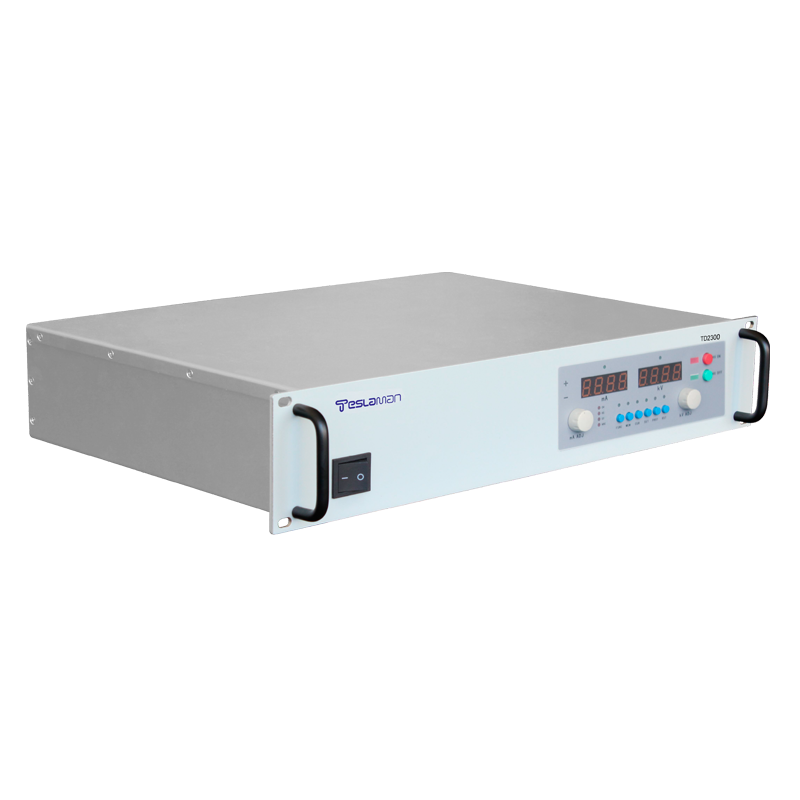
The power supply must be capable of operating in a challenging environment filled with floating fibers and adhesive vapors. This necessitates a design focused on robustness and safety. The output is invariably current-limited, both for operator safety and to prevent the initiation of a sustained arc discharge, which could ignite flammable materials. Modern flocking power supplies utilize switched-mode inverter technology to achieve high efficiency and relatively compact size compared to traditional transformer-rectifier sets. They provide a continuously adjustable DC output, often with the option for pulsed DC, which some studies indicate can improve packing density by allowing fibers to settle between pulses.
A key operational challenge is managing charge accumulation on non-conductive substrates or adhesive layers. This buildup can locally repel incoming fibers, creating voids. Sophisticated power supply systems address this by integrating a feedback loop that can modulate output voltage or incorporate a periodic discharge cycle to neutralize the substrate. The power supply must also respond dynamically to changes in the flocking density; as fibers build up on the substrate, they effectively change the dielectric properties of the target, which the system must compensate for to maintain consistent field strength at the point of fiber impact.
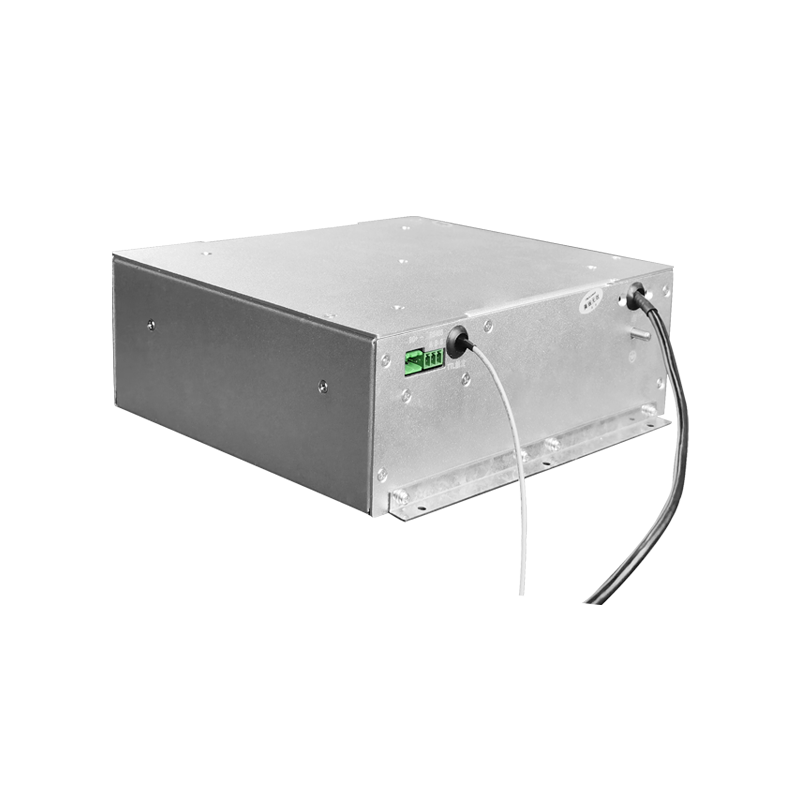
The high-voltage cables and connections are specially designed for this application, featuring smooth surfaces and rounded contours to minimize corona discharge, which not only wastes power but also produces ozone that can degrade certain adhesives and fibers. Enclosures are fully interlocked, and the system includes ground-fault monitoring to ensure operator safety. From a process control perspective, the voltage, current, and sometimes the field shape are precisely regulated parameters. The optimal setting depends on fiber length, diameter, dielectric constant, and adhesive viscosity. Therefore, the power supply interface allows for storing and recalling recipes for different products, ensuring reproducible quality. Advanced systems may even include real-time monitoring of the charging current as a proxy for flocking density, enabling closed-loop process control that maximizes material utilization and finish quality while minimizing waste and energy consumption.