High Voltage Power Supply for Accelerator Beam Dump Systems: Principles and Application Considerations
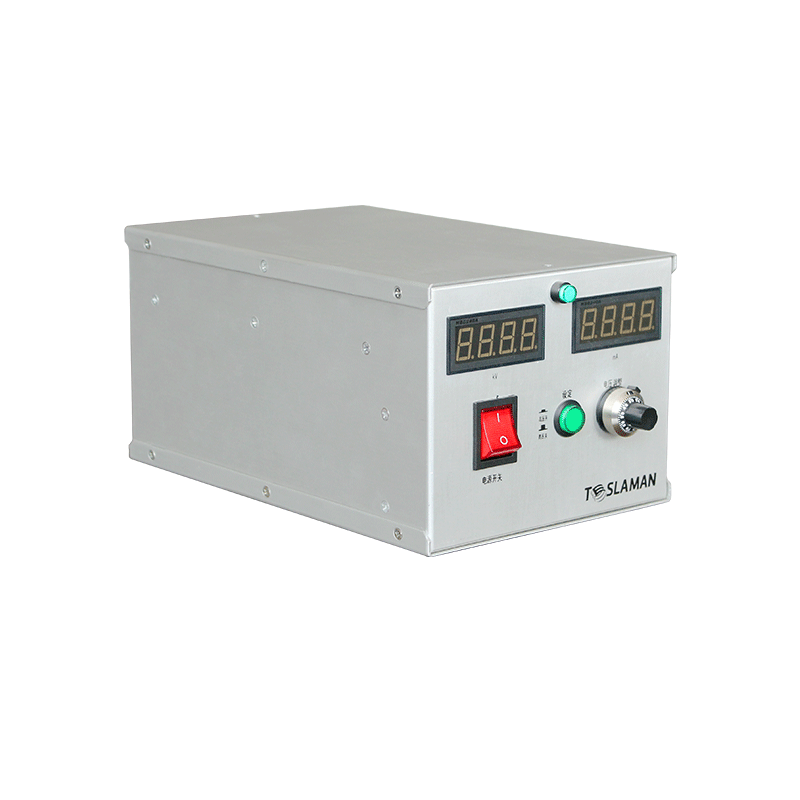
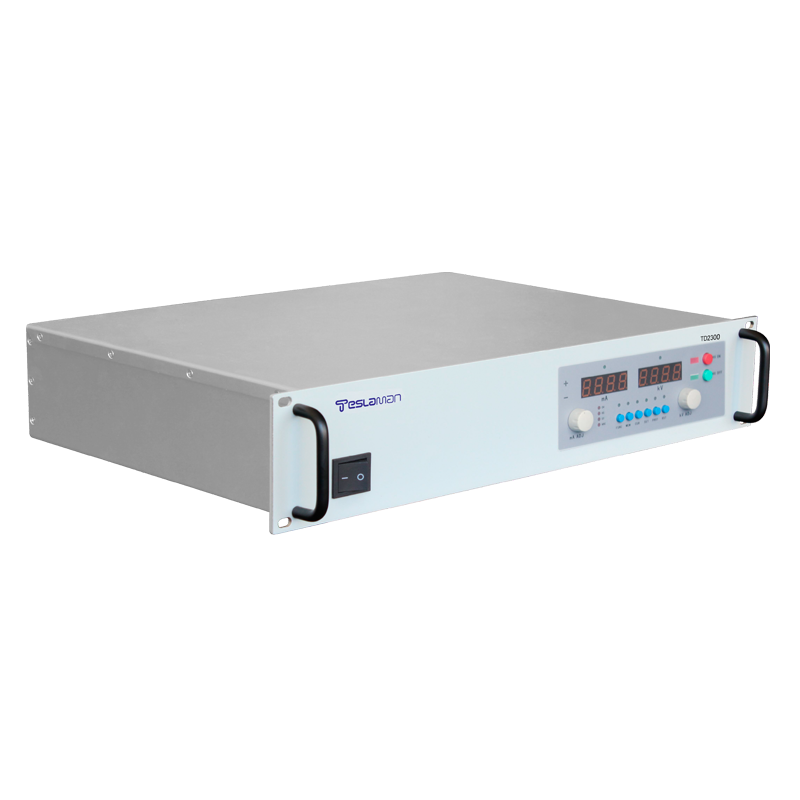
Within particle accelerator facilities, the beam dump or beam stopper serves as a critical subsystem for safely absorbing and dissipating the energy of accelerated particle beams. The operation of this component frequently relies on specialized high voltage power supplies designed for what is often termed 'high voltage suppression' or biased collection. These power units are not merely standard high voltage modules; they are engineered to meet exceptionally demanding performance criteria inherent to accelerator environments.
Fundamentally, the power supply must provide a stable, precisely controlled high voltage potential to the beam dump's internal structures, typically a series of electrodes or a Faraday cup-like assembly. This potential establishes an electric field that influences the trajectory of charged particles as they enter the dump, often to suppress secondary electron emission. When high-energy particles strike a material surface, they can liberate a cascade of secondary electrons. Unchecked, this electron cloud can cause significant problems, including measurement inaccuracies in beam current monitoring, undesired heating of adjacent components, and even instabilities in the beam itself. By applying a carefully tuned negative high voltage bias to the collector elements, these low-energy secondary electrons are effectively repelled back toward the absorption mass, containing the emission and ensuring a more accurate measurement of the true intercepted beam current.
The design challenges for such a power supply are multifaceted. First, it must exhibit outstanding stability and low ripple. Fluctuations in the suppression voltage directly translate to variations in the retarding field, which can modulate the secondary electron yield and introduce noise into the beam current signal. Ripple specifications are often in the range of a few tens of millivolts or lower, even at output voltages reaching tens of kilovolts. Second, the unit must possess excellent load regulation. The beam dump acts as a dynamic load; as beam intensity varies, the collected current changes, which can cause the effective load on the high voltage supply to shift. The output voltage must remain constant despite these changes.
A paramount consideration is the integration of robust protection and interlock features. The power supply is intrinsically linked to machine safety systems. It must feature fast over-current protection, arc detection, and dump capabilities to protect both itself and the sensitive dump hardware in the event of a vacuum arc or a sudden beam loss incident. The control interface is equally vital, requiring seamless integration with the accelerator's global control system, allowing for remote programming, voltage ramping, and real-time status monitoring. These interfaces often employ industry-standard protocols to ensure interoperability.
Environmental factors also dictate design choices. The power supply may be located in areas with significant levels of ionizing radiation or strong stray magnetic fields from accelerator magnets. Consequently, critical components may require selection for radiation tolerance or magnetic shielding. Cooling is another essential aspect, as the unit might be installed in a confined rack with limited airflow, necessitating efficient thermal management through conduction or liquid cooling.
Long-term reliability and maintainability are non-negotiable. Accelerators operate for extended periods, and unscheduled downtime is costly. Therefore, these high voltage supplies are designed with conservative derating of components, modular construction for easy service, and comprehensive diagnostic capabilities. The culmination of these engineering efforts is a power system that operates with unwavering reliability in the background, enabling precise beam diagnostics and safe beam termination, which are foundational to the successful operation of any particle accelerator complex.