High-Voltage System Integration for Ampoule Seal Integrity Testing via Helium Mass Spectrometry
The assurance of container integrity is paramount in the pharmaceutical and biotechnology industries, particularly for parenteral products stored in glass ampoules. Helium mass spectrometry leak detection stands as the gold standard for non-destructive, highly sensitive testing of ampoule seal quality. At the heart of a modern, automated test station lies a critically important and highly integrated high-voltage system. This system performs the dual function of ionization and ion acceleration within the mass spectrometer detector and often provides potentials for electrostatic focusing elements.
In a helium leak detector, a sample gas is drawn into the spectrometer tube where it is ionized by electrons emitted from a heated filament. The generated ions are then accelerated by a high-voltage field—typically several kilovolts—into a magnetic or quadrupole mass analyzer where helium ions are separated from other gas species based on their mass-to-charge ratio. The stability and purity of this acceleration voltage are directly proportional to the sensitivity and resolution of the detector. Any drift or noise can shift the ion beam's energy, degrading the instrument's ability to distinguish the tiny helium signal from the background, thus raising the minimum detectable leak rate.
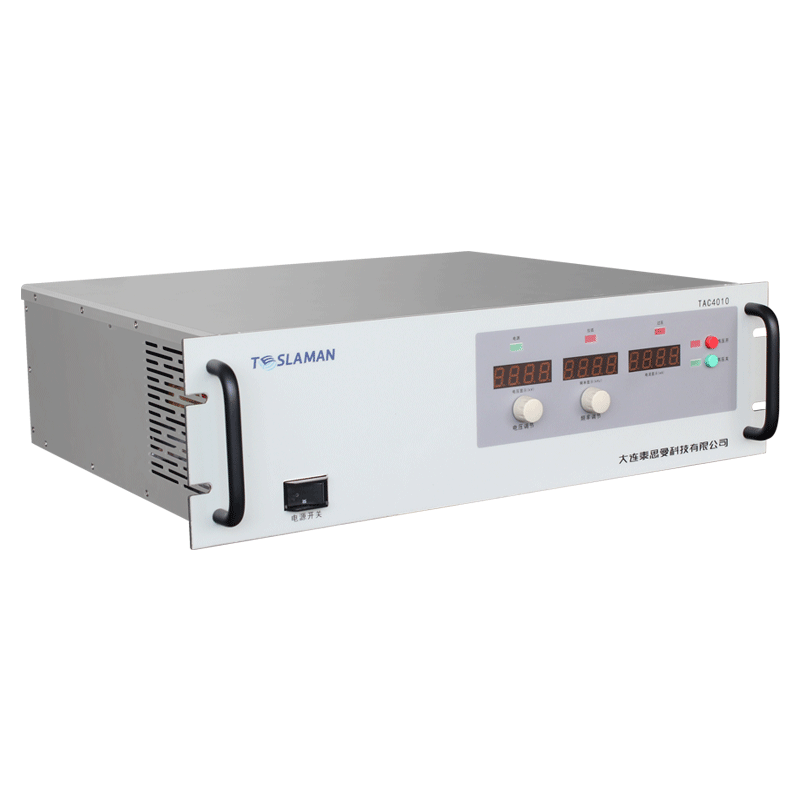
Modern automated test stations for ampoules integrate this high-voltage function into a compact, digitally controlled module. This integration goes beyond simply housing a power supply in the same chassis. It involves a sophisticated synergy between the high-voltage generator, the spectrometer's analog front-end electronics, the vacuum system controls, and the sample handling robotics. The voltage must be sequenced precisely with other system actions: it must ramp up only when the vacuum reaches a suitable operating pressure to prevent arcing, and it must be disabled during ampoule loading or air venting cycles.
Furthermore, the system is designed for exceptional electrical cleanliness. The current levels involved in detecting a minute helium leak are exceedingly small, often in the picoampere range. Therefore, the high-voltage section must be meticulously shielded to prevent any electrical noise, either from its own switching circuits or from external sources, from coupling into the sensitive ion current amplifier. This often involves the use of multi-stage filtering, guarding techniques, and careful layout of ground planes within the integrated assembly.
Another application of high voltage in such systems, though less common, is for electrostatic charging of ampoules. In some high-throughput configurations, a small electrostatic charge might be applied to ampoules to prevent them from sticking together or to orient them correctly on a conveyor. While a separate, lower-power supply might handle this, the trend is toward centralized power management where one main unit provides isolated, regulated outputs for both the spectrometer and auxiliary functions, improving overall system efficiency and footprint.
Reliability and uptime are critical in production environments. The integrated high-voltage system is therefore subject to rigorous design-for-manufacturing principles. It employs components with long service life, such as solid-state HV multipliers over traditional transformer-rectifier stacks where possible, and incorporates continuous self-diagnostics. It monitors parameters like output voltage, load current, internal temperature, and can predictively alert to filament end-of-life in the ion source, which is a common wear item. This proactive maintenance capability prevents unexpected test station failures during crucial production runs.
Ultimately, the sophisticated high-voltage integration in these leak detection systems is a key enabler for their performance. It allows them to achieve parts-per-billion level sensitivity reliably, day after day, in a factory floor setting. This capability directly contributes to drug safety by ensuring that every ampoule released to the market has a hermetically perfect seal, protecting the sterility and stability of the life-saving medications within.