Porosity Suppression in Electron Beam Selective Melting via High-Voltage Control
Electron beam selective melting has emerged as a leading additive manufacturing technology for producing dense metal parts with complex geometries. A high-power electron beam is scanned across a bed of metal powder, melting and fusing it into a solid layer. The quality of the final part is critically dependent on the stability and consistency of the melt pool, and one of the most persistent defects is porosity. After fifty years in high-voltage engineering, I have observed that the origins of porosity are often electrical in nature, and the key to its suppression lies in the precise, real-time control of the high-voltage systems that govern the beam.
The electron beam in an EBM system is generated by a triode or tetrode electron gun. A high voltage, typically 60 kV, is applied between the cathode and the anode to accelerate the electrons. A bias voltage on a grid or a Wehnelt electrode controls the beam current. The beam is then focused by electromagnetic lenses and deflected by magnetic coils to scan across the powder bed. The entire process takes place in a high vacuum to prevent scattering of the beam.
Porosity in EBM parts can arise from several mechanisms. One common cause is lack of fusion, where the beam does not deliver enough energy to fully melt the powder and the underlying layer, leaving voids between the tracks. Another cause is keyholing, where excessive energy density causes the material to vaporize, creating a deep, narrow cavity that can collapse and trap gas. A third cause is the entrapment of gas from the powder itself or from the atmosphere. The high-voltage control of the beam plays a role in all of these.
The primary tool for suppressing porosity is the precise control of the energy input. This is determined by the beam power, which is the product of the accelerating voltage and the beam current, and the scan speed. The accelerating voltage is typically held constant, as it determines the penetration depth of the electrons. Varying the voltage changes the interaction volume and is generally avoided during a build. Therefore, the beam current, controlled by the grid bias, is the primary variable for power control.
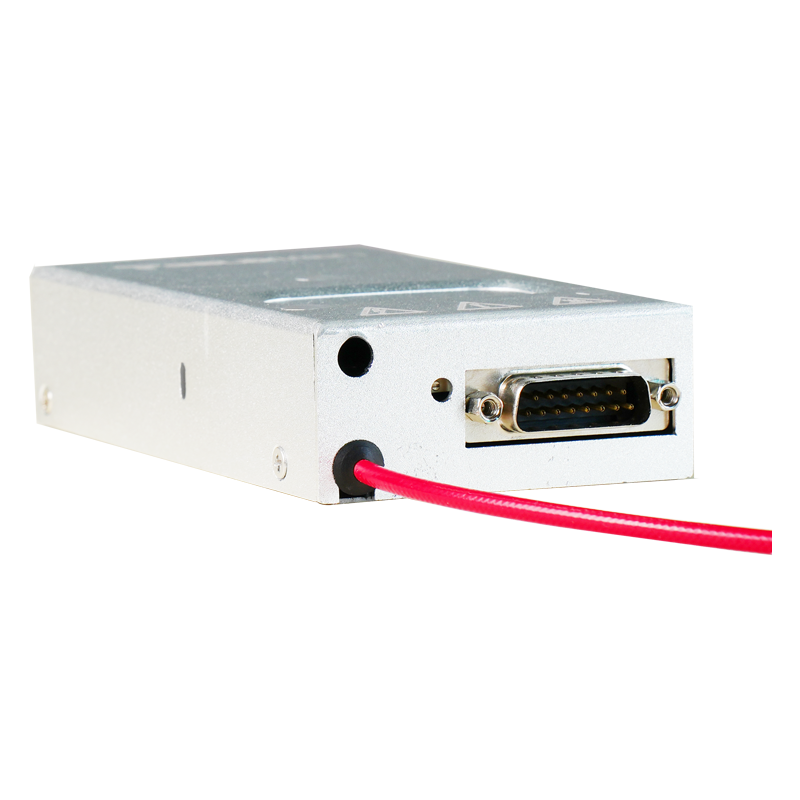
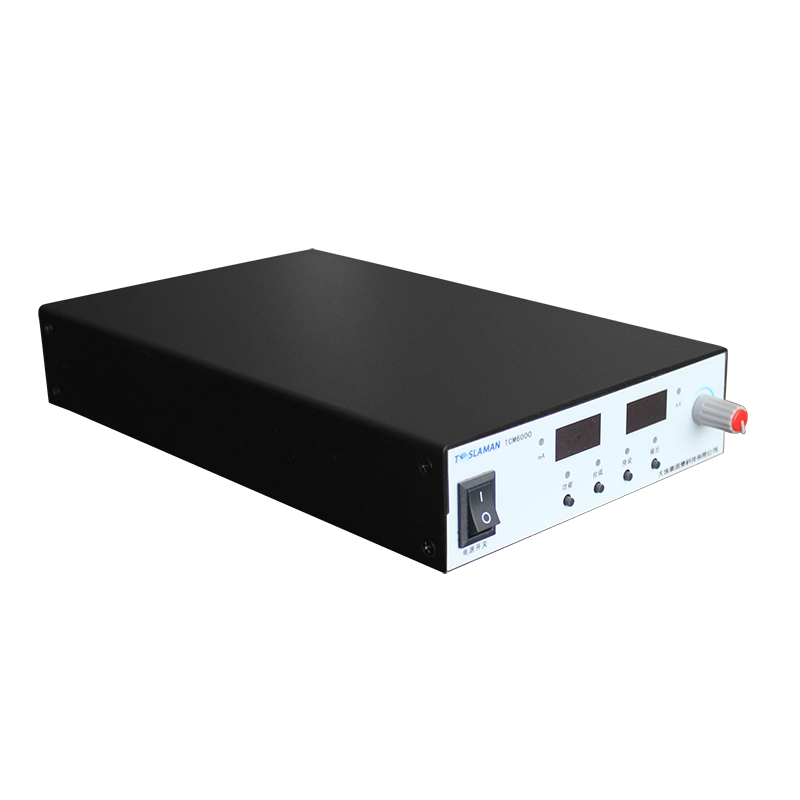
The high-voltage bias supply for the grid must be exceptionally fast and precise. As the beam scans across the part, it must turn on and off rapidly to define the melt regions. The current must be modulated in real-time to account for changes in geometry. For example, when scanning near the edge of a part, the heat can dissipate more quickly, requiring a higher beam current to maintain the same melt pool temperature. The grid bias supply must be able to respond to these commands from the control computer with microsecond latency, delivering a clean, rectangular current pulse without overshoot or ringing. An overshoot in current would deliver a momentary spike in power, potentially causing keyhole porosity.
Another critical factor is the stability of the beam's focus. The focus is controlled by the current in the focus lens, but the actual spot size on the powder bed is also a function of the space charge in the beam and the thermal properties of the cathode. If the beam defocuses even slightly, the power density drops, and the melt pool may become shallow and unstable, leading to lack-of-fusion porosity. The high-voltage supplies for the focus and deflection coils must be ultra-stable, with ripple levels so low that they do not cause any perceptible movement or blurring of the beam. This is particularly challenging because these are high-current, low-voltage supplies, but their stability is just as important as the high-voltage supplies for the gun.
The phenomenon of beam blooming is a specific concern in EBM. As the beam current is increased to deliver more power, the mutual repulsion of electrons within the beam, known as space charge, can cause the beam to expand. This blooming effect increases the spot size, reducing the power density and potentially leading to lack of fusion. To combat this, some advanced EBM systems use a technique called dynamic focusing. The focus lens current is modulated in synchrony with the beam current. When the beam current is high, the focus is increased to counteract the space charge blooming, maintaining a constant spot size. This requires a sophisticated control system that has a precise model of the beam's behaviour and can coordinate the high-voltage grid supply with the focus coil supply.
Furthermore, the detection of porosity during the build is an emerging field. By monitoring the signals from the electron beam itself, such as the backscattered electron signal or the X-rays emitted from the melt pool, it is possible to detect the formation of a pore in real-time. When a pore is detected, the control system could potentially take corrective action, such as re-melting the area with a second pass. This would require the high-voltage grid supply to be able to instantly re-apply the beam at the precise location, a challenging task given the speed of the scanning system.
In conclusion, the suppression of porosity in electron beam selective melting is a dynamic control problem that is fundamentally enabled by high-voltage engineering. The ability to modulate the beam current with microsecond precision, to maintain a stable focus under varying power levels, and to coordinate the beam parameters with the scan path, all depend on the performance of the high-voltage and high-current power supplies. As the demand for zero-defect additive manufacturing grows, the role of these power supplies will only become more critical, evolving from simple sources of energy into intelligent actuators in a closed-loop, real-time quality control system. This is the next frontier in the quest to build perfect parts, layer by layer.