Power-Adaptive High-Voltage Energy-Saving Control for Electrostatic Chucks
Electrostatic chucks (ESCs) are ubiquitous in semiconductor fabrication tools, providing the clamping force to hold wafers during processes. However, the high-voltage DC supplies powering these chucks operate continuously, often at full output voltage, regardless of the actual clamping force required. This represents a significant and overlooked source of energy consumption in a fab. Power-adaptive high-voltage control is an engineering philosophy aimed at minimizing this waste by dynamically adjusting the chuck voltage to the minimum necessary level, achieving substantial energy savings without compromising process stability or wafer safety.
The foundational principle is that the electrostatic clamping force is proportional to the square of the applied voltage for a Coulombic chuck and has a more complex, often near-linear, relationship for a Johnsen-Rahbek (JR) chuck. In any case, reducing the voltage reduces the force. For a given process step, the required clamping force is determined by several factors: the backside gas pressure used for thermal control, the shear forces from robot handling, and the pressure differentials or RF sheath forces in a plasma process. In many situations, especially during idle periods, wafer transfer, or non-plasma steps, the full clamping force is not needed. A power-adaptive system continuously evaluates these factors and calculates the minimum safe voltage.
Implementation requires a multi-input control system. Key inputs include the backside helium pressure, the chamber pressure, the RF power and frequency (if applicable), and the stage's kinematic state (moving, stationary, under robot arm). A real-time algorithm processes these inputs against a pre-loaded wafer-specific model. For example, during wafer loading, the system applies a low, safe voltage just sufficient to flatten the wafer against the pins. Once the wafer is seated and the backside gas is engaged, the voltage is ramped up to a level that prevents wafer slippage under the gas pressure. During a high-power plasma etch step with significant RF biasing, the algorithm calculates the additional shear force from ion momentum and increases the chuck voltage accordingly to prevent micro-slip, which can cause particle generation or etch non-uniformity.
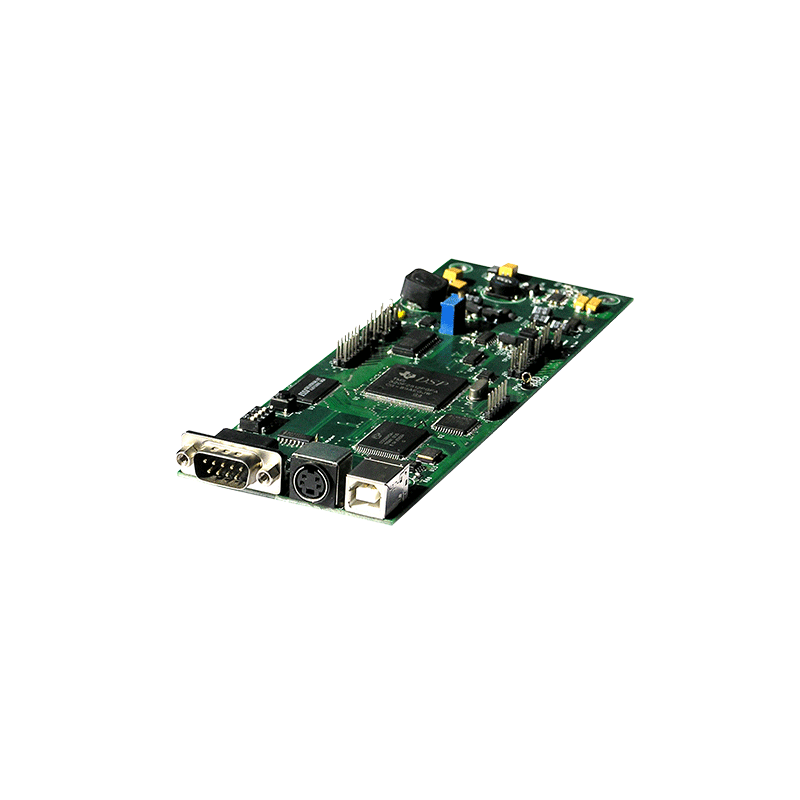
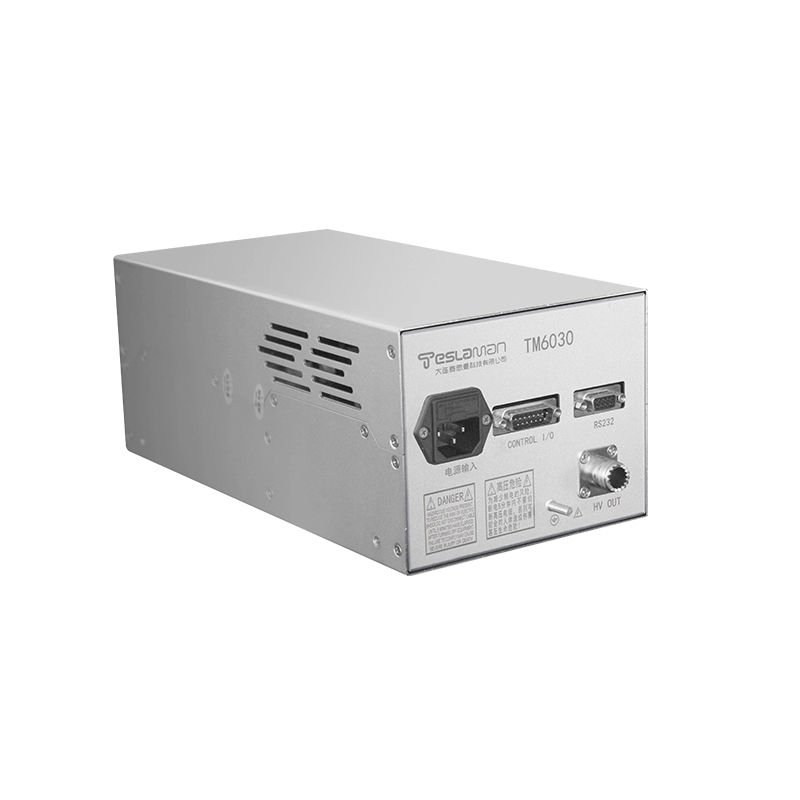
The heart of the system is the adaptive high-voltage power supply. It must be capable of rapid, smooth voltage transitions across a wide range, from perhaps a few hundred volts to several kilovolts. More importantly, it must maintain exceptional voltage stability at any setpoint, as a low voltage with high ripple is as detrimental as an unstable high voltage. The supply's feedback loop and regulation circuitry must be designed for optimal performance across its entire output range, not just at the maximum rating. This often involves adaptive gain control within the supply's internal controller to maintain consistent bandwidth and phase margin regardless of the operating point.
A critical safety and performance aspect is the monitoring of leakage current. In a JR chuck, the leakage current is integral to the clamping mechanism. As the voltage is reduced, the current drops. The control system must verify that the measured current remains within a valid window for the given voltage and wafer type. An abnormal current reading could indicate a loss of contact, contamination, or chuck degradation, triggering a fault recovery routine that may involve temporarily increasing the voltage to ensure wafer safety. This requires the power supply to have high-resolution current monitoring and fast digital communication to report this data to the master controller.
Energy savings are accrued not only from reduced direct power consumption of the high-voltage supply itself but also from reduced thermal load. Operating at a lower voltage reduces the power dissipated in the chuck's dielectric and in the plasma sheath for bipolar chucks in plasma tools. This can lessen the burden on the wafer cooling system, creating a secondary energy saving. Furthermore, by reducing the average electric field stress on the chuck dielectric, the adaptive system can potentially extend the operational lifespan of the chuck, reducing maintenance costs and downtime.
Integration into the tool's overall equipment efficiency (OEE) framework is the final step. The adaptive controller logs the voltage and power profiles for each wafer, providing data for analysis and optimization of the clamping recipes. Over time, machine learning algorithms can refine the models, learning from thousands of wafers to predict the optimal voltage trajectory for new process recipes. This transforms the high-voltage chuck supply from a static, always-on component into an intelligent, context-aware system that contributes directly to the sustainability and cost-effectiveness of semiconductor manufacturing.