High-Voltage Deposition for Ultrathin Seed Layers in Magnetron Sputtering
The fabrication of advanced microelectronic devices, magnetic sensors, and corrosion-resistant coatings often necessitates the deposition of ultrathin, continuous, and highly conformal seed layers. These initial layers, sometimes only a few nanometers thick, serve as the foundation for subsequent electrochemical plating or as adhesion-promoting interfaces. Magnetron sputtering is a preferred physical vapor deposition technique for this task due to its excellent directionality and material purity. However, achieving the desired properties in such thin films pushes the associated high-voltage power systems beyond their conventional operational envelopes, demanding extraordinary control over plasma initiation, stability, and ion bombardment energy.
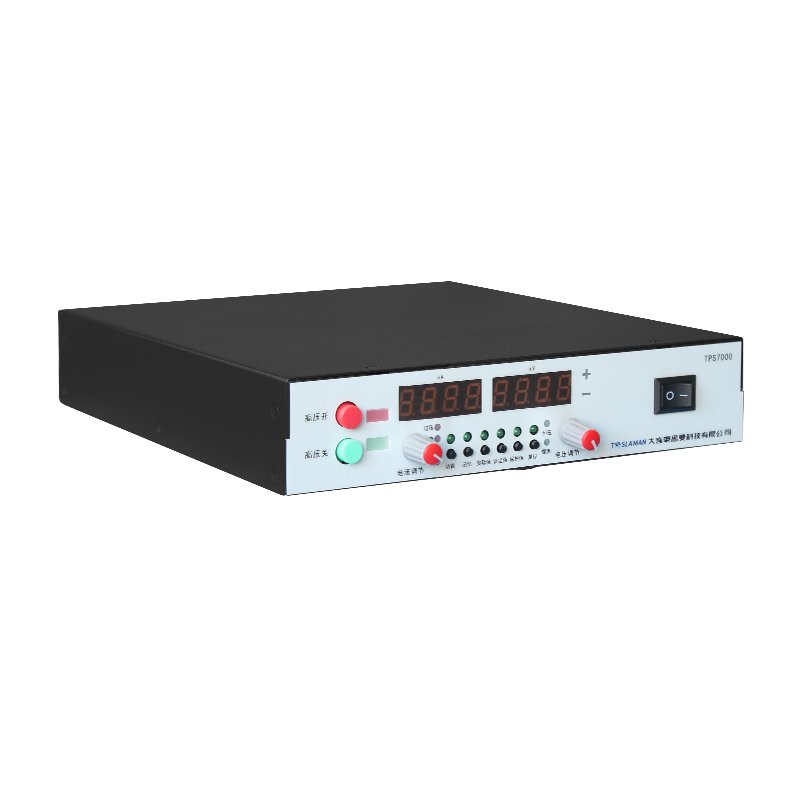
In a magnetron sputtering system, the high-voltage power supply, typically a DC or pulsed-DC source, provides the potential difference that ignites and sustains a plasma in front of a target material. For ultrathin seed layer deposition, the primary challenge is managing the very early stages of film growth. The first few atomic layers must wet the substrate uniformly, without island formation or excessive interfacial mixing. This requires precise command over the energy of the sputtered atoms and, more importantly, the flux and energy of ions arriving at the growing film surface. The high-voltage supply is the principal actuator for this control.
A standard DC magnetron operates with a constant voltage, leading to a relatively fixed plasma impedance and ion energy distribution. For seed layers, this is often insufficient. The process may begin with a substrate bias voltage, provided by a separate high-voltage supply, to gently pre-clean or activate the surface using argon ions at a low energy, perhaps 50-100 eV. This bias supply must be capable of delivering a stable, low-current discharge at these low voltages, which is challenging due to the high impedance of a weak plasma. It requires a supply with excellent output regulation and low ripple to prevent arcing during this delicate phase.
Once deposition commences, the properties of the magnetron discharge itself become critical. To promote dense, fine-grained growth in the initial monolayer, a higher ionization fraction of the sputtered material is beneficial. This is often achieved by operating the magnetron in a pulsed mode, where the high voltage is switched at frequencies from tens of kilohertz to several hundred kilohertz. The pulsed power supply must generate negative voltage pulses with fast rise and fall times. During the short off-time or positive reversal phase, electrons can be accelerated toward the target, enhancing ionization of the sputtered vapor in the region above the substrate. The parameters of this pulse—frequency, duty cycle, and negative/positive voltage amplitudes—directly influence the plasma chemistry and ion energy. Optimizing these for a specific seed layer material requires a power supply with wide, independent programmability of all these parameters.
Furthermore, the transition from the initial nucleation layer to the bulk of the thin seed layer might benefit from a dynamic process. One strategy involves starting with a higher sputtering pressure and lower target voltage to produce a more thermalized, less energetic flux for good adhesion, then gradually ramping to a lower pressure and higher voltage to increase density. This demands that the main magnetron high-voltage supply can execute a smooth, controlled voltage ramp according to a predefined recipe, all while maintaining plasma stability. Any instability or mode transition in the plasma during this ramp can introduce defects or variations in thickness.
The interplay between the target voltage and the substrate bias voltage is another layer of complexity. In some configurations, a phase-synchronized pulsed operation is employed, where the substrate bias pulse is timed relative to the magnetron pulse to attract ions only during specific portions of the cycle when the ionization of the sputtered material is highest. This requires two high-voltage pulsers to be synchronized with nanosecond precision, sharing a common timing reference. The control system must manage this timing and adjust it in real-time if process parameters shift.
From an engineering standpoint, these high-voltage systems must be designed for ultraclean operation. Even minute levels of output noise or periodic instability can cause nanoscale variations in film density or stress. The supplies are often equipped with multi-stage filtering and operate with switching frequencies carefully chosen to avoid harmonic coupling with the chamber's plasma resonance frequencies. Thermal management is also crucial, as the power levels, while not extreme, must be dissipated in a stable manner to prevent component temperature drift from affecting output stability over a long deposition run.
Ultimately, the high-voltage technology for ultrathin seed layer sputtering is about moving from brute-force material transfer to sculpted atomistic engineering. The power supplies are no longer simple on/off utilities but sophisticated, dynamic controllers of the plasma environment. Their ability to provide stable, programmable, and synchronized high-voltage waveforms directly enables the reproducible deposition of pinhole-free, adherent, and morphologically ideal seed layers that meet the stringent demands of next-generation nanotechnology and precision coating applications.