High-Voltage Interlock for Online Weight-Based Ampoule Rejection
In pharmaceutical filling lines for injectable products, glass ampoules are filled with a precise volume of liquid and then sealed. A critical quality control step is checking the fill weight of each ampoule to ensure it contains the correct dose, with no underfills or overfills. Modern high-speed lines perform this check in-line using sensitive weighing cells. When an ampoule is identified as out of specification, it must be instantly and reliably removed from the production stream. This rejection is often performed by a high-speed pneumatic or mechanical pusher. However, in environments where cleanliness and avoidance of mechanical contact are paramount, or where the ampoules are extremely fragile, a non-contact method using electrostatic deflection is employed. This method requires a precisely timed, high-voltage pulse system that is interlocked with the weighing system's decision.
The process flow is as follows: ampoules travel single-file on a conveyor past a precision weighing station. The weighing occurs dynamically, often using a vibrating or resonant weighing cell that can measure mass in milliseconds without stopping the ampoule. The measured weight is compared to set limits by a controller. If the ampoule fails, the controller tags it and predicts its arrival time at a downstream rejection station. The rejection station consists of one or more pairs of electrodes placed on either side of the conveyor. As the faulty ampoule passes between them, a high-voltage pulse is applied across the electrodes.
The ampoule, typically made of glass, is an insulator. However, the liquid inside is often conductive. The applied electric field induces a polarization charge on the ampoule. More effectively, if the filling liquid is even slightly conductive, the field exerts a net force on the ionic charges within it. This force, transmitted through the liquid, imparts a lateral impulse to the ampoule, nudging it off its path into a rejection chute. The voltage required depends on the electrode gap, the speed of the conveyor, and the desired deflection distance, but typically ranges from 5 to 20 kV. The pulse duration is very short, often less than a millisecond, to affect only the target ampoule and not its neighbors.
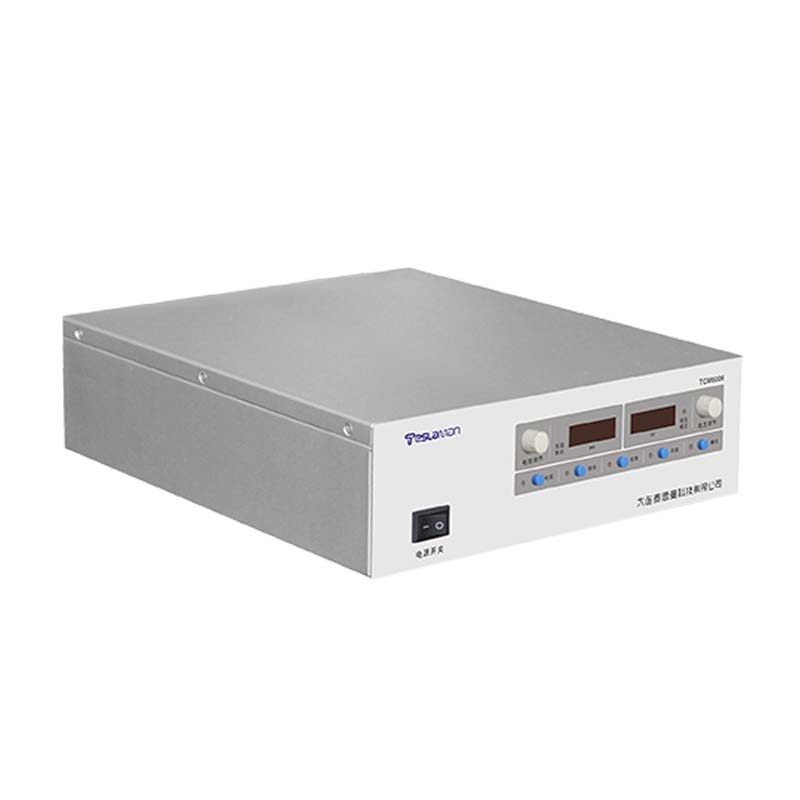
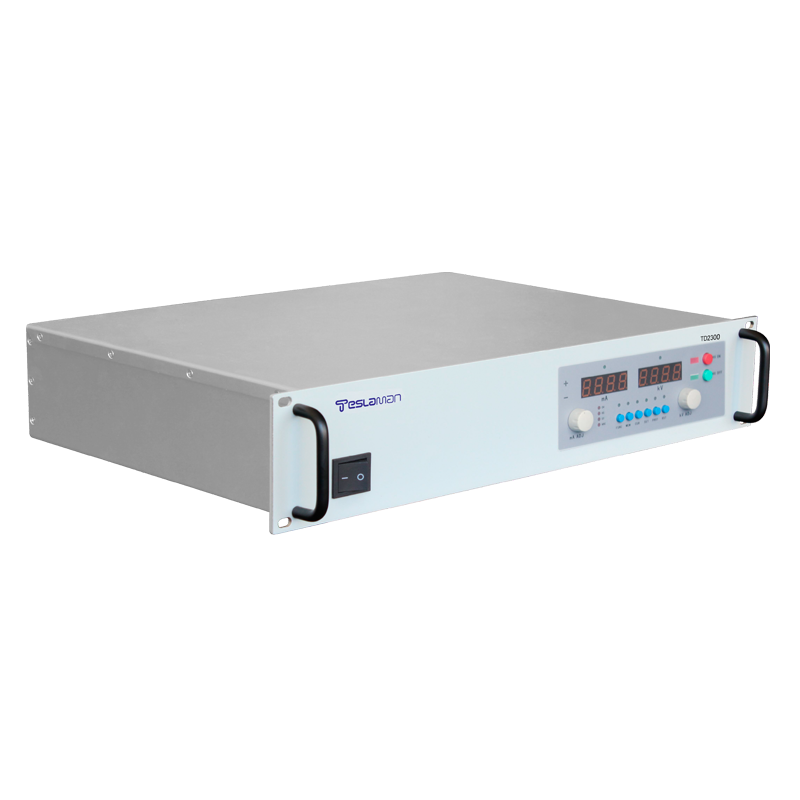
The high-voltage pulse generator for this application is characterized by its need for precise timing and synchronization rather than high average power. It is typically a capacitive discharge circuit. A capacitor is charged to the required voltage by a small high-voltage DC supply. A fast solid-state switch, such as an SCR or a MOSFET, is triggered by the rejection controller at the exact moment the faulty ampoule is centered between the electrodes. The switch discharges the capacitor through the electrode pair, creating the deflection pulse.
The interlock with the weighing system is the critical element. The controller must account for the conveyor speed, any vibration, and the latency of the high-voltage switch to fire the pulse at the microsecond-correct moment. This requires high-resolution encoders on the conveyor and a real-time controller with deterministic response. The system often includes a verification step, such as a photocell after the rejection station, to confirm the ampoule was actually deflected. If a miss occurs, the system can alert an operator or even stop the line.
Safety and reliability design is essential. The electrodes operate at high voltage in a potentially wet environment (spills can occur). They must be well-insulated and guarded. The pulse generator must be current-limited to prevent any hazard if an operator accidentally touches the electrodes. The system must also be immune to the electrical noise common in industrial environments. From a quality perspective, the non-contact nature of electrostatic rejection is a major advantage. It eliminates a mechanical component that can wear, generate particles, or break fragile ampoules. It allows for rejection at very high speeds, matching the throughput of modern filling lines that can process hundreds of ampoules per minute. The high-voltage system, therefore, provides a clean, fast, and reliable final gatekeeper for pharmaceutical dose accuracy.