Intelligent Dynamic Current Sharing in 320kV High-Voltage Power Supplies
At voltage levels of 320 kilovolts and beyond, the design of a single switching device or a single rectifier stack capable of handling the full power becomes impractical. The standard engineering solution is to use a modular approach, connecting multiple lower-voltage units in series to achieve the high voltage, and multiple lower-current units in parallel to achieve the high power. However, this introduces a critical challenge: ensuring that the current is shared equally among all the parallel paths. After fifty years in this field, I have seen that at 320kV, passive methods of current sharing are insufficient. The solution lies in intelligent, dynamic, closed-loop control systems that actively manage the current in each module.
The need for parallel connection arises from the limitations of semiconductor technology. A single high-voltage IGBT or thyristor may be rated for several kilovolts and several kiloamps, but at 320kV, we are dealing with voltages that are two orders of magnitude higher. The typical approach is to construct a converter using a series-parallel array of devices or, more commonly, using multiple identical power modules whose outputs are combined. For example, a 320kV supply might consist of dozens of modules, each rated for 10kV, with their outputs connected in series. Within each module, multiple switching devices might be connected in parallel to handle the current.
The problem with parallel connection is that no two devices or modules are identical. They have slight variations in their on-state resistance, their threshold voltage, and their switching speed. In a simple parallel connection, the device with the lowest resistance will conduct the most current, becoming hotter, which may further lower its resistance, leading to thermal runaway and eventual failure. This is a classic positive feedback loop that must be broken.
The traditional approach to current sharing is passive ballasting. This involves adding a small resistance in series with each parallel path. The voltage drop across this resistance provides negative feedback: if a device tries to conduct more current, the drop across its ballast resistor increases, reducing the voltage available to the device and limiting the current. This method is simple and robust, but it is also inefficient, as the ballast resistors dissipate power continuously. At the multi-megawatt power levels associated with a 320kV supply, this loss is unacceptable.
A more efficient approach is active current sharing. In this method, the current in each parallel path is measured by a sensor, and the signal is fed back to a control circuit that adjusts the drive to the individual switching devices. For example, in a paralleled IGBT configuration, the gate drive voltage can be fine-tuned for each device. A device carrying too much current can be commanded to turn on slightly slower or to have a slightly higher on-state resistance, forcing the current to redistribute to other devices. This adjustment happens on a cycle-by-cycle basis, ensuring that the currents are balanced dynamically.
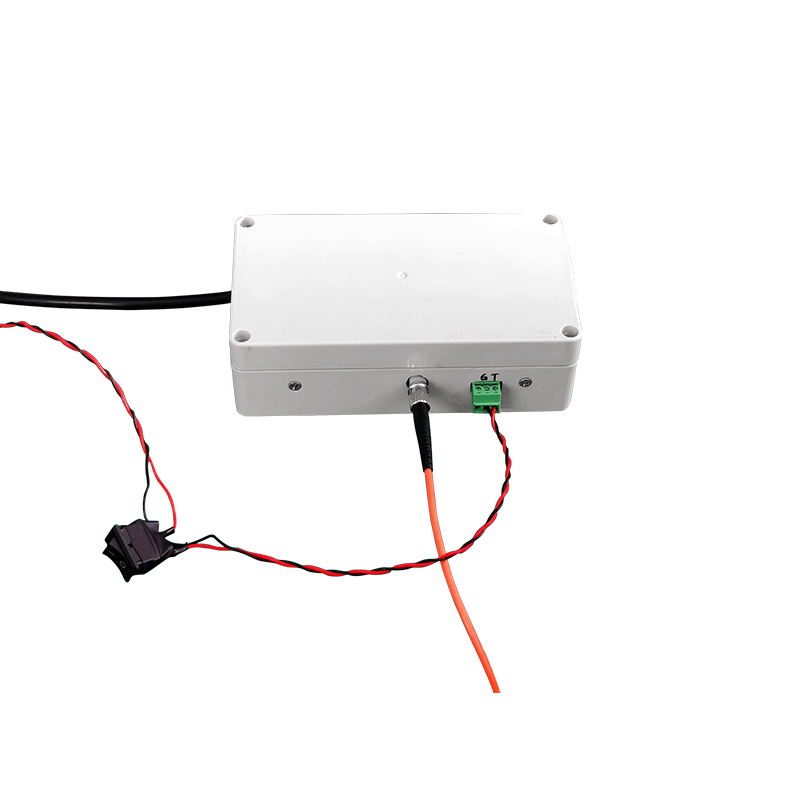
Implementing active current sharing in a 320kV supply, where the modules are connected in series and are all at different electrical potentials, presents a significant isolation challenge. The current sensors and the control electronics for a module operating at 300kV above ground cannot communicate directly with a central controller using conductive paths. The solution is to use fibre-optic communication. The current measurement is converted to a digital signal, which is then used to modulate a light source. This optical signal is transmitted via a fibre-optic cable to a receiver at ground potential. Similarly, the gate drive commands from the central controller are sent to the high-voltage modules via fibre optics. This creates a complete galvanic isolation between the high-voltage domain and the control domain.
The next level of sophistication is intelligent dynamic current sharing. This goes beyond simply balancing currents to actively optimising the performance and lifetime of the entire system. An intelligent system monitors not just the instantaneous current, but also the temperature of each device, its switching speed, and its accumulated stress. The control algorithm can then make decisions. For example, if one module is running hotter than the others, the controller might deliberately reduce its current share to allow it to cool down, even if this means other modules run slightly harder. This thermal management can significantly extend the life of the overall system.
Furthermore, the intelligent system can detect the early signs of failure. If a particular device's on-state voltage begins to increase over time, it could be a sign of degradation. The controller can flag this for predictive maintenance, allowing the module to be replaced during scheduled downtime rather than during a catastrophic failure. The dynamic current sharing algorithm can also compensate for a failed module. If one module in a series string fails short-circuit, the others must withstand the full voltage. The controller can detect this event and instantly shut down the entire system to prevent a cascade of failures. If a module fails open-circuit, the controller can command the remaining modules to increase their output voltage to compensate, allowing the system to continue operating at a reduced power level until the failed module can be replaced.
The implementation of such an intelligent system requires a robust digital infrastructure. Each module must have its own local microcontroller that handles the high-speed current sensing and gate drive, and communicates with a central system controller. The communication protocol must be deterministic and have low latency to ensure that the current sharing correction can be applied within a single switching cycle. The software algorithms must be thoroughly tested to ensure they are stable under all operating conditions.
In conclusion, the design of a 320kV high-voltage power supply is a masterclass in system engineering. The need to parallel numerous devices and modules demands an active approach to current sharing. The evolution from passive ballasting to intelligent, fibre-optically isolated, dynamic control systems represents a major advance in reliability and efficiency. These intelligent supplies not only balance currents but also manage thermal stress and predict failures, ensuring that the massive power required for applications like particle accelerators or high-voltage direct current transmission is delivered safely and reliably. This is the culmination of five decades of progress in power electronics and control theory.