High-Voltage Destructive Testing for Ampoule Seal Strength Validation
The pharmaceutical industry relies on glass ampoules for the storage and preservation of many sensitive liquid drug products. These small, sealed containers offer an excellent barrier against moisture and gases, ensuring the stability and sterility of their contents. However, the integrity of the seal, formed by melting the glass at the tip of the ampoule neck, is of paramount importance. A microscopic crack or a weak point in this seal can compromise sterility and lead to product loss. In my decades of consulting with packaging engineers, I have seen numerous methods for testing seal strength, but one of the most elegant and definitive is the use of high-voltage destructive testing. This technique applies a precisely controlled electrical stress to the seal, exploiting the dielectric properties of glass to identify and quantify its weakest points.
The principle behind high-voltage ampoule testing is rooted in the dielectric strength of glass. Glass is an excellent insulator, capable of withstanding very high electric fields without conducting. However, if the glass has a flaw, such as a micro-crack, a thin spot, or an inclusion, the local electric field can be dramatically enhanced. When a sufficiently high voltage is applied across the glass, this enhanced field can exceed the dielectric strength of the material at that point, causing a localized breakdown. This breakdown manifests as a tiny spark or arc that travels through the flaw, effectively puncturing the glass. In a destructive test, this puncture is the desired outcome, as it reveals the presence and location of the weakest point in the seal.
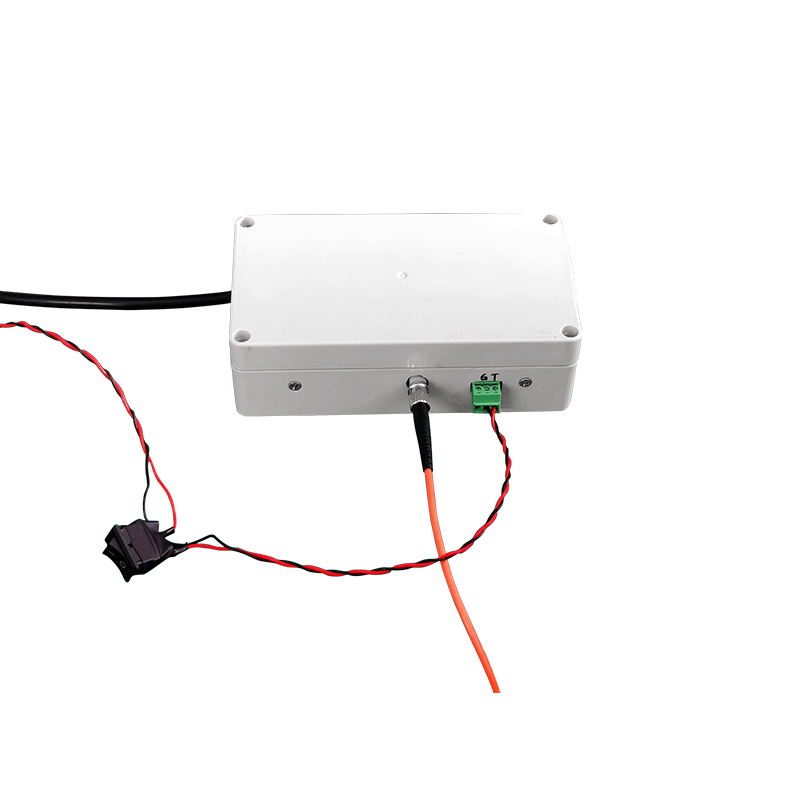
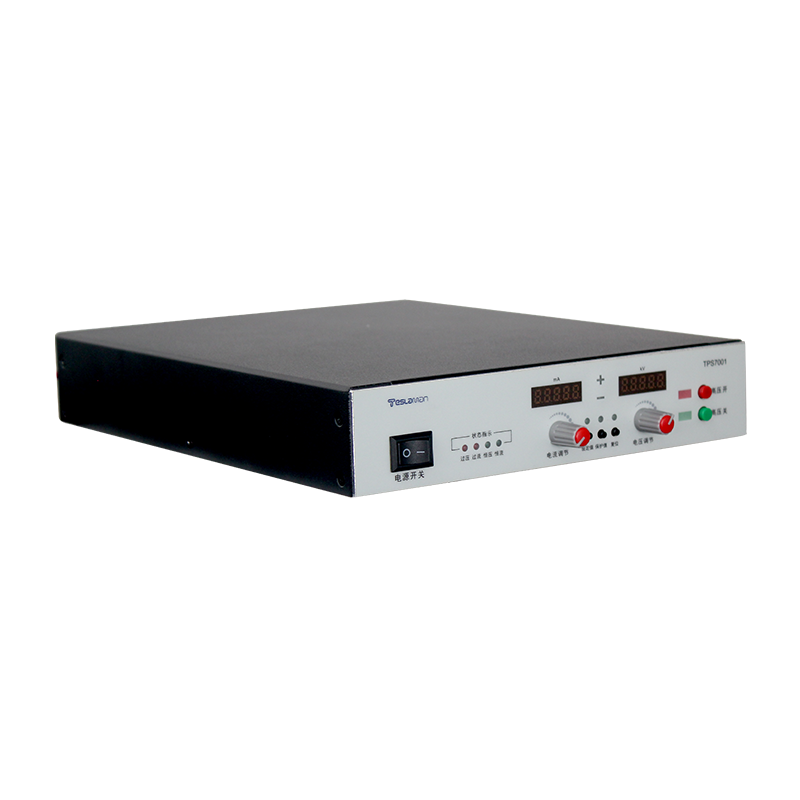
The execution of such a test requires a high-voltage power supply with very specific characteristics. The voltage required to break down a typical glass ampoule seal can range from a few kilovolts to over 20 kilovolts, depending on the glass thickness, the composition, and the nature of any flaws. The supply must be capable of delivering this voltage in a controlled, repeatable manner. It is not sufficient to simply apply a voltage and wait for a breakdown. The rate at which the voltage is increased, the waveform, and the current limit all influence the test results.
A typical test setup involves placing the ampoule between two electrodes. One electrode is in contact with the liquid inside the ampoule, often through the conductive rubber or a metal spike that penetrates the seal, or by capacitive coupling. The other electrode is positioned externally, near the seal to be tested. The high-voltage supply is then programmed to ramp up the voltage at a specific rate, typically measured in volts per second. During this ramp, the supply continuously monitors the voltage and the current. As long as the glass is intact, the current remains extremely low, in the nanoamp or picoamp range, representing only the capacitive charging current and any leakage through the glass.
When a breakdown occurs, the current rises dramatically and instantaneously. The power supply must detect this current spike and react within microseconds. Its primary job at the moment of breakdown is to limit the energy delivered into the arc. If too much energy is allowed to flow, the arc can become a large, destructive event that shatters the entire ampoule, rather than creating a small, diagnostic puncture. This energy limiting is achieved through a combination of a fast-acting electronic switch and a current-limiting resistor in series with the output. The resistor limits the peak current, and the switch opens to disconnect the supply entirely once the breakdown is detected. The total energy delivered is thus confined to a few millijoules, just enough to create a tiny hole that clearly marks the flaw.
The voltage at which the breakdown occurs is the critical data point. This breakdown voltage is a measure of the seal's strength. A low breakdown voltage indicates a significant flaw, while a high breakdown voltage indicates a robust seal. By testing a statistically significant sample of ampoules from a production batch, a manufacturer can build a distribution of breakdown voltages. This distribution provides a quantitative assessment of the overall seal quality and process consistency. A shift in the distribution towards lower voltages is an early warning of a problem in the sealing process, such as a misaligned flame, a contaminated glass surface, or a worn-out sealing jaw.
In my laboratory, we have refined this technique to study the effects of different sealing parameters on seal integrity. We built a test fixture that allowed us to precisely control the flame temperature, the dwell time, and the rotation of the ampoule during sealing. We then used high-voltage destructive testing to evaluate the seals. The results were illuminating. We found that there was an optimal range of parameters that produced consistently high breakdown voltages. Deviations in either direction, too little heat or too much, resulted in weaker seals and a wider distribution of breakdown voltages. The high-voltage test provided a rapid, quantitative metric that correlated perfectly with more time-consuming and subjective microscopic inspection.
The power supply for this application must be highly reliable and repeatable. The voltage ramp must be linear and free from noise or glitches that could trigger a premature breakdown. The current limit and energy cutoff must be precisely calibrated. Modern instruments incorporate digital control and data logging, allowing the breakdown voltage and the waveform of the event to be captured and stored for later analysis. This data can be used for statistical process control, helping to ensure that every batch of ampoules meets the highest standards of quality and patient safety. The high-voltage spark, once a feared phenomenon, is thus harnessed as a precision tool for quality assurance in one of the most critical aspects of pharmaceutical packaging.