Dose Uniformity Control and Online Monitoring System of High Voltage Power Supply for Irradiation Sterilization
Irradiation sterilization has become a widely adopted method for sterilizing medical devices, pharmaceuticals, and food products. The process uses ionizing radiation to destroy microorganisms without significant heating of the product. The high voltage power supply that drives the radiation source must provide controlled output to ensure uniform dose delivery throughout the product. Dose uniformity and online monitoring are essential for validating the sterilization process and ensuring product safety.
Irradiation sterilization uses gamma rays from radioactive sources, electron beams from accelerators, or X rays from converted electron beams. Each type of radiation has characteristics that affect its penetration and dose distribution. Electron beam irradiation offers the advantages of controllable output, no radioactive source handling, and the ability to turn off the radiation source when not in use. The electron beam energy determines the penetration depth, with higher energies enabling treatment of thicker products.
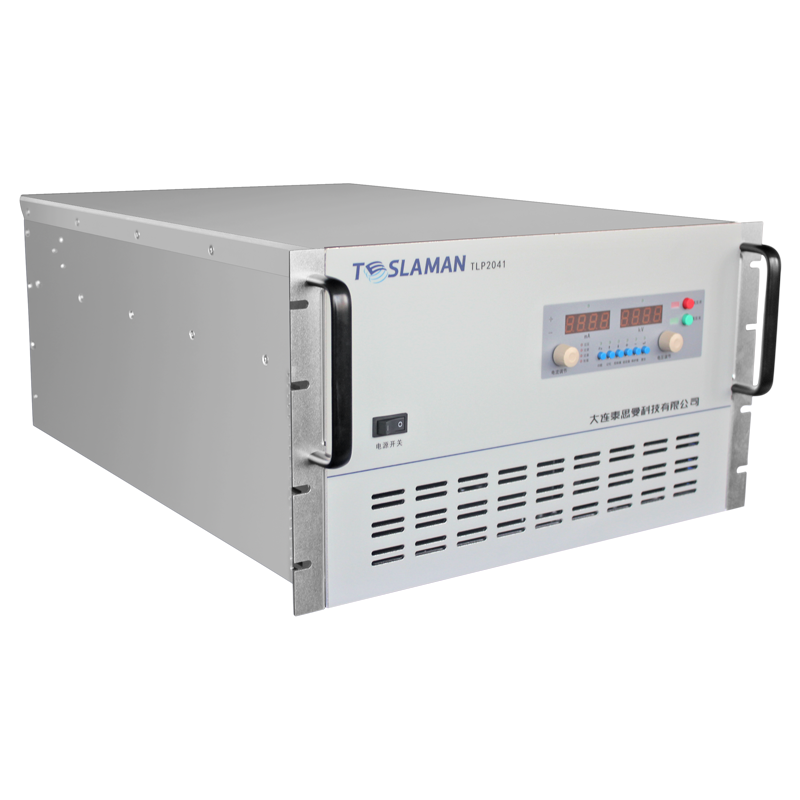
The high voltage power supply for an electron beam irradiator provides the acceleration voltage for the electron beam. Typical operating voltages range from hundreds of kilovolts to several megavolts depending on the required penetration. The beam current determines the dose rate, with higher currents delivering higher dose rates. The power supply must provide stable, controllable output for reproducible sterilization processes.
Dose uniformity refers to the consistency of the absorbed dose throughout the product volume. The sterilization efficacy depends on the minimum dose received by any part of the product. Overdosing can cause product degradation, particularly for sensitive materials. Achieving uniform dose maximizes the sterilization efficacy while minimizing product damage.
The dose distribution in the product depends on the radiation characteristics and the product geometry. Electron beams have a finite penetration depth, with the dose initially increasing with depth before decreasing. The depth dose curve depends on the electron energy and the product density. Products thicker than the electron range require multiple sided irradiation to achieve uniform dose.
Product conveying systems move the product through the irradiation field to achieve dose uniformity. Conveyor speed, product orientation, and the number of passes affect the dose distribution. The conveyor speed must be coordinated with the beam current to deliver the required dose. Multiple pass configurations, where the product passes through the beam more than once, can improve uniformity for complex product geometries.
Beam scanning spreads the electron beam across the product width. Electromagnetic scanners deflect the beam in a controlled pattern, typically a zigzag or raster pattern. The scan width, scan frequency, and scan uniformity affect the dose uniformity across the product. The scan pattern must cover the entire product width with uniform intensity.
The high voltage power supply affects dose uniformity through its influence on the beam energy and current. Voltage variations cause changes in the electron energy, affecting the penetration depth and the depth dose curve. Current variations cause changes in the dose rate, affecting the dose delivered per unit time. Stable power supply output is essential for reproducible dose delivery.
Online dose monitoring provides real time measurement of the dose during irradiation. Dosimeters placed at various positions measure the local dose rate or accumulated dose. Common dosimeter types include ionization chambers, semiconductor detectors, and film dosimeters. The dosimeter signals provide feedback for process control and documentation for validation.
Ionization chambers measure the radiation by collecting the ionization produced in a gas volume. The chamber current is proportional to the dose rate. Ionization chambers can be placed at fixed positions to monitor the beam output, or they can be scanned through the beam to measure the dose distribution. Temperature and pressure correction factors account for variations in the gas density.
Semiconductor detectors offer advantages of small size and direct electronic readout. Silicon diodes produce current proportional to the radiation intensity. The small size enables placement in locations where ionization chambers would not fit. However, semiconductor detectors may have energy dependence and radiation damage effects that require correction.
Process interlocks ensure that the irradiation meets the specified requirements before the product is released. The interlock system monitors the dose measurements, the conveyor operation, and the power supply status. If any parameter deviates from specification, the interlock stops the process and prevents release of the product. This safety system ensures that only properly sterilized products reach the market.
Documentation and traceability are essential for regulatory compliance in medical device and pharmaceutical sterilization. The online monitoring system records the dose delivered to each product lot, along with the process parameters and any deviations. This documentation provides the evidence needed to demonstrate that each product received the required sterilization treatment.