High-Voltage Light Sources for Hyperspectral Imaging in Plastic Sorting
The recycling of post-consumer plastics is a critical component of the circular economy, yet it remains a formidable challenge due to the sheer variety of polymer types, colours, and additives. Hyperspectral imaging has emerged as a powerful technique to identify and sort these materials based on their unique spectral signatures. However, the success of this technology hinges on the ability to illuminate the waste stream with intense, stable, and spectrally broad light. After fifty years in high-voltage engineering, I have witnessed the evolution of the specialised light sources that make this possible, where high voltage is not an afterthought but the fundamental enabler of the illumination required for high-speed, high-accuracy sorting.
The principle of hyperspectral imaging is straightforward. As a stream of plastic flakes passes under a camera, it is illuminated by a light source. The camera captures not just a red-green-blue image, but a full spectrum of reflected light at every pixel. Different polymers, such as polyethylene terephthalate and polypropylene, have different absorption and reflection characteristics across the visible and near-infrared spectrum. By analysing these spectra, the system can identify the material of each flake and direct a jet of air to sort it into the appropriate bin.
The quality and speed of this sorting process are directly limited by the light source. The camera requires a certain number of photons to create a usable spectrum. A brighter source allows for shorter exposure times, which in turn allows for a faster conveyor belt and higher throughput. Furthermore, the source must be spectrally broad, covering the range from visible light to the short-wave infrared, to capture the identifying features of all relevant plastics. Finally, the source must be exceptionally stable. Any fluctuation in the intensity or spectrum of the light from one moment to the next will be misinterpreted as a change in the material, leading to sorting errors.
The most common high-intensity light sources for this application are gas-discharge lamps, such as xenon flash lamps or quartz-tungsten-halogen lamps, the latter often operated at higher than normal voltages to increase colour temperature and output. A xenon flash lamp, for example, consists of a glass tube filled with xenon gas at high pressure. When a high-voltage pulse, typically several kilovolts, is applied across the electrodes, the gas ionises and conducts, producing an intense, broad-spectrum flash of light. The duration of this flash can be as short as a few microseconds, which is ideal for freezing the motion of the fast-moving plastic flakes.
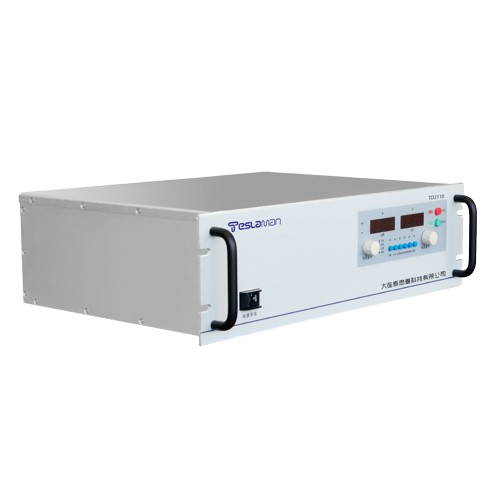
The power supply for a xenon flash lamp is a specialised piece of high-voltage engineering. It consists of a high-voltage DC power supply that charges a capacitor bank to a voltage of 500 to 2000 volts. A trigger circuit generates a very high voltage, often 10 to 20 kilovolts, to ionise the gas in the lamp and initiate the main discharge. The energy stored in the capacitor bank is then dumped through the lamp in a short, intense pulse. The shape of this current pulse, controlled by the inductance and resistance in the circuit, determines the temporal profile of the light output. A fast, high-current pulse produces a very bright, short flash; a slower, lower-current pulse produces a longer, less intense flash. The power supply must be designed to deliver these pulses reliably, millions of times, without degrading the lamp or the electronics.
For continuous-wave illumination, as opposed to stroboscopic flashing, quartz-tungsten-halogen lamps are often used. These are incandescent lamps, but they are typically overdriven to achieve a higher colour temperature, which shifts their spectrum into the near-infrared where many polymers have strong identifying features. Overdriving a halogen lamp means applying a voltage higher than its nominal rating. This increases the filament temperature, producing more light and a bluer spectrum, but it also shortens the lamp's life. The high-voltage power supply for these lamps must therefore be a very stable, regulated DC source. It must maintain the voltage to within a fraction of a percent to ensure that the colour temperature and intensity are constant. Any ripple on the output will cause the filament to heat and cool slightly, modulating the light output and introducing noise into the hyperspectral data.
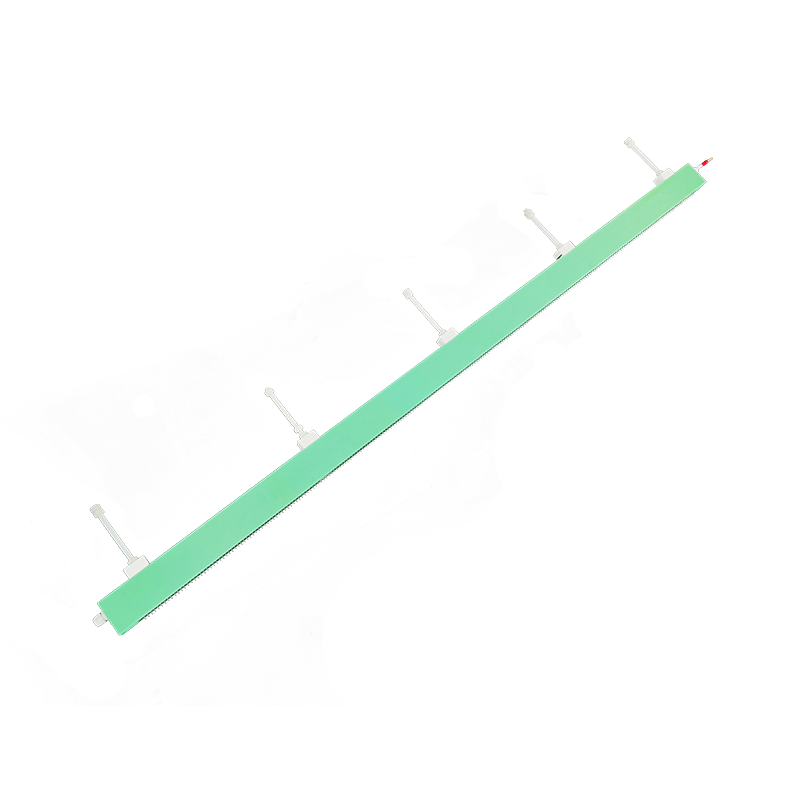
The trend in modern sorting systems is towards light-emitting diode technology, but even here, high voltage plays a role. While individual LEDs operate at low voltage, high-power arrays for illumination require a substantial amount of electrical power. To distribute this power efficiently, the arrays are often designed to operate at a higher DC voltage, such as 48 volts or even higher, to reduce current and resistive losses in the cabling. The power supply for an LED array is a high-efficiency, switch-mode converter that steps down the mains voltage to this intermediate DC level. The stability of this supply is critical, as any fluctuation in the drive current will change the intensity and, to a lesser extent, the spectrum of the LEDs.
Furthermore, the synchronisation between the light source and the camera is paramount. In a flash lamp system, the high-voltage trigger pulse must be precisely timed to the camera's exposure window. This requires a low-jitter trigger generator that is slaved to the conveyor belt's encoder. If the flash fires too early or too late, the image will be dark or blurred. This synchronisation is a form of high-voltage timing control that is just as important as the generation of the voltage itself.
In conclusion, the high-speed, high-accuracy sorting of plastics by hyperspectral imaging is a technology made possible by advanced high-voltage light sources. Whether it is the multi-kilovolt trigger and discharge of a xenon flash lamp, the precise overvolting of a halogen lamp, or the efficient power conversion for an LED array, the performance of the light source is the limiting factor in the sorting process. The high-voltage power supplies that drive these sources must be stable, efficient, and precisely controllable, operating reliably in the harsh environment of a recycling facility. They are the unsung heroes of the circular economy, illuminating the path to a more sustainable future.