High-Voltage Sorting Systems for Plastic Identification Using Laser-Induced Breakdown Spectroscopy
Plastic waste recycling represents one of the most significant environmental challenges of the modern era.Countries worldwide produce tens of millions of tons of plastic waste annually,with recycling rates remaining disappointingly low due in part to the difficulty and cost of sorting mixed plastic wastes.Laser-induced breakdown spectroscopy has emerged as a powerful analytical technique for rapid plastic identification,and the integration of high-voltage sorting systems enables automated separation of plastic streams by composition.
Laser-induced breakdown spectroscopy operates by focusing a high-intensity laser pulse onto the sample surface.The laser creates a microplasma that vaporizes and excites sample atoms and molecules.As the plasma cools,excited species emit characteristic light at wavelengths specific to the elements present in the sample.Spectral analysis of this emission identifies the elemental composition,which correlates with the plastic polymer type.
Different plastic polymers have distinctive elemental signatures that enable clear differentiation.Polyethylene and polypropylene contain primarily carbon and hydrogen.Polyvinyl chloride contains chlorine in addition to carbon and hydrogen.Polyethylene terephthalate contains oxygen from the ester groups.Polystyrene contains aromatic rings that produce characteristic carbon emission.Polycarbonate contains oxygen and aromatic structures.This elemental differentiation enables reliable polymer identification.
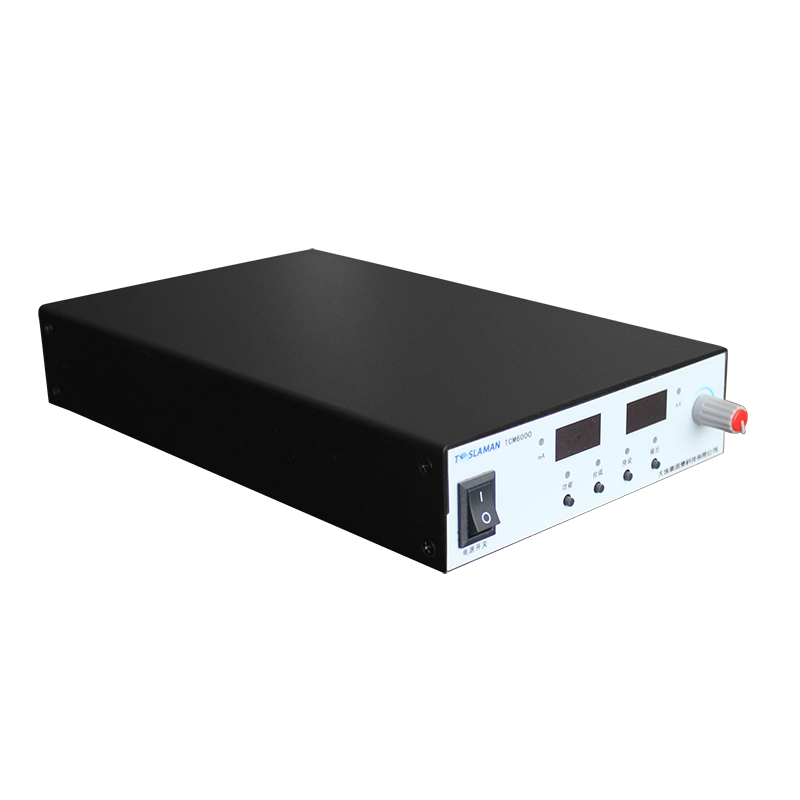
High-voltage sorting systems employ electrostatic separation principles to divide plastic streams based on their electrical properties or to provide the energy for plasma excitation in the spectroscopic analysis.The sorting process requires several stages:identification,decision making,and physical separation.
In identification stage,a high-repetition-rate laser creates plasma on each plastic fragment as it passes through the detection zone.Spectrometers capture the emitted light and process the spectral data in real-time.Modern systems can complete identification in less than one millisecond,enabling sorting at commercial throughput rates.
The decision-making stage analyzes the spectral data using pattern recognition algorithms.Classification models trained on reference spectra of pure polymers identify the plastic type with high accuracy.Advanced systems can identify polymer blends and detect contaminants that might otherwise cause misclassification.
Physical separation employs various mechanisms depending on plastic characteristics and sorting requirements.Electrostatic separation uses high-voltage electrodes to charge plastic particles based on their surface properties and then deflects them into collection bins using electric fields.Air knives provide mechanical separation by directing high-velocity air jets at classified particles to push them into appropriate paths.Chutes and diverter gates offer simpler mechanical separation for larger fragments.
High-voltage systems for plastic sorting must provide reliable operation in challenging industrial environments.Continuous operation requires robust design that tolerates dust,humidity,and temperature variations.Safety systems prevent dangerous situations arising from the high-voltage components.
System configuration depends on the specific sorting requirements.Single-material sorting separates one polymer type from a mixed stream.Multi-material sorting separates multiple polymer types simultaneously into distinct output streams.Quality control sorting identifies and removes contaminants or off-specification material from otherwise clean streams.
Performance metrics for sorting systems include throughput rate,sorting accuracy,purity of output streams,and recovery rate.Throughput rates for commercial systems range from one ton per hour to ten tons per hour depending on fragment size and sorting complexity.Sorters achieve purities exceeding ninety-nine percent for many polymer types when properly configured and operated.
Pre-processing of plastic waste significantly affects sorting performance.Shredding creates appropriately sized fragments that flow consistently through the sorting system.Washing removes contaminants such as paper labels,adhesives,and residues that interfere with spectroscopic analysis.Drying prevents water-related spectral interference and ensures reliable particle handling.
Economic considerations favor laser-induced breakdown spectroscopy sorting compared to alternative technologies.Spectral analysis provides direct polymer identification without requiring tracers or markers that add cost to virgin materials.Rapid analysis enables high throughput that reduces labor costs while improving sorting accuracy increases the value of recovered materials.
Environmental benefits of effective plastic sorting are substantial.High-quality recycled plastics can replace virgin materials in many applications,reducing petroleum consumption and associated emissions.Effective recycling also reduces plastic waste in landfills and oceans,addressing a significant environmental pollution source.
Technical challenges remain in extending sorting capabilities to include additional polymer types,improving detection of polymer blends,and handling heavily contaminated or weathered plastic waste.Research continues to advance classifier algorithms,improve spectral data quality,and develop sorting configurations that address these limitations.
Integration of laser-induced breakdown spectroscopy sorting with other recycling technologies creates comprehensive plastic waste processing facilities.Combined with density separation,magnetic separation,and eddy current separation,the technique enables efficient processing of complex waste streams.
In summary,high-voltage sorting systems integrated with laser-induced breakdown spectroscopy provide powerful capabilities for plastic waste recycling.The technology enables automated,high-throughput sorting that transforms mixed plastic waste into valuable sorted streams suitable for recycling,supporting both economic and environmental objectives.