Electrostatic Flocking Fiber Length Classification High-Voltage Electric Field Design
Electrostatic flocking represents a versatile technology for applying oriented fiber coatings to various substrates.The process uses high-voltage electric fields to orient and accelerate fibers onto adhesive-coated surfaces,creating materials with unique properties for applications including filtration,textiles,and technical fabrics.Fiber length classification within the high-voltage electric field is crucial for achieving consistent product quality.
The electrostatic flocking process involves several sequential steps.Fibers are first dispensed into a high-voltage electric field.The field orients the fibers along field lines and imparts velocity toward the grounded substrate.Fibers embed in adhesive on the substrate surface,maintaining their oriented configuration after the field is removed.
Fiber length significantly affects the flocking process and resulting product characteristics.Shorter fibers tend to align more readily and produce smoother,more uniform surfaces.Long fibers create thicker,more porous coatings with different tactile and functional properties.For specific applications,controlled fiber length distribution is essential for meeting performance requirements.
High-voltage electric field design for fiber length classification exploits the relationship between fiber length and dynamic behavior in electric fields.Shorter fibers experience less drag relative to their mass and accelerate more rapidly in the field.Long fibers have higher mass and experience greater air resistance,resulting in slower acceleration and potentially different orientation behavior.
The implementation of length classification in high-voltage flocking systems typically involves multiple stages.Fiber feeding systems introduce fibers into the classification region where field parameters are optimized for separation.Differential acceleration causes fibers to separate spatially as they travel toward the substrate.Fiber collection at the substrate captures the classified fibers in distinct zones or in sequence to build layered structures.
Technical design of classification systems requires attention to several parameters.Field strength determines the force acting on fibers and consequently their acceleration. Field uniformity ensures consistent classification across the working width.Fiber charging mechanisms affect the force experienced by different fiber types.
Air flow management plays an important role in fiber classification.Air currents can assist or oppose fiber motion depending on system design.Turbulence affects fiber trajectories and classification precision.Careful air flow control enables optimization of classification accuracy.
In industrial flocking applications,achieving consistent fiber length distribution improves product quality and reduces waste.Classified flocking enables production of graded density materials with tailored properties.Performance requirements for filtration media,for example,depend on precise fiber length control.
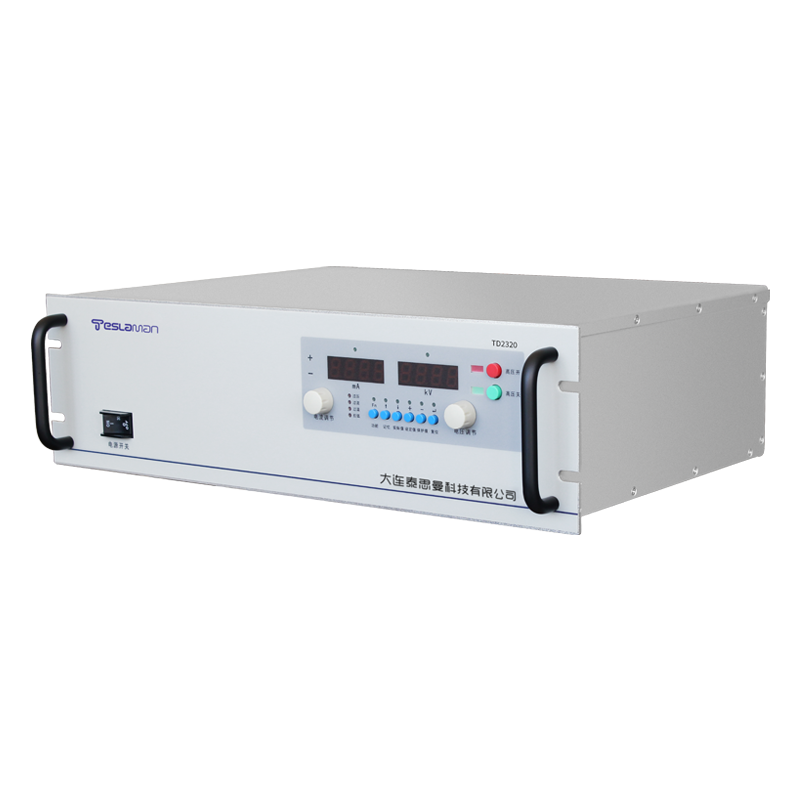
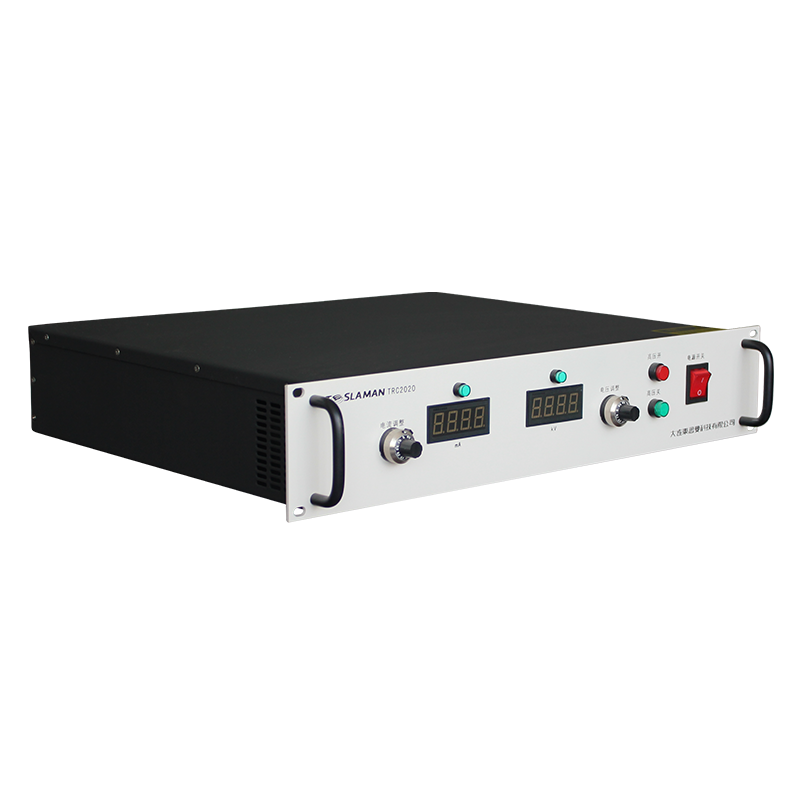
The high-voltage power supplies for flocking systems must provide stable output despite varying load conditions as fibers move through the field.Fast response to control commands enables rapid adjustment of field parameters for different fiber types.Automatic voltage regulation compensates for environmental changes.
Safety considerations in electrostatic flocking systems require comprehensive attention.High voltages present electrical hazards that necessitate interlock systems and grounding provisions.Fiber dust can create fire or explosion hazards in certain environments.Proper ventilation and dust collection protect workers and equipment.
Economic considerations favor systems that achieve efficient classification with minimal fiber waste.Energy consumption of high-voltage systems affects operating costs.Maintenance requirements for electrode cleanliness and insulator condition impact overall equipment effectiveness.
Future developments in electrostatic flocking fiber classification will likely incorporate improved sensor systems and control algorithms.Real-time fiber length measurement can enable closed-loop control of classification parameters.Advanced electrode designs will improve field uniformity and classification precision.
In summary,electrostatic flocking fiber length classification using high-voltage electric field technology provides valuable capabilities for producing specialized fiber materials.Through careful design and control of electric field parameters,fiber length classification enables production of materials with tailored properties for diverse applications.