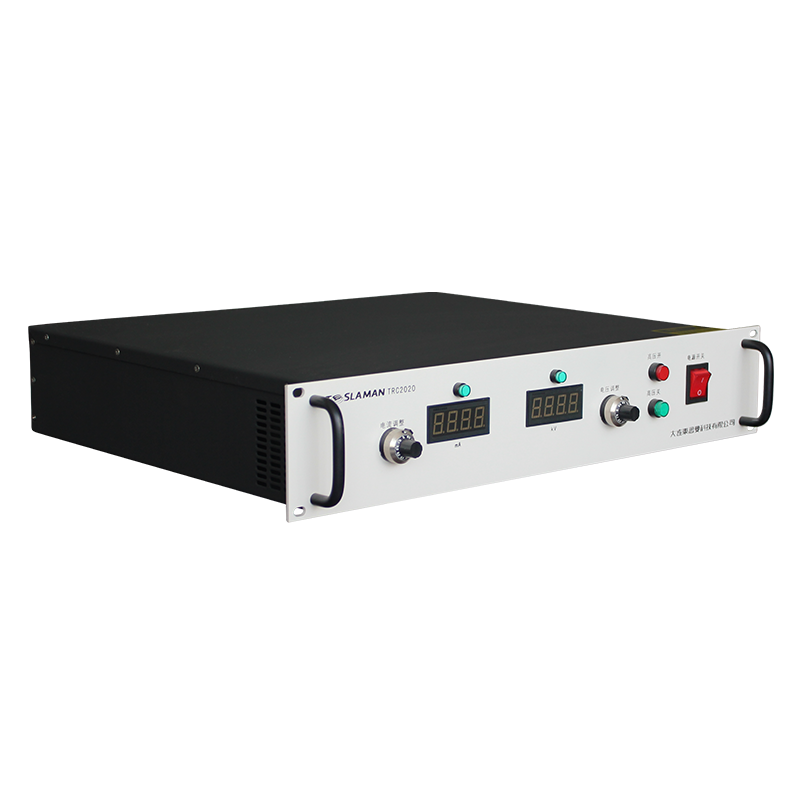
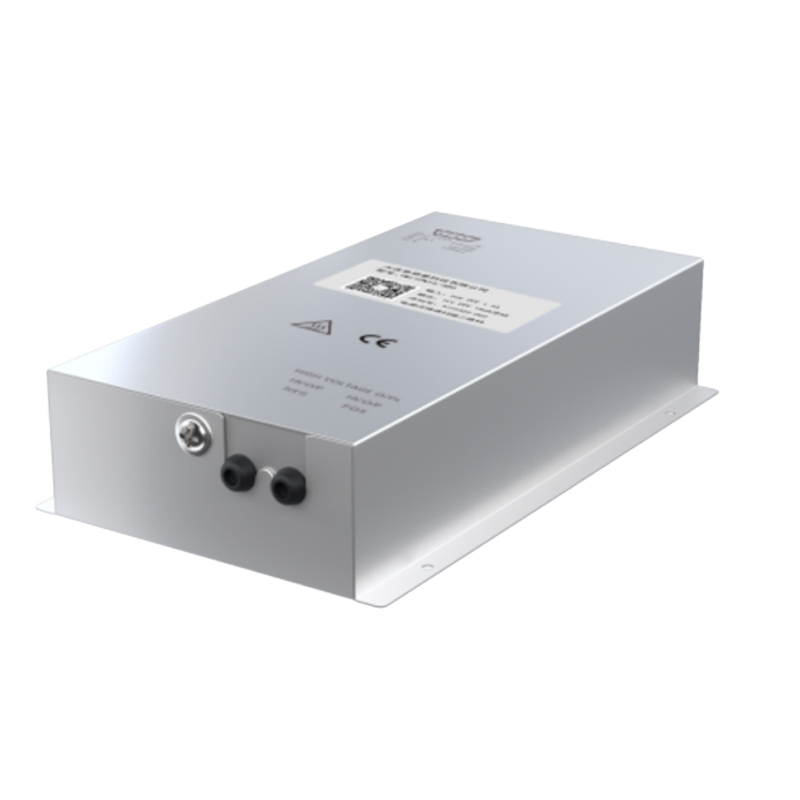
Voltage Reversal Function of High Voltage Power Supply for Space Charge Decay Measurement
Space charge accumulation in insulating materials significantly affects the performance and reliability of high voltage insulation systems. Understanding the dynamics of space charge formation, distribution, and decay is essential for designing reliable power equipment. The space charge decay measurement technique requires specialized high voltage power supplies with voltage reversal capability to characterize the charge behavior in dielectric materials.
Space charge refers to the accumulation of electric charge within the bulk of an insulating material. Under high electric fields, charges can be injected from electrodes or generated within the material through various mechanisms. These charges become trapped at defects, interfaces, or impurities, creating space charge distributions that distort the local electric field. The enhanced fields can accelerate aging processes and lead to premature insulation failure.
The space charge decay measurement technique provides information about charge trapping and detrapping processes in dielectric materials. The sample is first subjected to a poling voltage that establishes a space charge distribution. The voltage is then removed, and the decay of the space charge is monitored over time. The decay characteristics reveal information about trap depths, charge mobility, and recombination processes. This information is valuable for understanding material behavior and predicting insulation lifetime.
Voltage reversal is a critical function for certain space charge measurement configurations. After the poling phase, reversing the voltage polarity can provide additional information about the charge dynamics. The reversed field drives the trapped charges in the opposite direction, and the resulting current or field changes reveal the charge distribution and mobility. The voltage reversal must be performed smoothly and precisely to avoid disturbing the space charge distribution or introducing measurement artifacts.
The high voltage power supply for space charge decay measurement must meet several specific requirements. The output voltage must be stable during the poling phase to establish a well-defined space charge distribution. The voltage must be precisely controllable to enable accurate measurement of the field-dependent charge behavior. The voltage reversal must be smooth and reproducible to ensure consistent measurement conditions. The power supply must have low noise and ripple to avoid interfering with the sensitive measurements.
The voltage reversal mechanism can be implemented using various circuit topologies. H-bridge configurations using four high voltage switches can generate both positive and negative output voltages from a single DC supply. The switches are controlled to connect the load to the supply with either polarity. This approach provides rapid polarity reversal but requires careful timing to avoid short-circuit conditions during switching transitions.
Dual-supply configurations use separate positive and negative high voltage supplies with switching to select the active supply. This approach can provide smoother transitions between polarities by ramping one supply down while ramping the other up. The switching can be implemented using high voltage relays for slow transitions or semiconductor switches for faster reversal. The choice depends on the required reversal speed and the measurement protocol.
The reversal speed affects the measurement of fast charge dynamics. Some materials exhibit rapid charge redistribution when the field changes, and the measurement must capture these fast processes. High-speed semiconductor switches enable reversal times in the microsecond range, suitable for studying fast phenomena. Slower reversal using relays or ramped transitions may be appropriate for materials with slower dynamics or for avoiding disturbance of the space charge distribution.
Current measurement during voltage reversal provides valuable information about charge dynamics. The displacement current resulting from the voltage change includes contributions from the geometric capacitance and from the movement of space charge. Separating these contributions requires careful analysis and precise measurement. The current measurement system must have adequate bandwidth and sensitivity to capture the relevant signals.
Field measurement using electro-optic or acoustic sensors provides an alternative approach to characterizing space charge. These techniques measure the electric field distribution within the material, from which the space charge distribution can be derived. The voltage reversal function enables measurement of the field changes associated with charge movement. The power supply must be compatible with the specific measurement technique and provide the necessary voltage waveforms.
Calibration and validation procedures ensure the accuracy of space charge measurements. Known capacitors and resistors can be used to verify the voltage and current measurement accuracy. Reference materials with known space charge behavior can validate the overall measurement system. Regular calibration maintains measurement accuracy over time and enables comparison of results from different laboratories.