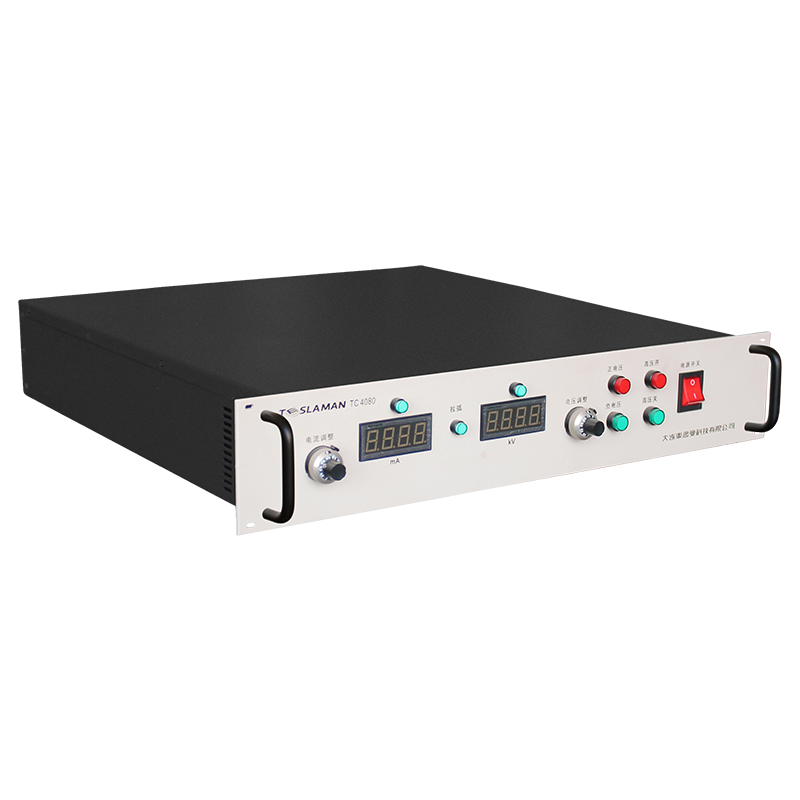
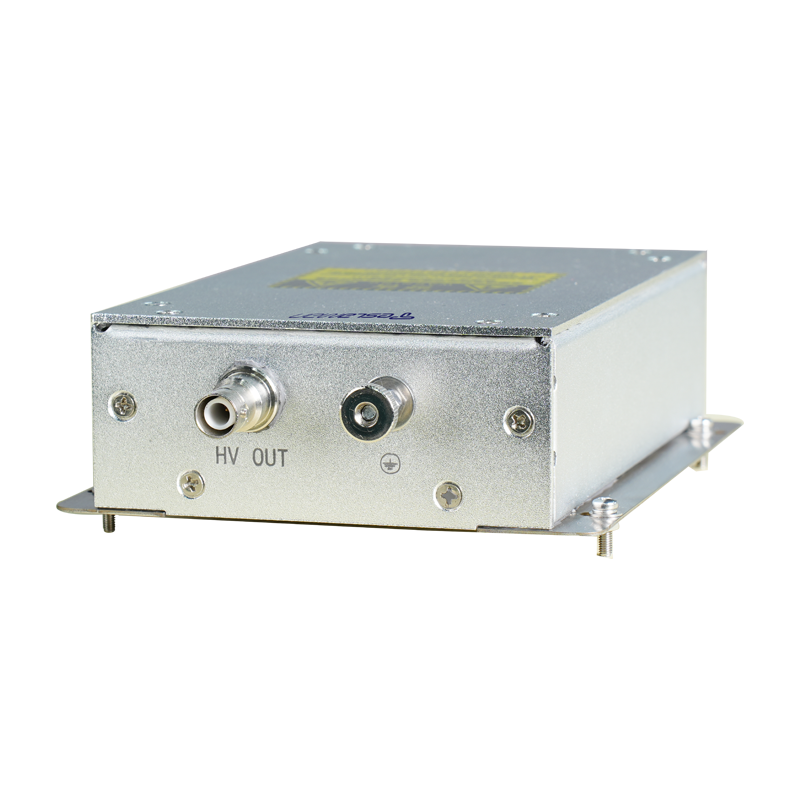
Gain Adjustment Range Optimization of Independent High Voltage Power Supply for Microchannel Plate Input and Output
Microchannel plate detectors offer exceptional sensitivity and timing resolution for detecting particles and photons in scientific and industrial applications. The gain of the detector, determined by the voltage applied across the microchannel plate, affects both the signal amplitude and the detection efficiency. Providing independent high voltage power supplies for the input and output regions of the microchannel plate enables optimization of the gain adjustment range for specific application requirements.
The microchannel plate consists of a thin plate with millions of parallel channels, each acting as a continuous dynode electron multiplier. Electrons entering the input side of the channels are accelerated by the electric field along the channel length. When electrons strike the channel walls, they release secondary electrons that continue the multiplication process. The gain depends on the channel length-to-diameter ratio, the secondary emission coefficient of the channel wall material, and the applied voltage.
Traditional microchannel plate operation uses a single voltage applied across the entire plate. The gain is determined by this single voltage, and adjusting the gain requires changing the voltage across the whole plate. This approach limits the flexibility to optimize the detector for different operating conditions. For example, the optimal gain for detecting single photons may differ from the optimal gain for detecting higher-energy particles.
Independent power supplies for the input and output regions divide the microchannel plate into two zones with different electric field strengths. The input region, near the entrance face of the plate, can be operated at a different voltage gradient than the output region, near the exit face. This configuration provides additional degrees of freedom for optimizing the detector performance.
The gain adjustment range depends on the voltage ranges of the independent power supplies. Each power supply must be capable of providing the required voltage for its region of the plate. The total gain depends on the combination of voltages applied to both regions. The adjustment range must cover the gain values needed for the intended applications while maintaining stable operation.
Lower gain operation is beneficial for applications with high input signal levels or where maximum dynamic range is required. By reducing the voltage in one or both regions, the gain can be decreased while maintaining adequate signal amplitude for detection. Lower gain operation also reduces the current through the plate, extending the operational lifetime and reducing the rate of gain degradation.
Higher gain operation is beneficial for detecting very weak signals or single particles. By increasing the voltage in one or both regions, the gain can be increased to produce larger output pulses. However, very high gain operation increases the current through the plate and accelerates the gain degradation. The power supplies must be capable of providing the higher voltages needed for high gain operation while maintaining stability.
The spatial uniformity of gain across the detector area is important for imaging applications. Variations in the electric field across the plate can cause gain variations that affect the image quality. The independent power supply configuration must maintain uniform voltage distribution across each region. The transition between regions must be designed to minimize gain non-uniformity at the boundary.
The response time of the detector depends on the electron transit time through the microchannel plate. The transit time is determined by the channel length and the electric field strength. Independent power supplies can optimize the transit time by adjusting the field distribution along the channel. Faster response times are beneficial for time-resolved measurements and high-count-rate applications.
Feedback and stability considerations affect the design of independent power supply systems. The two power supplies must operate independently without mutual interference. The control loops for each supply must maintain stable output despite the varying load presented by the microchannel plate. Protection circuits must prevent damage from overvoltage or overcurrent conditions in either region.
Calibration procedures characterize the gain as a function of the two independent voltages. Gain measurements at various voltage combinations map the gain surface across the adjustment range. This calibration data enables selection of the optimal voltage settings for specific applications. Regular recalibration accounts for gain changes due to aging and usage history.
Integration with detector systems requires coordination between the power supplies and the data acquisition electronics. The power supply settings must be synchronized with the measurement modes. Remote control capabilities enable automated adjustment of the gain for different measurement conditions. Monitoring of the power supply outputs supports quality assurance and diagnostic functions.