High Voltage Power Supply System for Thermally Stimulated Current Measurement of Insulation Material Trap Energy Levels
Thermally stimulated current measurement is a powerful technique for characterizing the trap energy levels in insulation materials. These trap levels affect the charge storage, transport, and decay behavior that determine the electrical performance and reliability of insulation systems. The high voltage power supply system for these measurements must provide precise, stable voltage with controlled temperature programming to enable accurate characterization.
Insulation materials contain localized electronic states called traps that can capture and release charge carriers. The trap energy level is the depth of the trap below the conduction band for electron traps or above the valence band for hole traps. The distribution of trap energy levels affects the charge dynamics in the material. Understanding these trap levels is essential for predicting insulation behavior under electrical stress.
Thermally stimulated current measurement involves several steps. First, the sample is polarized by applying a high voltage at an elevated temperature, causing charge carriers to migrate and become trapped. The sample is then cooled while maintaining the voltage, freezing the trapped charges in place. The voltage is then removed, and the sample is heated at a controlled rate while measuring the current. As the temperature rises, trapped carriers are released and contribute to the measured current. The current peaks correspond to specific trap levels.
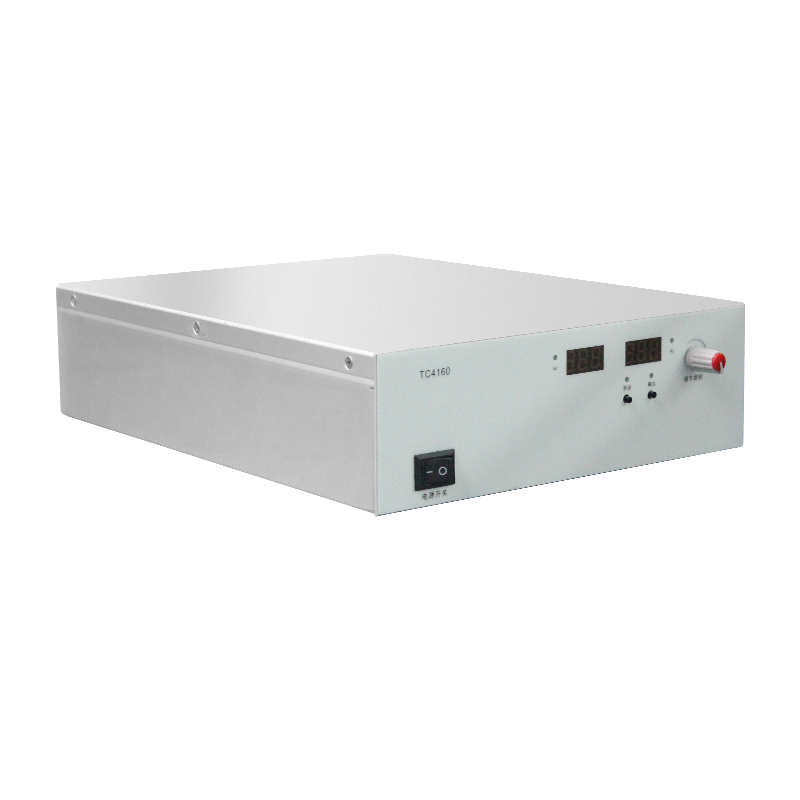
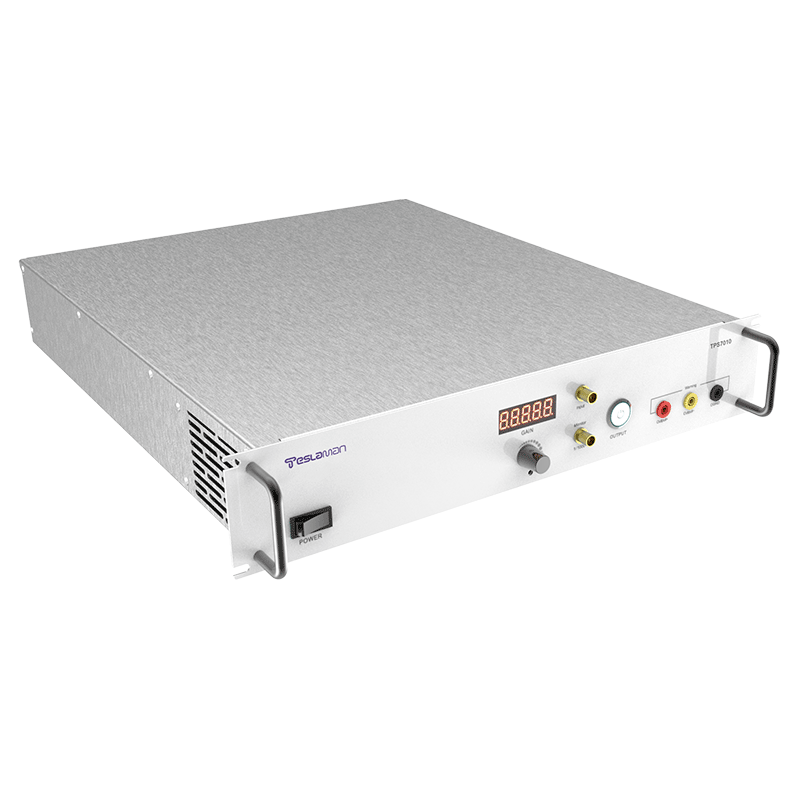
The high voltage power supply provides the polarization voltage for the sample. Typical polarization voltages range from hundreds to thousands of volts, depending on the sample thickness and the desired field strength. The power supply must maintain stable voltage during the polarization and cooling phases. Any voltage drift during these phases affects the charge distribution and the measurement results.
Voltage stability is critical for accurate measurements. The trapped charge distribution depends on the applied field during polarization. Voltage fluctuations during polarization cause variations in the charge distribution. The power supply must have very low noise and drift to ensure consistent polarization conditions. Temperature coefficients of the power supply components must be considered, as the measurement involves significant temperature changes.
The temperature programming system controls the sample temperature during the measurement. The system must provide controlled heating at a constant rate during the current measurement phase. The heating rate affects the position and shape of the current peaks. Typical heating rates range from one to ten degrees Celsius per minute. The temperature must be measured accurately to determine the trap energy levels from the peak positions.
The current measurement system detects the small currents generated by the release of trapped charges. The currents are typically in the picoampere to nanoampere range. The measurement system must have high sensitivity and low noise. Electrometers or picoammeters are commonly used for these measurements. The measurement bandwidth must be adequate to capture the current variations during the temperature scan.
The sample holder must provide good electrical contact and thermal coupling. The electrodes contact the sample surfaces for voltage application and current measurement. The holder must accommodate samples of various sizes and thicknesses. The thermal design must ensure uniform heating of the sample. The electrical design must minimize parasitic currents and leakage.
Shielding and guarding are essential for accurate current measurements. Stray currents from external sources can overwhelm the small signals from the sample. Triaxial cables with driven guards eliminate leakage currents in the measurement leads. Shielded enclosures prevent interference from external electric fields. The entire measurement system must be designed for low-level current measurement.
Data analysis extracts the trap energy level distribution from the measured current-temperature curve. The peak temperature relates to the trap energy level through various analysis methods. The peak amplitude relates to the trap density. Multiple peaks indicate multiple trap levels. The analysis must account for the heating rate, the sample geometry, and the measurement conditions.
Calibration and validation ensure the accuracy of the measurement system. Known reference materials with characterized trap levels can verify the system performance. Comparison with other measurement techniques, such as thermoluminescence or photo-stimulated current, can validate the results. Regular calibration of the voltage, temperature, and current measurements maintains accuracy over time.
Safety considerations are important for high voltage measurements. The sample and electrodes may be at high potential during polarization. Proper insulation and interlocks prevent operator exposure to high voltage. The heating system must be designed to prevent thermal hazards. The measurement system should fail safe in case of faults or abnormal conditions.