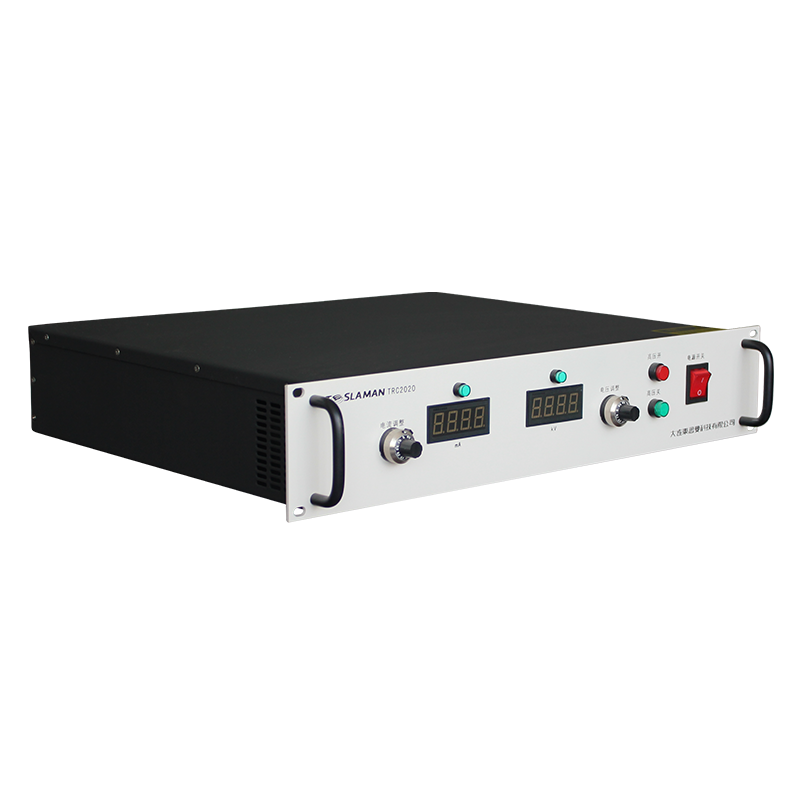
Relationship Between Timing Precision of High Voltage Extraction Power Supply and Mass Resolution in Time of Flight Mass Spectrometer
Time of flight mass spectrometry has become an essential analytical technique in fields ranging from proteomics to materials science. The technique measures the mass to charge ratio of ions by timing their flight through a field free drift region. The high voltage extraction power supply that accelerates ions from the source significantly affects the timing precision and, consequently, the mass resolution of the instrument.
The fundamental principle of time of flight mass spectrometry is that ions accelerated to the same kinetic energy have velocities inversely proportional to the square root of their mass. After acceleration, ions travel through a drift region where they separate based on their velocities. Lighter ions travel faster and arrive at the detector earlier than heavier ions. The flight time measurement enables calculation of the mass to charge ratio.
Ion extraction from the source region requires a high voltage pulse that accelerates ions into the flight tube. The extraction voltage determines the kinetic energy of the ions and affects the flight time. The timing of the extraction pulse defines the start time for the flight time measurement. Any variation in the extraction timing or voltage affects the flight time and degrades the mass resolution.
Mass resolution in time of flight mass spectrometry is defined as the ability to distinguish ions with similar masses. Higher resolution enables separation of ions with smaller mass differences. The resolution depends on the spread in flight times for ions of the same mass. Narrower flight time distributions yield higher resolution. The timing precision of the extraction pulse is a major contributor to the flight time spread.
The extraction power supply must generate high voltage pulses with precise timing and amplitude. Typical extraction voltages range from several kilovolts to tens of kilovolts. The pulse rise time must be fast, typically nanoseconds, to define a sharp start time for the flight. The pulse amplitude must be stable from pulse to pulse to ensure consistent ion energies. Any jitter in timing or amplitude degrades the mass resolution.
Timing jitter refers to variation in the time when the extraction pulse reaches its target voltage. Jitter can arise from several sources in the power supply. Trigger circuit jitter occurs when the trigger signal that initiates the pulse has timing variation. Switch jitter occurs when the switching element that generates the pulse has variable turn on time. Propagation delay variations through the pulse circuit can also contribute to jitter.
Amplitude stability refers to the consistency of the extraction voltage from pulse to pulse. Variations in amplitude cause variations in ion energy, which translate to variations in flight time. The power supply must maintain stable output voltage despite changes in temperature, component aging, and other factors. Low drift and high reproducibility are essential for high resolution measurements.
Pulse rise time affects the definition of the extraction start time. A slower rise time means that ions are extracted over a longer period, causing a spread in initial velocities and positions. This spread translates to flight time variations that degrade resolution. Fast rise times, achieved through appropriate circuit design and component selection, minimize this contribution to resolution degradation.
The relationship between timing precision and mass resolution can be quantified mathematically. The mass resolution is approximately proportional to the flight time divided by the spread in flight times. The timing jitter contributes directly to the flight time spread. For high resolution instruments, timing jitter must be a small fraction of the total flight time, typically picoseconds for high performance instruments.
Calibration and correction techniques can partially compensate for power supply imperfections. Time to digital converters with high precision enable accurate measurement of flight times despite small timing variations. Calibration using known mass standards establishes the relationship between flight time and mass. Correction algorithms can adjust for systematic variations in extraction timing or voltage.
Advanced extraction schemes improve resolution beyond the limits of simple linear extraction. Delayed extraction applies the extraction pulse after a delay following ion formation, allowing ions to expand radially before acceleration. This technique can improve resolution by reducing the initial spatial spread of ions. Orthogonal acceleration extracts ions perpendicular to their initial direction, decoupling the extraction from the ion formation process. These advanced schemes place additional requirements on the extraction power supply timing and control.
The design of high voltage extraction power supplies for time of flight mass spectrometry requires careful attention to timing precision, amplitude stability, and pulse shape. Solid state switches using MOSFETs or thyristors can achieve the required switching speeds and timing precision. Careful layout minimizes parasitic inductance and capacitance that could slow the pulse edges. Temperature stabilization maintains consistent component characteristics for stable operation over time.