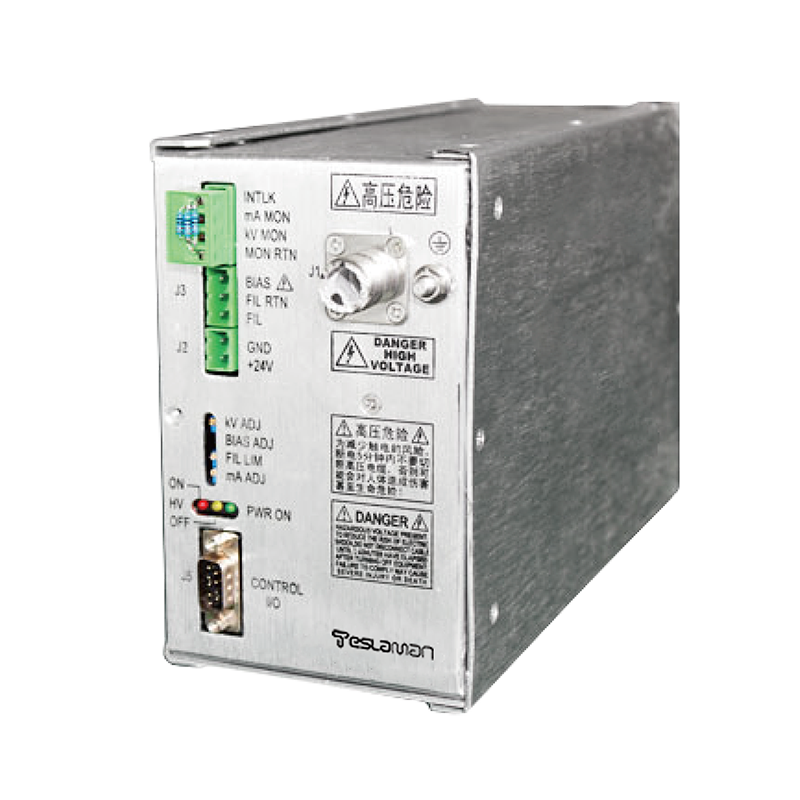
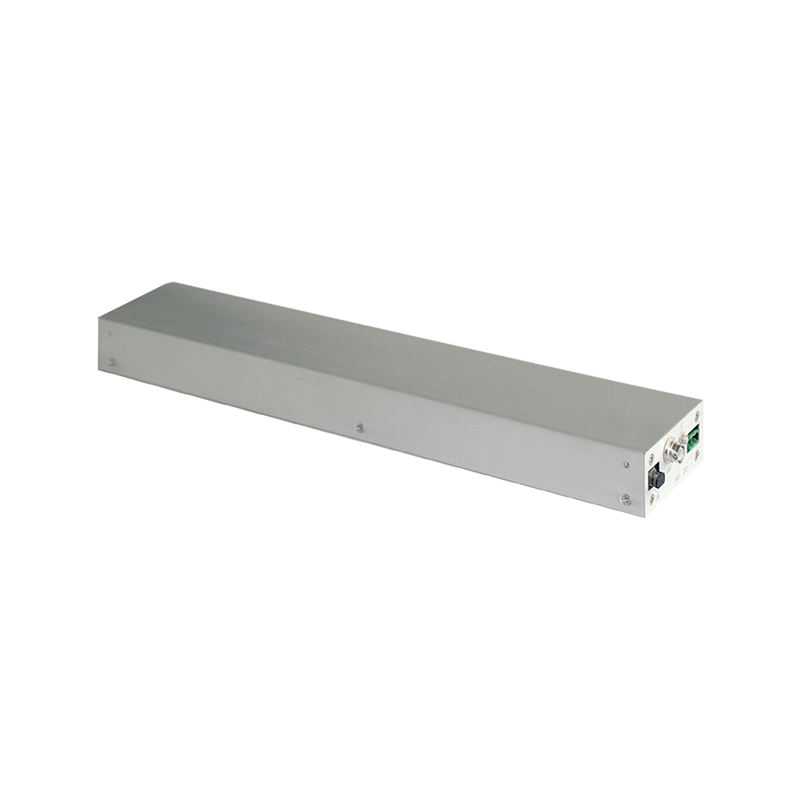
225kV AC Resonant High Voltage Power Supply for Partial Discharge Detection of Power Cable
Partial discharge detection has become an essential diagnostic technique for assessing the insulation condition of power cables. These discharges are localized electrical breakdowns that do not completely bridge the insulation, but they indicate insulation defects that can progress to complete failure. The two hundred twenty-five kilovolt AC resonant high voltage power supply provides the test voltage for partial discharge measurements, and its characteristics significantly affect the sensitivity and reliability of the detection.
Power cables are critical components of electrical distribution and transmission systems. The insulation, typically cross-linked polyethylene for medium and high voltage cables, must maintain its integrity over decades of service. During operation, the insulation is subjected to electrical, thermal, and mechanical stresses that can cause degradation. Manufacturing defects, installation damage, or aging can create sites where partial discharges occur.
Partial discharges are small electrical breakdowns that occur in regions of high local electric field. They typically occur at voids, delaminations, or contamination sites within the insulation, or at protrusions or contamination on the conductor or sheath surfaces. Each discharge produces a small current pulse that can be detected by appropriate instrumentation. The pattern and magnitude of the discharges provide information about the type and severity of the defect.
Partial discharge testing requires applying a high voltage to the cable while monitoring for discharge activity. The test voltage is typically above the normal operating voltage to stress the insulation and reveal defects that might not discharge at operating voltage. The two hundred twenty-five kilovolt level is appropriate for testing cables rated at intermediate voltage levels.
AC resonant test systems have become the preferred technology for high voltage cable testing. These systems use a resonant circuit to generate the high voltage, providing advantages over conventional test transformers. The resonant circuit consists of a reactor with adjustable inductance and the capacitance of the test object. When the inductance is tuned to resonate with the capacitance at the supply frequency, the circuit amplifies the voltage by the quality factor of the resonant circuit.
The resonant approach offers several advantages for partial discharge testing. The resonant circuit inherently filters harmonics and noise from the supply, providing a clean sinusoidal test voltage. This clean waveform is essential for reliable partial discharge detection, as harmonics and noise can interfere with the sensitive measurements. The resonant circuit also limits the energy available for a breakdown, improving safety compared to direct transformer excitation.
The quality factor of the resonant circuit determines the voltage amplification and the selectivity of the filtering. Higher quality factors provide greater amplification and better noise rejection. The quality factor depends on the resistance in the circuit, which includes the reactor resistance and any losses in the test object. Well designed reactors can achieve quality factors of fifty or more at power frequency.
Partial discharge detection requires extremely sensitive measurement circuits that can detect charge transfers as small as picocoulombs. The detection circuit typically uses a coupling capacitor and a measurement impedance connected across the test object. The partial discharge pulses cause voltage transients across the measurement impedance that can be detected and quantified.
The background noise level limits the minimum detectable partial discharge. Noise sources include the power supply itself, the measurement circuit, and external electromagnetic interference. The resonant power supply contributes minimal noise due to the filtering action of the resonant circuit. Proper shielding and filtering of the measurement circuit reduce its contribution. Testing in shielded enclosures minimizes external interference.
Calibration of the partial discharge measurement establishes the relationship between the measured signal and the actual discharge magnitude. A calibrator injects a known charge into the measurement circuit, and the system response is recorded. This calibration enables reporting of partial discharge magnitudes in picocoulombs, which is the standard unit for partial discharge measurement.
The test voltage level and duration affect the partial discharge behavior. Some defects may not discharge at lower voltages but begin discharging above an inception voltage. The discharge magnitude typically increases with voltage. The test protocol specifies the voltage levels and durations to comprehensively assess the insulation condition while avoiding excessive stress that could cause damage.
Interpretation of partial discharge results requires understanding of the discharge patterns. Different types of defects produce characteristic patterns in the phase resolved partial discharge diagram. Internal voids produce discharges symmetrically distributed around the voltage peaks. Surface discharges occur preferentially on the positive and negative half cycles. Corona from sharp points produces discharges on one half cycle. Pattern recognition assists in identifying the type and location of defects.