Research on Gain Stability of Electron Multiplier High Voltage Power Supply in Photon Counting Mode
Electron multipliers are essential detectors for low light and particle counting applications where single event detection is required. In photon counting mode, the detector counts individual photons by detecting the charge pulses produced by the electron multiplier. The gain stability of the high voltage power supply directly affects the pulse amplitude distribution and the counting accuracy. Understanding and optimizing gain stability is essential for reliable photon counting measurements.
Electron multipliers amplify weak signals through secondary electron emission. The detector consists of a series of dynodes, each at successively higher voltage. Electrons from the photocathode strike the first dynode, releasing secondary electrons. These electrons are accelerated to the next dynode, where each produces more secondaries. The cascade produces a charge pulse at the anode that can be easily detected and counted.
The gain of an electron multiplier is the ratio of the output charge to the input charge. For a discrete dynode multiplier, the gain depends on the secondary emission coefficient of each dynode and the number of dynodes. The secondary emission coefficient depends on the dynode material and the incident electron energy, which is determined by the inter-dynode voltage. The total gain is the product of the gains at each stage.
Photon counting mode detects individual photons by discriminating the charge pulses from the electron multiplier. A discriminator sets a threshold that separates signal pulses from noise. Pulses above the threshold are counted as photon events. The counting accuracy depends on the pulse amplitude distribution, which depends on the gain and its stability.
The pulse height distribution shows the number of pulses as a function of pulse amplitude. For an ideal electron multiplier with constant gain, all single photon events would produce the same pulse amplitude. In reality, statistical variations in the multiplication process produce a distribution of pulse heights. The distribution typically follows a negative exponential shape for single photon events.
Gain variations cause the pulse height distribution to shift or broaden. If the gain decreases, the pulse amplitudes decrease, potentially causing some pulses to fall below the discriminator threshold. These pulses are not counted, reducing the counting efficiency. If the gain increases, the pulse amplitudes increase, potentially increasing the counting rate but also increasing the noise counts if the threshold is too low.
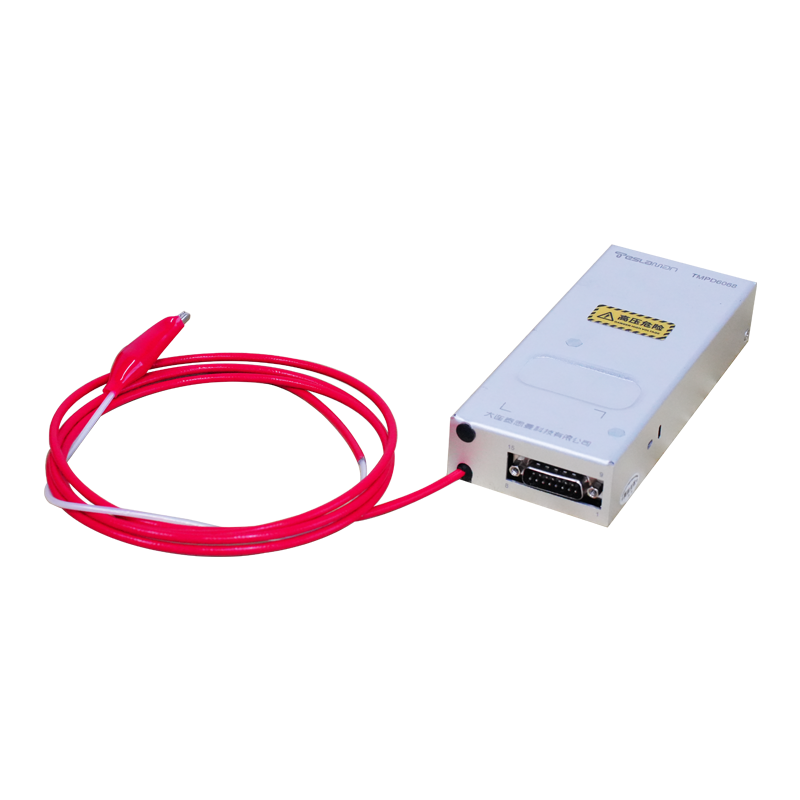
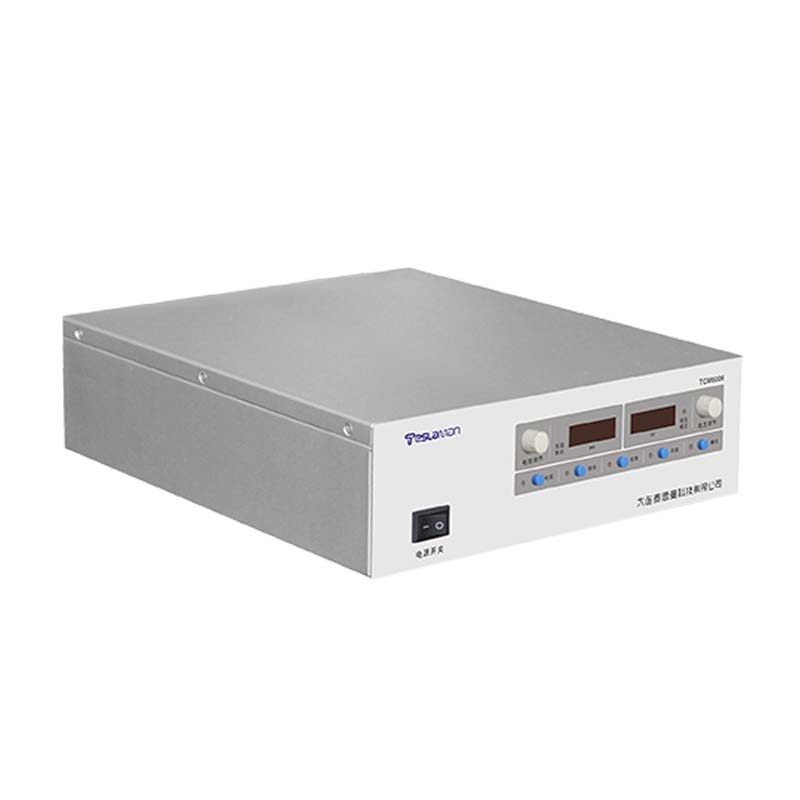
The high voltage power supply determines the inter-dynode voltages and thus the gain. For a voltage divider chain that distributes the total voltage across the dynodes, the gain depends on the total voltage. The gain varies approximately as a power of the voltage, with the exponent depending on the number of dynodes and the secondary emission characteristics. A typical gain voltage relationship might be gain proportional to voltage to the seventh power for a ten stage multiplier.
The high sensitivity of gain to voltage means that small voltage variations cause significant gain variations. For a gain voltage exponent of seven, a one percent voltage change causes approximately seven percent gain change. This sensitivity makes the power supply stability critical for photon counting applications.
Short term stability affects the pulse height distribution during a measurement. Voltage noise and ripple cause pulse amplitude variations that broaden the distribution. The power supply must provide extremely low ripple, typically specified in parts per million, to maintain acceptable pulse height resolution. Linear power supplies or heavily filtered switching supplies are typically used.
Long term stability affects the counting efficiency over extended measurements. Voltage drift causes the gain to change slowly, shifting the pulse height distribution. If the distribution shifts significantly, the discriminator threshold may no longer be optimal. Regular calibration or active gain stabilization can compensate for long term drift.
Temperature effects cause gain variations through the temperature coefficients of the voltage supply and the detector materials. The power supply temperature coefficient determines how the output voltage changes with temperature. The detector materials have temperature dependent secondary emission coefficients. Temperature control or compensation can reduce these effects.
Active gain stabilization uses feedback to maintain constant gain despite variations. A reference light source or radioactive source provides a known input rate. The measured rate is compared to the expected rate, and the high voltage is adjusted to maintain the correct gain. This closed loop control maintains stable counting efficiency over time and temperature variations.