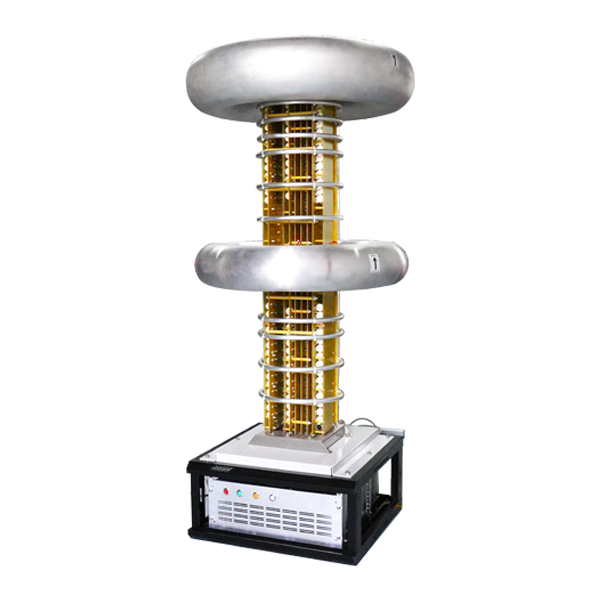
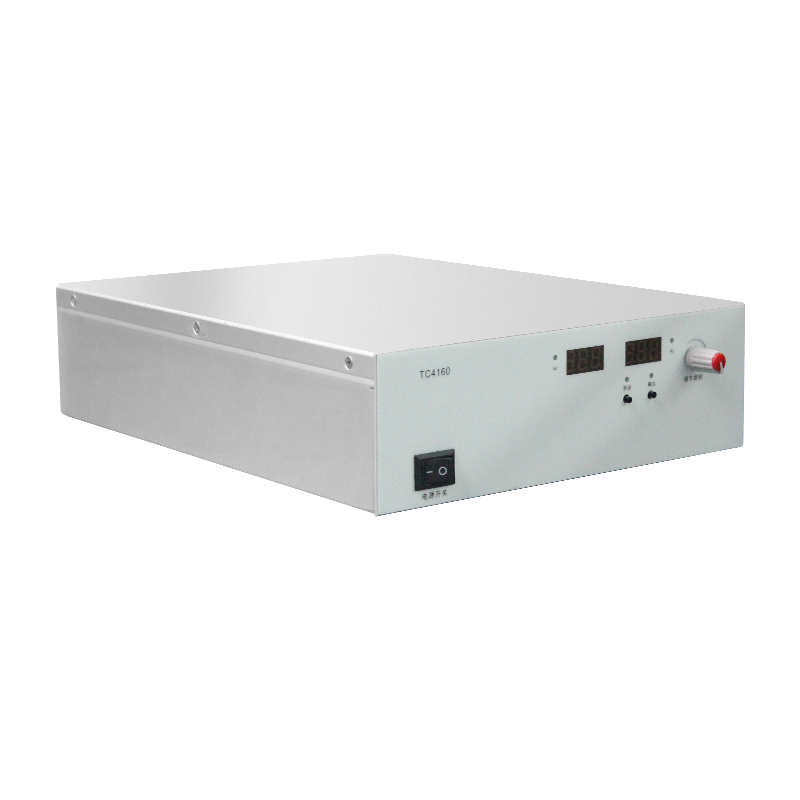
Charging Efficiency and Thermal Management Balance of Series Resonant Capacitor Charging Power Supply
Capacitor charging power supplies are essential for pulsed power systems that store energy in capacitors for release in short, intense bursts. The series resonant topology has proven effective for capacitor charging, offering efficient energy transfer with inherent current limiting. Balancing the charging efficiency against thermal management requirements is crucial for reliable, high performance operation.
Pulsed power systems store energy in capacitors and release it rapidly for applications including laser pumping, particle accelerators, and electromagnetic forming. The charging power supply must transfer energy from the prime power source to the capacitor bank between pulses. The charging time, typically milliseconds to seconds, determines the maximum pulse repetition rate.
The series resonant converter uses a resonant circuit consisting of an inductor and capacitor in series with the transformer primary. The resonant circuit oscillates at a characteristic frequency determined by the inductance and capacitance. When the converter switching frequency matches the resonant frequency, the circuit achieves maximum power transfer with zero current switching.
The charging process begins with the capacitor at zero or residual voltage. The voltage difference between the supply output and the capacitor drives current through the resonant circuit. As the capacitor charges, the voltage difference decreases, reducing the charging current. The charging profile is approximately exponential, with fast initial charging that slows as the capacitor approaches full charge.
Charging efficiency is the ratio of energy delivered to the capacitor to energy drawn from the input. Losses that reduce efficiency include switching losses in the semiconductors, conduction losses in the switches and transformer, and core losses in the magnetic components. Higher efficiency reduces the input power requirement and the thermal load on the system.
Switching losses occur during the transitions when the switch turns on and off. In hard switched converters, the switch voltage and current overlap during the transition, dissipating energy. The series resonant converter achieves zero current switching, eliminating switching losses at the resonant frequency. This soft switching is a key advantage of the resonant topology.
Conduction losses occur during the on state when current flows through the switch. The loss is proportional to the current squared and the on resistance. At high currents, conduction losses can be significant. Using switches with low on resistance, such as MOSFETs with low RDS on, reduces conduction losses.
Thermal management removes the heat generated by losses. The power semiconductors, transformer, and resonant inductor are the primary heat sources. The component temperatures must be maintained within their rated limits for reliable operation. Excessive temperature degrades performance and shortens component life.
Heat sinking transfers heat from the components to the ambient air or a cooling medium. The heat sink thermal resistance determines the temperature rise for a given power dissipation. Larger heat sinks have lower thermal resistance but add size and weight. Forced air cooling with fans improves the heat transfer compared to natural convection.
Liquid cooling provides superior heat removal for high power densities. Cold plates attached to the power semiconductors transfer heat to a circulating coolant. The coolant carries the heat to a remote heat exchanger. Liquid cooling enables compact designs but adds complexity and potential leak points.
The thermal design must account for the pulsed nature of the operation. During charging, the components dissipate power, raising their temperature. Between charging cycles, the components cool. The temperature cycles between peaks and valleys, with the amplitude depending on the charging power, the cycle time, and the thermal time constants. Thermal fatigue from repeated cycling can cause failure.
Component selection must account for both the average and peak stresses. The average power dissipation determines the steady state temperature rise. The peak power during charging determines the instantaneous junction temperature in semiconductors. The components must be rated for both conditions with adequate margin.
Design optimization balances efficiency and thermal management. Higher efficiency reduces the thermal load, easing the cooling requirements. However, achieving higher efficiency may require more expensive components or larger magnetic elements. The optimal design minimizes the total cost including the power supply, cooling system, and operating energy cost over the equipment life.