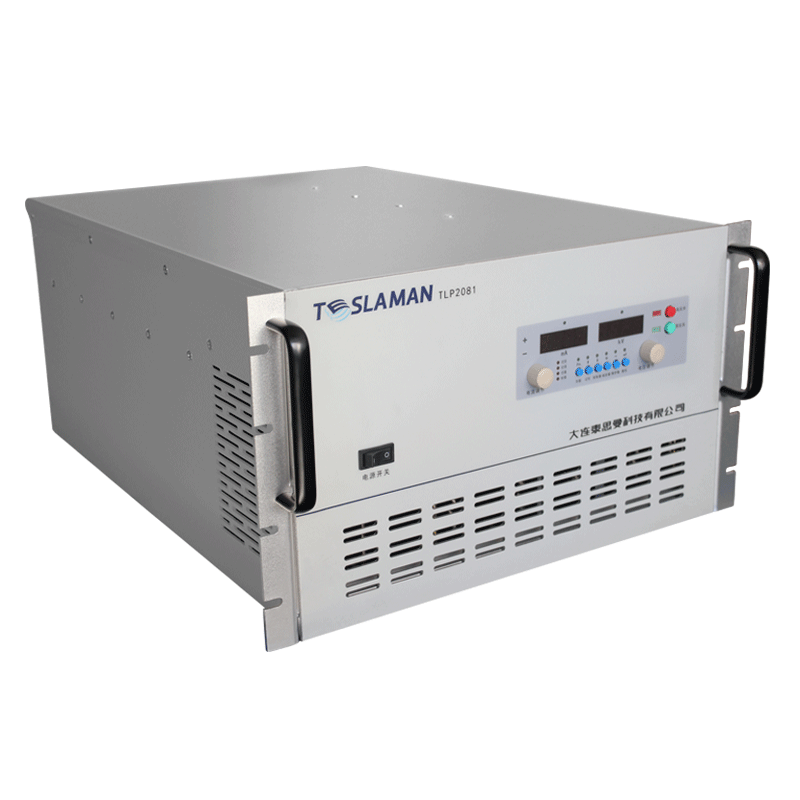
Electrode Lifetime Prediction Model of Discharge Excitation High Voltage Power Supply for High Repetition Rate Excimer Laser
Excimer lasers used in lithography and other applications operate at high repetition rates, producing thousands of pulses per second. Each pulse involves a discharge through the laser gas that erodes the electrodes. The electrode lifetime limits the operational availability and maintenance cost of the laser. A prediction model for electrode lifetime enables proactive maintenance planning and optimization of operating conditions.
Excimer laser discharges occur between two electrodes in a gas mixture containing halogen species. The discharge produces the excited species that generate the laser emission. The discharge also produces energetic ions and atoms that sputter and chemically attack the electrode surfaces. This erosion gradually degrades the electrodes, eventually requiring replacement.
The erosion mechanisms include sputtering by energetic ions, chemical attack by halogen species, and thermal effects from the discharge energy. The relative importance of each mechanism depends on the electrode material, the gas composition, and the discharge conditions. Understanding these mechanisms is the foundation for lifetime prediction.
Electrode materials for excimer lasers are selected for erosion resistance. Nickel alloys, tungsten, and specialized materials are commonly used. The material choice affects the erosion rate and the lifetime. The material must also be compatible with the laser gas and must not contaminate the laser operation.
The erosion rate depends on the discharge parameters. Higher discharge voltages produce more energetic ions and faster erosion. Higher pulse energies deposit more thermal energy and may increase thermal erosion. Higher repetition rates increase the number of erosion events per unit time. The power supply settings directly affect the electrode lifetime.
The lifetime prediction model relates the electrode condition to the operating history. The model inputs include the pulse count, the pulse energy, the voltage, and other operating parameters. The model output is the remaining electrode life or the time to replacement. The model can be empirical, based on observed data, or physics based, derived from the erosion mechanisms.
Empirical models use statistical analysis of lifetime data to develop prediction equations. Accelerated life testing at elevated stress levels generates failure data in reasonable time. The data is extrapolated to normal operating conditions using appropriate statistical distributions. The Weibull distribution is commonly used for electrode lifetime analysis.
Physics based models calculate the erosion from the fundamental mechanisms. Sputtering yield data gives the number of atoms removed per incident ion. Chemical reaction rates give the material removed by chemical attack. Thermal models give the temperature cycling and the associated stress. Integrating these contributions over the operating history gives the total material removed.
Hybrid models combine empirical and physics based approaches. The physics provides the functional form of the relationship, while empirical data calibrates the parameters. This approach captures the physical understanding while fitting the actual observed behavior.
Model validation compares predictions against observed lifetimes. Field data from operating lasers provides the ultimate validation. The model should predict the actual failure times within acceptable accuracy. Discrepancies indicate model limitations or unmodeled factors that require investigation.
Application of the lifetime model enables predictive maintenance. The model predicts when electrode replacement will be needed based on the accumulated operating history. Maintenance can be scheduled before failure, avoiding unplanned downtime. The prediction also enables optimization of operating conditions to extend electrode life while maintaining laser performance.
Economic optimization balances the electrode replacement cost against the value of extended operation. Higher pulse energies may improve process throughput but accelerate electrode wear. The optimal operating point maximizes the overall economic value, considering both productivity and maintenance costs.