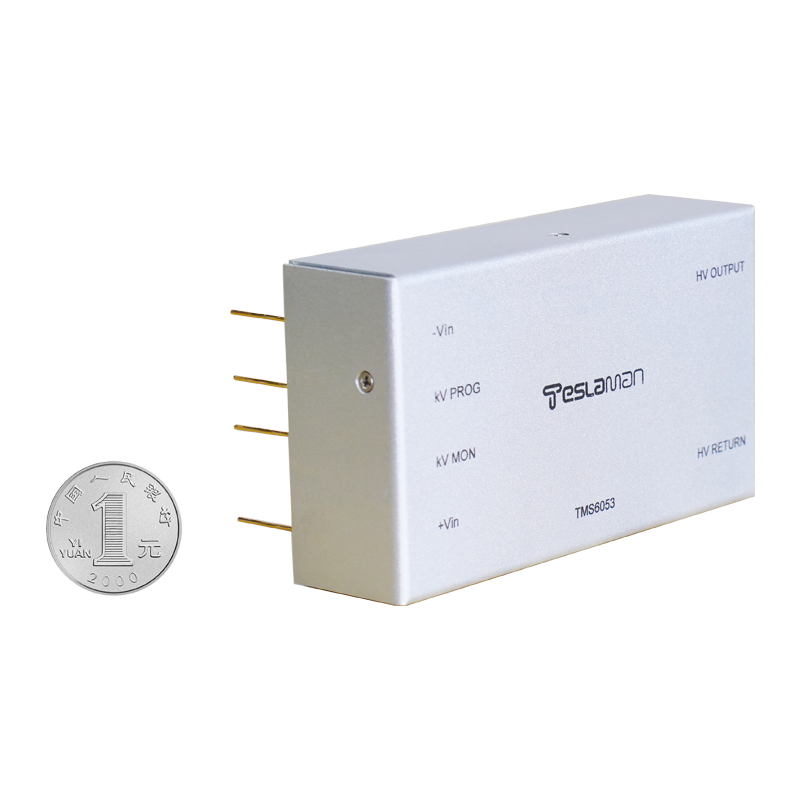
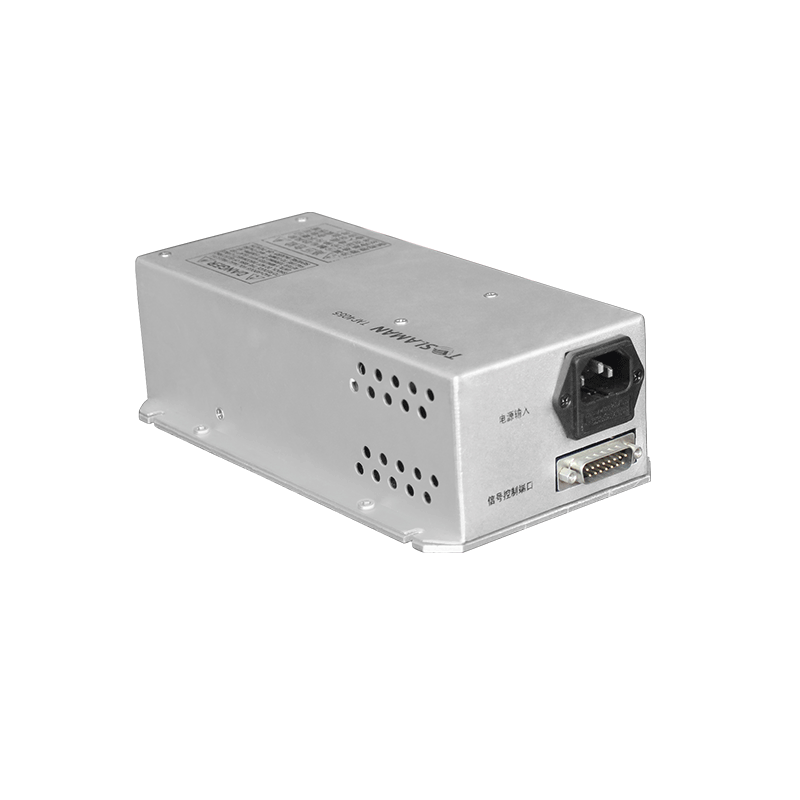
320kV Programmable High Voltage Power Supply for Partial Discharge Pattern Recognition of Cable Accessories
Cable accessories including terminations, joints, and splices represent critical components in power cable systems, connecting cable sections and transitioning between different insulation or conductor configurations. These accessories concentrate electrical stress and must maintain reliable insulation under operating conditions for decades. Partial discharge activity in cable accessories indicates developing insulation defects that can progress to failure if not addressed. Pattern recognition of partial discharge signals enables identification of defect types and severity, supporting condition based maintenance decisions. The 320 kilovolt programmable high voltage power supply provides the controlled test voltage for partial discharge measurement, with programmable features enabling standardized test sequences and automated diagnostic procedures.
Partial discharges are localized electrical breakdowns that occur in voids, interfaces, or other defects within insulation systems without immediately bridging the electrodes. In cable accessories, partial discharges can arise from voids in the insulation bulk, delaminations at material interfaces, contamination on insulation surfaces, or stress enhancements from geometric features. Each defect type produces partial discharge pulses with characteristic patterns in terms of magnitude, phase position, and repetition rate. Recognition of these patterns enables identification of the underlying defect mechanism.
The partial discharge measurement system detects the discharge pulses through coupling devices that extract the high frequency signals associated with discharge events. Coupling capacitors provide a low impedance path for high frequency signals while blocking the power frequency voltage. Inductive couplers detect the current pulses associated with discharges. The detected signals are amplified, filtered, and digitized for analysis. Modern systems capture the complete pulse waveforms, enabling detailed analysis of pulse characteristics beyond simple magnitude and phase.
The 320 kilovolt rating of the power supply accommodates test voltages for cable accessories rated at distribution and subtransmission voltage levels. Medium voltage cables rated up to 35 kilovolts require test voltages in the range of 20 to 50 kilovolts for partial discharge measurement. High voltage cable accessories rated at 66 to 220 kilovolts require correspondingly higher test voltages. The 320 kilovolt capability provides margin for testing accessories at the upper end of the high voltage range and enables testing at elevated voltages for accelerated diagnostic purposes.
Programmable features of the power supply enable automated test sequences that improve test consistency and efficiency. The voltage can be ramped up and down at controlled rates, held at specified levels for defined durations, and stepped through predetermined sequences. These programmed sequences ensure that each test is performed according to standardized procedures, reducing variability from operator actions. The programmable capability also enables complex test sequences such as voltage endurance tests where the voltage is maintained for extended periods while monitoring partial discharge evolution.
Pattern recognition algorithms analyze the partial discharge data to identify defect types. Statistical features extracted from the partial discharge patterns include the pulse magnitude distribution, phase distribution, and correlation between successive pulses. Machine learning algorithms trained on known defect signatures can classify observed patterns into defect categories. Common defect types in cable accessories include internal voids, surface discharges, and electrical treeing, each producing characteristic patterns that experienced analysts or automated systems can recognize.
Internal voids result from manufacturing defects where gas filled cavities remain in the insulation material. Discharges in these voids occur when the electric field exceeds the breakdown strength of the gas, typically producing pulses clustered around the peaks of the applied voltage waveform. The pulse magnitude distribution tends to be relatively narrow for void discharges, and the pattern is symmetric between positive and negative half cycles for voids in symmetric positions.
Surface discharges occur along insulation interfaces where contamination, moisture, or geometric factors enhance the local field. These discharges often exhibit asymmetric patterns between positive and negative half cycles due to the asymmetry of surface discharge processes. The pulse magnitudes may vary widely, and the phase distribution can extend throughout the half cycle rather than concentrating at the peaks. Surface discharges often indicate contamination or tracking that requires cleaning or component replacement.
Electrical treeing is a degradation mechanism where partial discharges create branching channels through the insulation, progressively extending toward the opposite electrode. The discharge pattern associated with electrical trees shows characteristic changes as the tree develops, with pulse magnitudes and repetition rates evolving over time. Early detection of treeing enables intervention before the tree progresses to complete failure.
The test voltage level affects the partial discharge activity and the diagnostic information obtained. At voltages below the discharge inception voltage, no partial discharges occur and the insulation appears healthy regardless of actual condition. As voltage increases above inception, discharges begin and their magnitude and repetition rate increase with voltage. Testing at multiple voltage levels provides information about the discharge inception and extinction voltages, which are characteristic parameters for insulation condition assessment. The programmable power supply enables systematic variation of test voltage for comprehensive characterization.
Environmental conditions during testing influence the partial discharge behavior and must be controlled or documented. Temperature affects the discharge inception voltage and the degradation processes. Humidity influences surface discharge behavior and can mask or modify defect signatures. Electromagnetic interference from external sources can obscure the partial discharge signals or create false indications. Shielding of the test area and filtering of the measurement system reduce interference effects, while environmental monitoring documents the test conditions for proper interpretation of results.