Beam Loss Monitoring and Interlock Protection of High Voltage Power Supply for Medical Cyclotron
Medical cyclotrons serve as the primary production sources for short lived positron emitting radioisotopes used in positron emission tomography imaging. These accelerators produce proton or deuteron beams with energies typically ranging from 10 to 20 million electron volts, directing the beams onto targets containing stable isotopes that are transformed into the desired radioactive products. The high voltage power supplies that power the cyclotron magnets and radio frequency systems must operate with exceptional reliability to maintain consistent beam characteristics. Beam loss monitoring and interlock protection systems safeguard the cyclotron from damage caused by misdirected beam and protect personnel from radiation exposure.
Beam loss in a cyclotron occurs when the accelerated particles deviate from their intended trajectories and strike the accelerator structure or surrounding components. Even small fractions of the beam current impacting on sensitive components can cause significant damage due to the high energy density of the particle beam. Localized heating from beam impact can melt or vaporize materials, creating vacuum leaks or structural damage. Radiation produced by beam interactions with materials poses hazards to personnel and can activate components, creating long term radiation sources.
The causes of beam loss include magnetic field errors, radio frequency phase or amplitude variations, vacuum degradation, and mechanical misalignments. Magnetic field errors cause particles to deviate from the designed orbits, potentially causing them to strike the vacuum chamber walls. Radio frequency variations affect the energy gain per turn, causing particles to fall outside the acceptable energy range. Vacuum degradation increases scattering of particles, spreading the beam distribution and increasing losses at apertures.
Beam loss monitoring systems detect the radiation produced when beam particles interact with materials. Ionization chambers measure the ionization produced by secondary radiation, providing a signal proportional to the beam loss in the monitored region. Scintillation detectors offer high sensitivity and fast response, enabling detection of brief loss events. Multiple detectors distributed around the cyclotron provide spatial information about the loss locations, helping identify the source of problems.
The sensitivity and coverage of the loss monitoring system must be sufficient to detect losses at levels below the damage threshold. The relationship between the detector signal and the actual beam loss depends on the detector location, the loss location, and the radiation transport between them. Calibration using controlled beam loss or simulation determines the sensitivity for various loss scenarios. The monitoring system should cover all regions where beam loss could cause damage or excessive radiation.
Interlock systems respond to beam loss signals by terminating the beam before damage occurs. The interlock logic compares the loss monitor signals with threshold values and initiates protective actions when thresholds are exceeded. The response time must be fast enough to prevent damage from developing loss conditions. For high power beams, the damage can develop in milliseconds or less, requiring microsecond level response times from the detection and interlock systems.
The interlock actions typically include disabling the ion source to stop beam production, turning off the radio frequency power to stop acceleration, and reducing the magnetic fields to safe values. The sequence and timing of these actions must be coordinated to avoid creating additional hazards. For example, suddenly turning off magnetic fields while beam is present could cause beam to strike sensitive areas before the ion source is disabled.
Threshold settings for the interlocks balance the need for protection against the desire to avoid unnecessary beam trips. Thresholds set too low cause frequent interruptions from minor fluctuations that do not represent actual hazards. Thresholds set too high allow damaging loss conditions to develop before protective action occurs. The appropriate thresholds depend on the beam power, the damage sensitivity of components, and the acceptable frequency of interruptions.
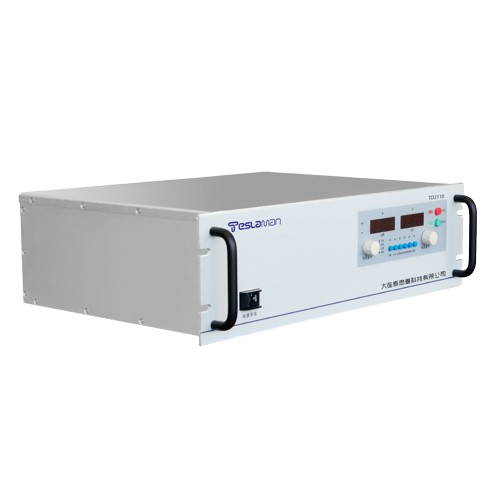
The high voltage power supplies for the cyclotron magnets directly affect the beam trajectories and the potential for beam loss. Magnetic field stability determines the constancy of the beam orbits. Voltage ripple or drift causes corresponding magnetic field variations that can drive particles toward loss conditions. The power supply design must provide stability appropriate for the cyclotron requirements, and the power supply status should be monitored as part of the interlock system.
Radio frequency system faults can rapidly cause beam loss if the accelerating voltage or phase deviates from the required values. The RF power supplies must maintain stable output with appropriate interlocks for overvoltage, undervoltage, and phase errors. The RF interlocks should be integrated with the beam loss interlocks to provide comprehensive protection.
Personnel protection interlocks ensure that no one is present in radiation areas when the cyclotron is operating. Access controls prevent entry to shielded enclosures during operation. Emergency stop buttons at strategic locations allow personnel to terminate operation if hazards are observed. The personnel protection system should be independent of the machine protection system to ensure that personnel safety is maintained even if machine interlocks fail.
Documentation and testing of the interlock system verify its proper function and reliability. Functional testing exercises each interlock function to confirm correct response. Fault injection testing simulates failure conditions to verify that the interlocks respond appropriately. Regular verification during operation confirms that the system remains functional. Records of interlock events support analysis of any problems and optimization of threshold settings.