Ice Crystal Morphology Control during High Voltage Electrostatic Assisted Food Freezing Process
Food freezing preserves quality by reducing temperature to inhibit microbial growth and slow chemical reactions, but the freezing process itself affects quality through ice crystal formation. The size, shape, and distribution of ice crystals determine the texture, drip loss, and other quality attributes of frozen food products. High voltage electrostatic fields applied during freezing can influence ice crystal nucleation and growth, providing a physical method for controlling ice crystal morphology without additives.
The formation of ice crystals during freezing proceeds through nucleation and growth stages. Nucleation creates the initial ice crystal embryos when water molecules arrange into the ice crystal structure. Homogeneous nucleation occurs spontaneously in pure water at high supercooling, while heterogeneous nucleation occurs on surfaces or impurities at lower supercooling. Once nuclei form, they grow by incorporation of water molecules at the crystal surface, with the growth rate depending on the supercooling and the heat and mass transfer conditions.
The size distribution of ice crystals affects the food microstructure and the quality after thawing. Large ice crystals formed by slow freezing cause more structural damage to cellular tissues, leading to greater drip loss and texture degradation upon thawing. Small ice crystals formed by rapid freezing cause less damage but may recrystallize during frozen storage, growing larger over time. The optimal ice crystal size distribution depends on the food product and the intended storage duration.
Electrostatic field effects on ice crystallization may arise through several mechanisms. The electric field may align polar water molecules, affecting the nucleation rate and the crystal orientation. The field may influence the surface energy of ice crystal interfaces, affecting the growth morphology. Electrohydrodynamic effects from charge injection may create fluid motion that affects the heat and mass transfer around growing crystals. The relative importance of these mechanisms depends on the field intensity, the electrode configuration, and the freezing conditions.
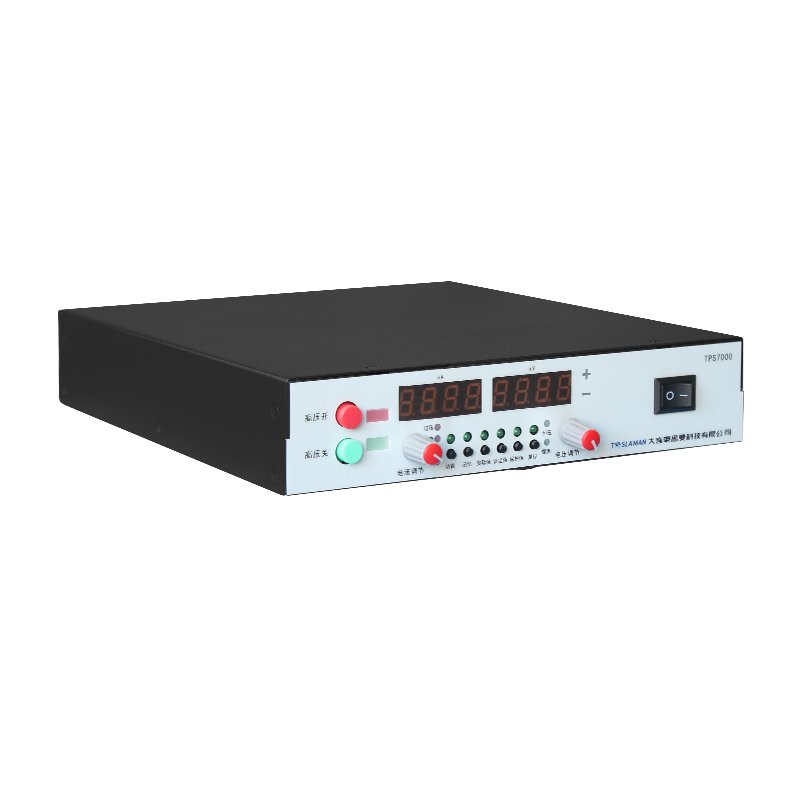
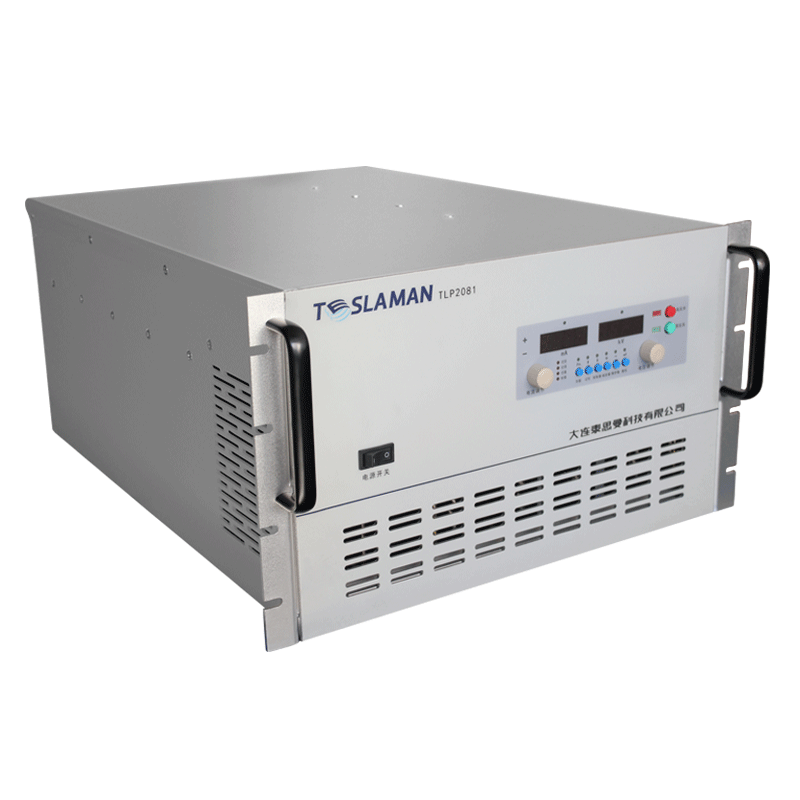
High voltage power supplies for electrostatic freezing must provide controlled electric field intensity throughout the freezing process. The field intensity required to influence ice crystallization is typically in the range of kilovolts per meter to tens of kilovolts per meter. The field can be applied continuously during freezing or pulsed at specific stages of the process. The electrode configuration must create a uniform field through the food product while avoiding electrical discharge or breakdown.
The electrode design for electrostatic freezing must consider both the electrical and the thermal requirements. Electrodes must maintain their electrical characteristics at the low temperatures encountered during freezing, where material properties may change. The electrodes should not impede the heat transfer required for freezing, which may require designs that minimize thermal mass or position electrodes outside the primary heat flow path. The electrode materials must be compatible with food contact requirements and resist corrosion from the food constituents.
Process parameters affecting ice crystal formation include the cooling rate, the final temperature, and the electrostatic field characteristics. Faster cooling rates generally produce smaller ice crystals by creating many nucleation sites that compete for the available water. The electrostatic field may modify this behavior by affecting the nucleation rate or the growth kinetics. The interaction between cooling rate and field effects determines the optimal combination for achieving the desired ice crystal morphology.
Food product characteristics including water content, composition, and structure affect the ice crystallization behavior and the response to electrostatic treatment. High water content products have more water available for ice formation and may show more pronounced electrostatic effects. Dissolved solutes depress the freezing point and may affect the water molecule behavior in the electric field. Cellular structures constrain ice crystal growth and may interact with electrostatic effects in complex ways.
Measurement and characterization of ice crystal morphology in frozen foods employs various techniques. Cryo microscopy allows direct observation of ice crystals in frozen samples. Image analysis provides quantitative measures of crystal size, shape, and distribution. X ray tomography enables three dimensional reconstruction of ice crystal networks. Differential scanning calorimetry provides information on the freezing and melting behavior that relates to the ice crystal characteristics. These characterization methods enable evaluation of electrostatic freezing effectiveness.
Scale up considerations for commercial application of electrostatic freezing require addressing the challenges of applying uniform electric fields to large product volumes. The electrode configuration must scale appropriately while maintaining the field characteristics that influence ice crystallization. The power supply capacity must increase to drive the larger electrode systems. The integration with existing freezing equipment must consider the space constraints and the process flow. Economic analysis must justify the added complexity and cost of electrostatic systems through the value of improved product quality.