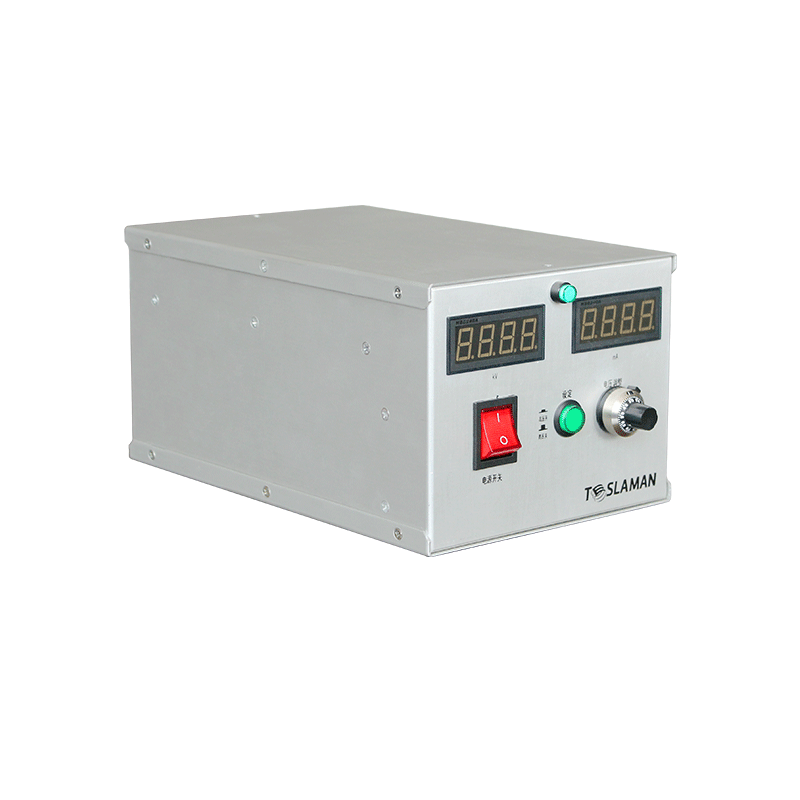
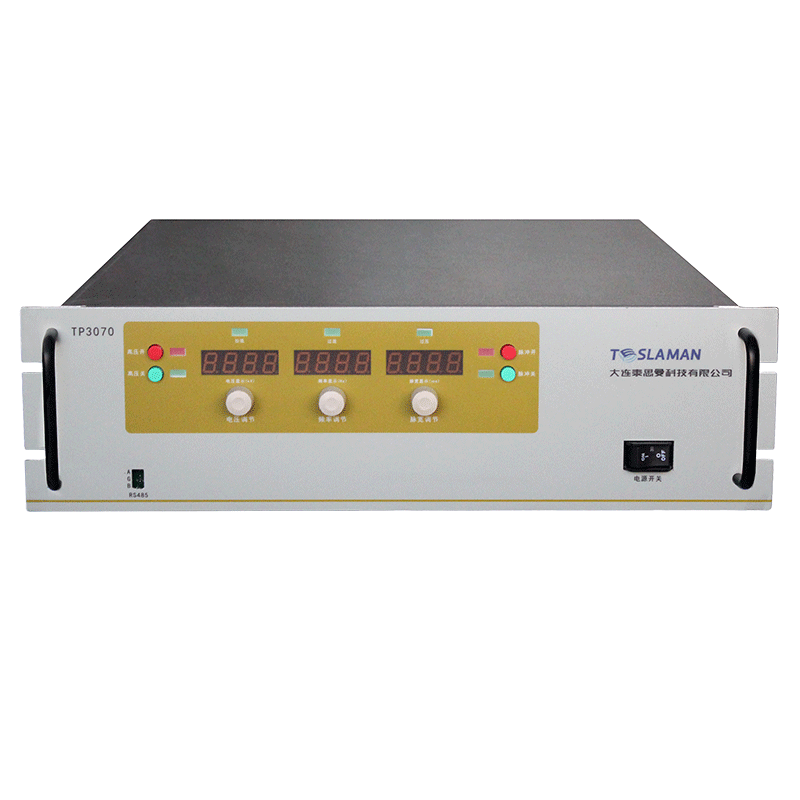
Mobile Platform of High Voltage Power Supply for Electrostatic Tomography Imaging of Fragile Artifacts at Archaeological Site
Archaeological excavations frequently uncover fragile artifacts that require documentation and analysis before removal from the site environment. Electrostatic tomography imaging offers a nondestructive technique for visualizing internal structures and material distributions within artifacts without physical contact or penetration. Implementing this technique at archaeological sites requires mobile high voltage power supply systems that can operate in field conditions while providing the precision and stability needed for imaging applications.
Electrostatic tomography principles involve applying controlled electric fields to an object and measuring the resulting surface potentials or field distributions. The internal permittivity and conductivity distributions affect the field propagation, creating variations in the surface measurements that can be reconstructed into internal images. The technique is particularly suited for artifacts with heterogeneous compositions, such as ceramics with inclusions, corroded metals with preserved cores, or composite objects with multiple materials.
The field environment at archaeological sites presents challenges quite different from controlled laboratory conditions. Power availability may be limited to portable generators or battery systems, constraining the power consumption of the imaging system. Environmental conditions including temperature, humidity, and dust vary throughout the day and may affect electrical measurements. The irregular terrain and limited space constrain the equipment positioning and setup. The mobile power supply must accommodate these field conditions while maintaining measurement quality.
High voltage requirements for electrostatic tomography depend on the artifact size and the desired spatial resolution. Larger artifacts require higher voltages to achieve adequate field intensities throughout the object volume. Higher spatial resolution requires better signal to noise ratio in the measurements, which can be achieved through higher voltages that produce larger signal amplitudes. The voltage range typically spans from hundreds of volts for small artifacts to tens of kilovolts for larger objects.
Measurement protocols for electrostatic tomography involve applying voltages through multiple electrode configurations to gather sufficient data for image reconstruction. Each projection applies voltage to one electrode pair while measuring potentials on other electrodes. The sequence of projections must cover the angular range needed for reconstruction. The power supply must maintain stable output throughout each projection measurement and switch rapidly between projection configurations to minimize total measurement time.
Electrode interface with the artifact surface requires careful design to avoid damaging fragile surfaces. Noncontact electrodes using capacitive coupling can apply the measurement fields without physical contact, but require precise positioning and may have lower coupling efficiency. Soft contact electrodes using compliant materials can conform to irregular surfaces while distributing pressure to avoid damage. The electrode design affects both the artifact safety and the measurement quality.
Image reconstruction algorithms process the measured data to estimate the internal permittivity or conductivity distribution. The reconstruction problem is ill posed, requiring regularization techniques to produce stable solutions. The quality of the reconstruction depends on the number and coverage of the projections, the measurement accuracy, and the appropriateness of the forward model to the actual artifact properties. Real time reconstruction during field measurements can guide the measurement strategy to improve image quality.
Calibration procedures characterize the measurement system response and enable correction of systematic errors. Calibration measurements on objects with known properties establish the relationship between applied voltages and measured signals. System drift during field deployment can be tracked through periodic calibration checks. Reference measurements on standard objects verify that the system maintains calibration throughout the field campaign.
Data management for field imaging includes storage of raw measurements, calibration data, and reconstructed images. The data volume depends on the number of projections, the number of measurement channels, and the digitization resolution. Metadata documenting the measurement conditions, artifact identification, and site context must accompany the measurement data. Robust data storage with backup protects against data loss in the field environment.
Power supply design for mobile deployment must balance performance requirements against portability constraints. Weight and volume limitations affect the achievable voltage and power ratings. Battery powered operation enables deployment at sites without electrical infrastructure but limits the operating duration. Generator powered operation provides continuous power but adds noise and requires fuel. Hybrid systems can use batteries for peak loads and generators for charging, optimizing the power system for the measurement duty cycle.