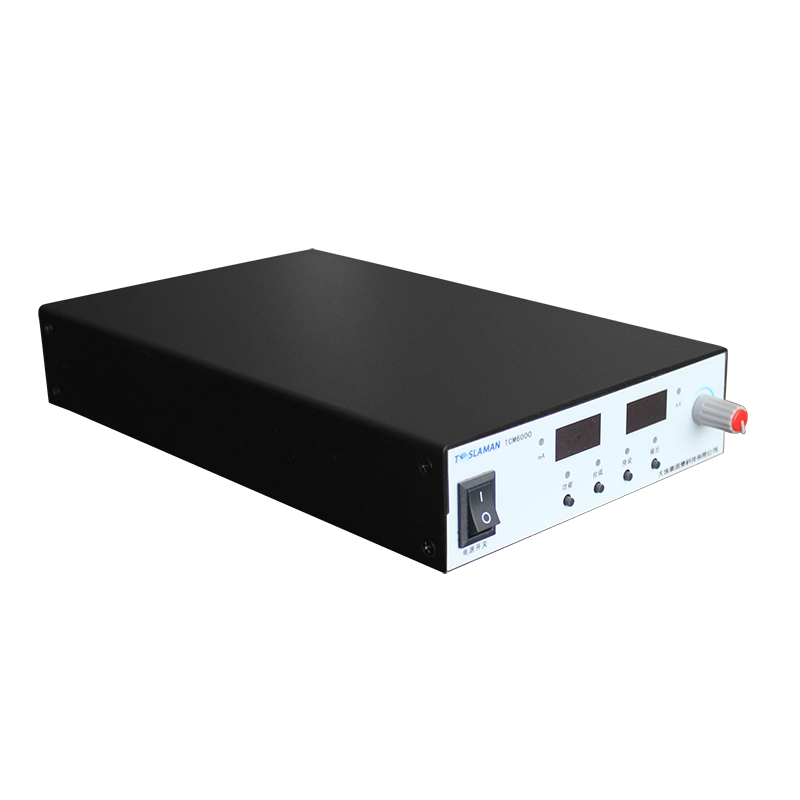
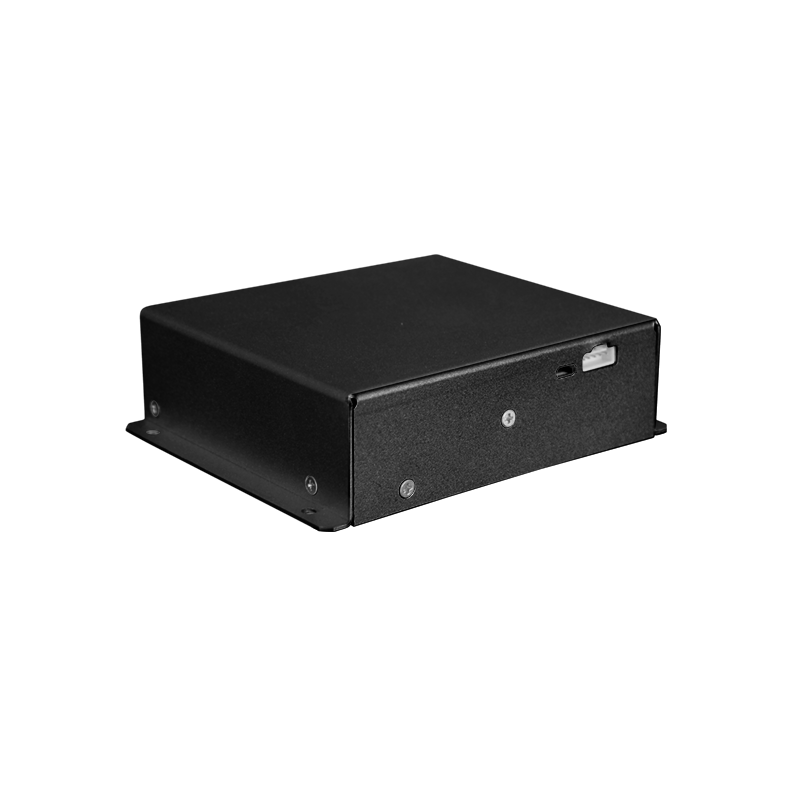
Scanning Strategy of High Voltage Driving Power Supply for Large Area Flexible Pressure Sensing Array
Flexible pressure sensing arrays enable distributed tactile sensing over large areas for applications including robotic skin, wearable devices, and structural health monitoring. These arrays consist of numerous pressure sensitive elements arranged in a matrix configuration, with each element providing pressure information at its location. High voltage driving power supplies activate the sensing elements through scanning sequences that address each element in turn. The scanning strategy determines the temporal resolution, power consumption, and measurement accuracy of the sensing system.
The architecture of flexible pressure sensing arrays typically employs a row column matrix arrangement where each sensing element sits at the intersection of a row line and a column line. Addressing a specific element involves activating its row and column lines while measuring the element response. This matrix arrangement reduces the number of interconnects compared to individually wiring each element, but introduces challenges for scanning strategy design including crosstalk between elements and the need for rapid sequential addressing.
High voltage requirements for pressure sensing arrays arise from the transduction mechanisms employed. Capacitive sensing elements measure pressure induced changes in capacitance between electrodes, requiring voltage excitation to detect the capacitance value. Piezoelectric sensing elements generate charge in response to pressure, but may require high voltage bias for certain readout configurations. Electret based sensing uses permanently charged materials that create internal fields, but may still require external voltage for readout. The driving voltage affects the signal amplitude and the signal to noise ratio of the pressure measurements.
Scanning strategies range from simple raster scanning to more sophisticated adaptive approaches. Raster scanning addresses each element in a fixed sequence, typically row by row, with uniform time allocated to each element. This approach provides consistent temporal resolution across the array but may waste time on elements with no pressure input. The scanning rate determines the frame rate, the number of complete array scans per second, which affects the ability to capture dynamic pressure distributions.
Adaptive scanning strategies concentrate measurement time on active regions where pressure is present, improving the effective temporal resolution for dynamic inputs while reducing power consumption during idle periods. Detection of activity in one scan can inform the scanning pattern for subsequent scans, focusing on regions where changes are occurring. Implementation of adaptive scanning requires real time processing of measurement data to guide the scanning controller.
Crosstalk between matrix elements arises from parasitic capacitances and resistances in the interconnect lines and from leakage through nonideal switches. When one element is addressed, signals can couple to adjacent elements through these parasitic paths, corrupting their measurements. Scanning strategies can incorporate crosstalk compensation by measuring the coupling characteristics and subtracting estimated crosstalk contributions from the raw measurements. Alternative element addressing sequences can reduce crosstalk by avoiding simultaneous activation of adjacent elements.
Power consumption in large arrays depends on the number of active elements, the driving voltage, and the element capacitance. Each addressed element draws current to charge its capacitance to the driving voltage, with the energy per element proportional to the capacitance times the square of the voltage. The total power scales with the number of elements addressed per second, the frame rate times the array size. Power management strategies can reduce consumption by lowering the frame rate when activity is low or by reducing the driving voltage when high sensitivity is not required.
The temporal resolution of the pressure sensing depends on both the scanning rate and the response time of individual sensing elements. Some transduction mechanisms have inherent time constants related to material properties or circuit configurations. The element response time must be faster than the dwell time per element in the scanning sequence to avoid temporal smearing of the pressure distribution. Characterization of element dynamics informs the appropriate scanning rate for accurate pressure measurement.
Signal conditioning and digitization for each addressed element must fit within the scanning dwell time. Amplifiers, filters, and analog to digital converters process the element signal before storage or transmission. The bandwidth and settling time of these circuits constrain the achievable scanning rate. Multiplexed signal conditioning circuits shared among multiple elements can reduce circuit complexity but may introduce settling time overhead when switching between elements.
Mechanical flexibility of the sensing array introduces considerations for the driving electronics. Flexing of the array during operation can change the interconnect resistances and capacitances, affecting the signal paths. Strain in the substrate may also affect the sensing element characteristics. The scanning strategy and signal processing must accommodate these variations, potentially requiring periodic recalibration or real time compensation based on strain measurements.