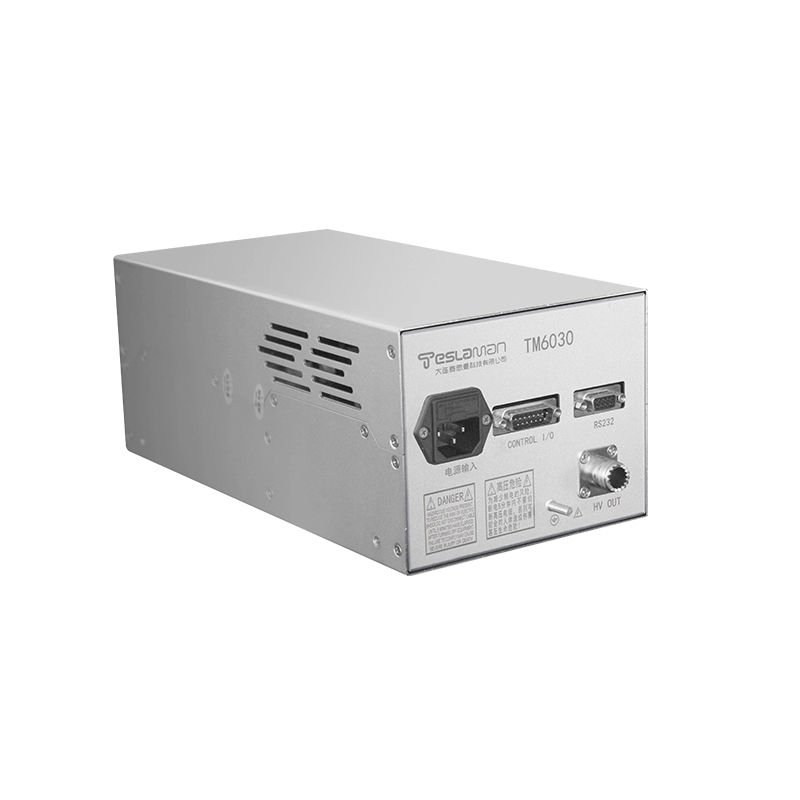
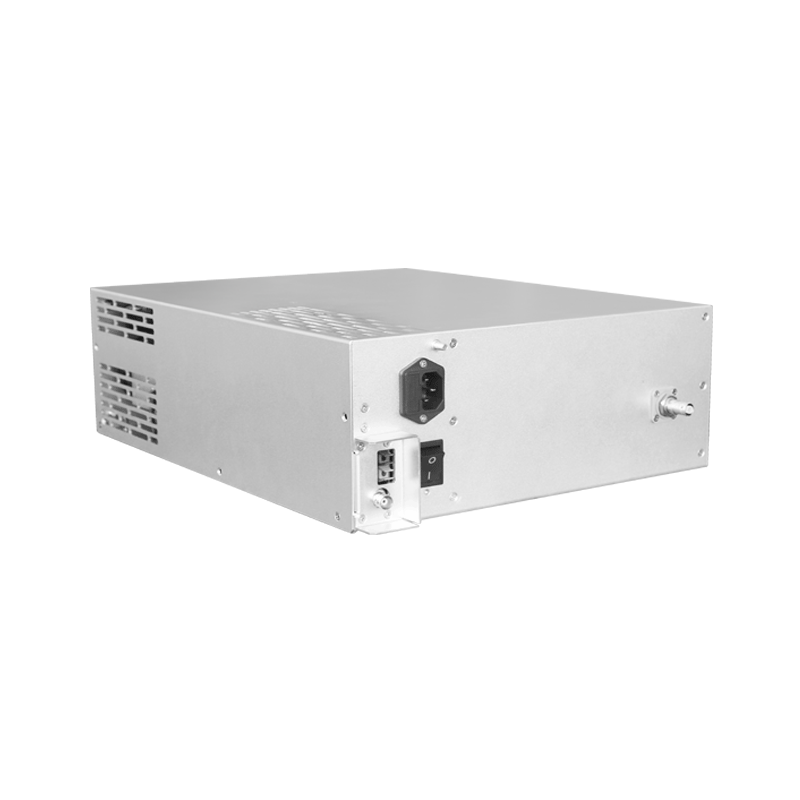
RF Interference Suppression and Grounding Technology of High Voltage Power Supply for Mass Spectrometry Analysis
Mass spectrometry instruments combine sensitive ion detection with radio frequency systems for ion manipulation, creating an environment where electromagnetic interference can severely degrade performance. The high voltage power supplies that bias detectors, accelerate ions, and control ion optics must operate without introducing interference that corrupts the mass spectra. Radio frequency interference suppression and proper grounding techniques preserve the signal integrity needed for accurate mass analysis.
Mass spectrometers employ various radio frequency systems including quadrupole mass filters, ion traps, and time of flight reflectrons. These systems operate at frequencies from hundreds of kilohertz to tens of megahertz, with voltage amplitudes that may range from volts to kilovolts. The radio frequency signals are sensitive to interference that can distort the ion trajectories and degrade the mass resolution. The high voltage power supplies must not introduce signals at frequencies that could interfere with these radio frequency systems.
Sources of radio frequency interference from high voltage power supplies include switching converters operating at high frequency, digital control circuitry with fast edge rates, and microphonic effects from mechanical vibration. Switching converters generate fundamental frequency energy and harmonics that can radiate or conduct into sensitive circuits. Digital circuits generate broadband interference from the fast transitions of logic signals. Microphonic effects convert mechanical vibration into electrical noise through piezoelectric or electrostatic coupling.
Switching frequency selection affects the interference characteristics. Choosing a switching frequency that does not overlap with the sensitive frequencies in the mass spectrometer avoids direct interference. Higher switching frequencies place the fundamental and lower harmonics above the sensitive frequency range, though higher frequencies may radiate more effectively. Frequency spreading techniques modulate the switching frequency to spread the interference energy across a wider bandwidth, reducing the peak interference at any single frequency.
Filtering at the power supply output attenuates the switching frequency components before they can couple to the mass spectrometer. Common mode filters suppress interference that appears on both output leads relative to ground, preventing coupling through ground paths. Differential mode filters suppress interference between the output leads, cleaning the voltage applied to the load. The filter design must provide adequate attenuation at the switching frequency and harmonics while maintaining the power supply regulation bandwidth.
Shielding contains the electromagnetic radiation from the power supply circuitry. Conductive enclosures attenuate electric fields by providing a barrier that intercepts the field lines. Magnetic materials attenuate magnetic fields by providing a low reluctance path for the magnetic flux. The shielding effectiveness depends on the material properties, the enclosure geometry, and the quality of the seams and apertures. Feedthrough filters allow signals and power to pass through the shield while maintaining the shielding integrity.
Grounding strategy is critical for preventing interference coupling through ground paths. The ground system must provide a stable reference for the power supply and the mass spectrometer while preventing interference currents from flowing through sensitive signal references. Star grounding connects all grounds at a single point, preventing ground loops. Ground planes provide low impedance reference paths at high frequency. The grounding implementation must address both low frequency DC grounds and high frequency RF grounds.
Ground loop analysis identifies paths where interference currents could flow through sensitive circuits. Ground loops occur when there are multiple paths between ground points, creating a loop that can intercept magnetic fields and induce circulating currents. Breaking the loop at appropriate points prevents the current flow. Isolation techniques including transformers and optical isolators break ground paths while allowing signal transfer.
Cable routing affects the interference coupling between the power supply and the mass spectrometer. Cables act as antennas that can radiate or pick up interference. Keeping power cables away from sensitive signal cables reduces coupling. Twisted pair cables cancel magnetic field pickup. Shielded cables with properly terminated shields contain interference. The cable lengths and routing should minimize the antenna efficiency at the interference frequencies.
Verification of interference suppression measures the actual interference levels in the operating system. Spectrum analyzer measurements detect any spurious signals at the mass spectrometer inputs. Time domain measurements capture transient interference during power supply events. Comparison with the mass spectrometer sensitivity determines whether the interference is acceptable. If interference is detected, additional suppression measures can be targeted at the specific frequencies and coupling paths identified.