Beam Spot Quality Monitoring System of High Voltage Power Supply for Electron Beam Powder Bed Fusion Additive Manufacturing
Electron beam powder bed fusion additive manufacturing builds metal parts by melting powder layers with an electron beam. The electron beam is generated by an electron gun and focused by electromagnetic lenses onto the powder bed. The high voltage power supply that accelerates the electrons determines the beam energy and affects the beam focusing. Beam spot quality monitoring ensures that the beam achieves the required characteristics for precise, consistent melting.
Electron beam powder bed fusion operates in vacuum, spreading metal powder in thin layers and selectively melting each layer with the electron beam. The beam scans across the powder bed according to the part geometry, melting powder in the pattern that defines the part cross section. After each layer, a new powder layer is spread and melted, building the part layer by layer. The process requires precise beam control to achieve accurate geometry and consistent material properties.
The electron gun generates the beam by emitting electrons from a cathode and accelerating them with high voltage. Thermionic emission from a heated cathode provides the electron source. The acceleration voltage, typically tens to hundreds of kilovolts, determines the electron energy. Higher voltages produce higher energy electrons that penetrate deeper into the powder. The beam current, controlled by the emission, determines the power delivered to the powder.
Electromagnetic lenses focus the beam to a small spot on the powder bed. The lenses use magnetic fields to steer and focus the electrons, analogous to optical lenses for light. The focusing determines the spot size, which affects the melting precision. Smaller spots enable finer features but may have lower power density. Larger spots enable faster melting but may have reduced precision.
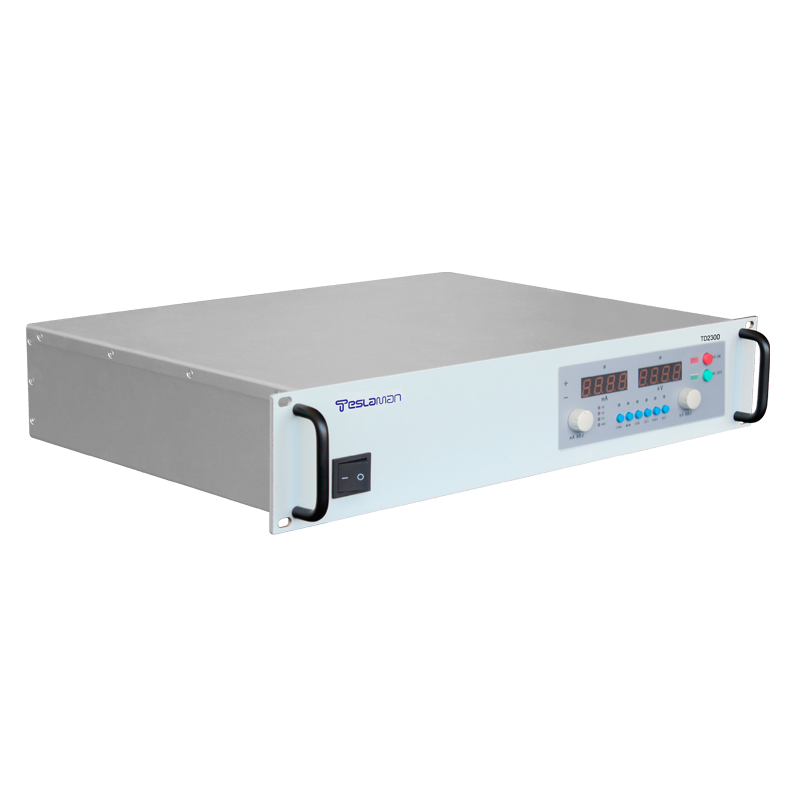
The high voltage power supply for the electron gun provides the acceleration voltage. The voltage must be stable to maintain constant electron energy. Voltage variations cause energy variations that affect the melting depth and consistency. The power supply must also respond to beam current variations, maintaining voltage despite changing load.
Beam spot quality includes spot size, spot shape, and spot position. The spot size determines the melting resolution. The spot shape affects the energy distribution within the spot. The spot position determines where melting occurs. All characteristics must be maintained within specifications for consistent part quality.
Spot size monitoring measures the actual beam spot size during operation. Various monitoring methods include scanning the beam across a edge or aperture and measuring the beam response, using a beam viewing system that captures the beam profile, or inferring the spot size from melting characteristics. The monitoring enables detection of spot size deviations from the target.
Spot shape monitoring detects aberrations that distort the beam profile. Ideal beams have circular, symmetric spots. Aberrations can cause elongated, asymmetric, or irregular spots. The shape affects the melting uniformity within the spot. Monitoring can detect shape problems that indicate lens misalignment or other issues.
Spot position monitoring verifies that the beam reaches the intended location. Position errors cause melting at wrong locations, affecting part geometry. Position monitoring compares the actual beam position with the commanded position, detecting any errors. The monitoring enables correction of position errors through calibration or adjustment.
Focus monitoring detects focus drift that enlarges the spot. Focus drift can occur from thermal effects, mechanical shifts, or electrical parameter changes. The monitoring measures the spot size or shape, detecting focus degradation. Focus adjustment can correct drift, maintaining the target spot size.
Beam current monitoring measures the emission current from the electron gun. The current determines the beam power, affecting the melting rate. Current variations cause power variations that affect melting consistency. The monitoring enables detection of current drift or instability.
High voltage monitoring measures the acceleration voltage. Voltage variations cause energy variations that affect melting depth. The monitoring detects voltage deviations from the target. Voltage adjustment can correct deviations, maintaining constant energy.
Integrated monitoring combines multiple measurements into a comprehensive beam quality assessment. The integration correlates different measurements to identify problems. For example, spot size increase combined with focus coil current drift indicates focus drift. The integration enables more effective diagnosis than individual measurements.
Real time monitoring during melting enables immediate detection of problems. The monitoring can alert operators or trigger automatic corrections when quality deviations occur. Real time monitoring prevents extended operation with degraded beam quality that would produce defective parts.
Calibration procedures establish baseline beam quality and correction parameters. Calibration measurements characterize the beam at known conditions, establishing the relationship between control parameters and beam characteristics. The calibration data enable correction of systematic errors and provide reference for monitoring.
Quality assurance through beam monitoring supports consistent part production. The monitoring verifies that beam quality meets specifications before and during part builds. The verification prevents production of defective parts from beam quality problems. The monitoring data provide documentation of beam quality for quality records.