Design and Development of Virtual-Real Combined High Voltage Power Supply Fault Diagnosis Teaching Platform
The education and training of engineers in high voltage power supply technology requires comprehensive understanding of both theoretical principles and practical troubleshooting skills. Traditional educational approaches often separate theoretical instruction from hands-on experience, creating gaps in student preparation for real-world engineering challenges. Virtual-real combined teaching platforms integrate simulation-based learning with physical hardware experimentation, enabling students to develop diagnostic skills through realistic fault scenarios without the risks and costs associated with actual high voltage equipment failures.
The fundamental challenge of high voltage power supply education involves the inherent dangers and costs of working with actual high voltage systems. Students cannot safely explore fault conditions on real equipment without risk of injury or equipment damage. The expense of high voltage equipment limits the availability of hands-on learning opportunities. Virtual simulation provides safe exploration of fault scenarios, while physical hardware provides authentic experience with actual equipment behavior.
Virtual simulation components of the teaching platform employ computational models that represent the electrical behavior of high voltage power supply systems. These models incorporate the characteristics of power electronics components, control circuits, and load interactions. The simulation enables exploration of normal operation and fault conditions through numerical solution of circuit equations. Students can observe voltage and current waveforms, control system responses, and fault progression in a safe virtual environment.
Fault scenario libraries within the virtual platform provide structured learning experiences covering common high voltage power supply failure modes. Component failures such as capacitor degradation, semiconductor breakdown, and transformer insulation failure can be simulated with realistic progression characteristics. Control system faults including sensor failures, feedback loop disruptions, and timing errors demonstrate system-level failure behaviors. Environmental faults such as temperature extremes, electromagnetic interference, and power supply anomalies show how external conditions affect system performance.
The diagnostic interface within the virtual platform provides tools that students use to investigate fault conditions. Virtual oscilloscopes display voltage and current waveforms at various circuit nodes. Virtual multimeters measure DC and AC values at test points. Virtual spectrum analyzers reveal frequency domain characteristics of signals. These diagnostic tools replicate the functionality of actual test equipment, enabling students to develop measurement skills in the virtual environment.
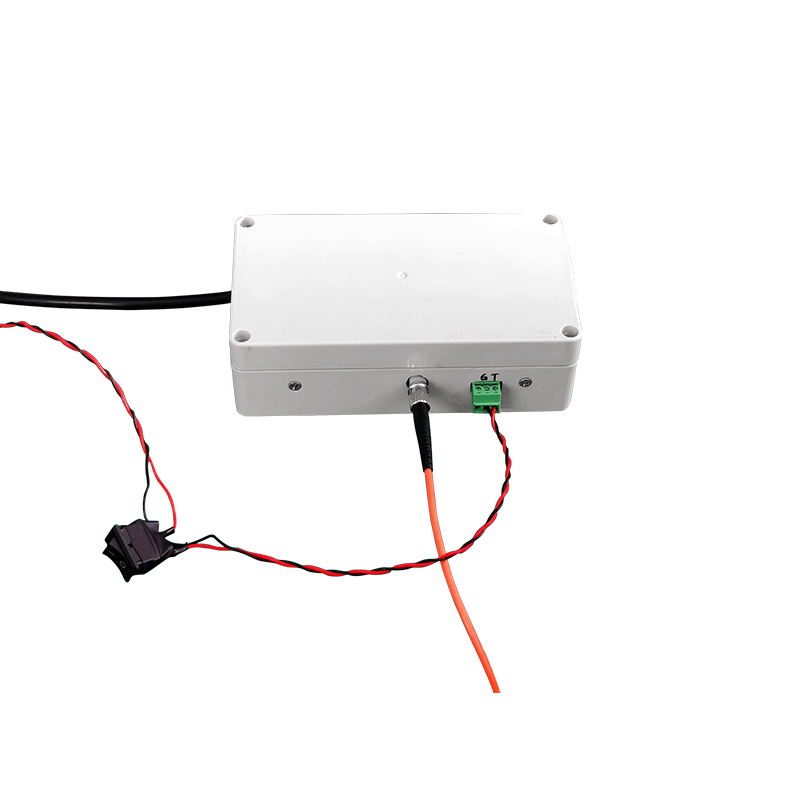
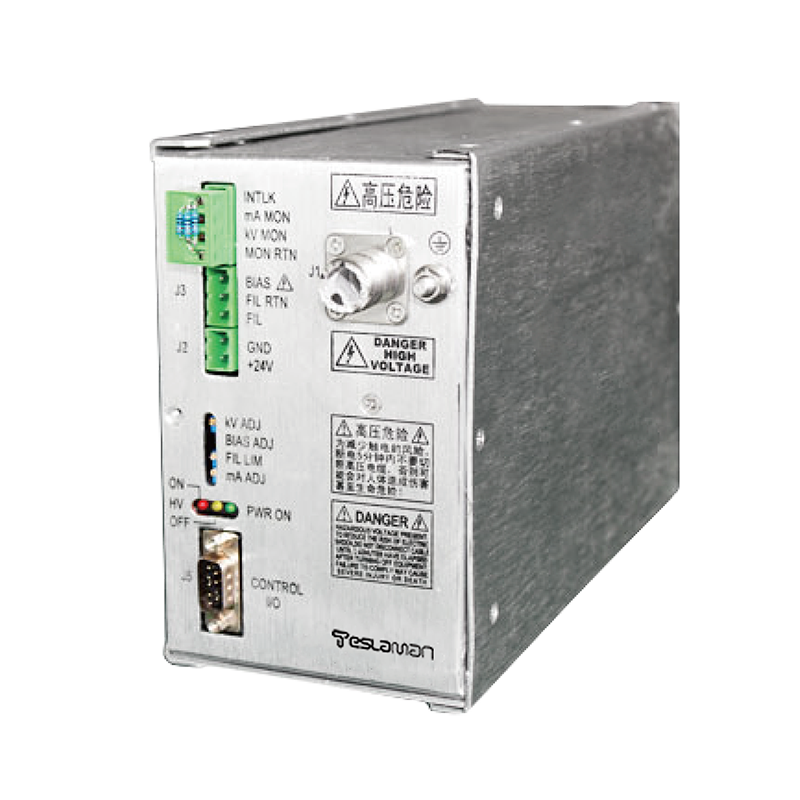
Physical hardware components of the teaching platform provide actual high voltage power supply equipment for hands-on experimentation. The hardware may include reduced-scale power supplies that operate at lower voltages for safety while maintaining representative circuit topologies. Actual diagnostic equipment enables students to practice measurement techniques on real hardware. The physical experimentation complements virtual learning with authentic equipment experience.
Fault injection mechanisms in the physical hardware enable controlled introduction of fault conditions for diagnostic practice. Switchable fault circuits can introduce specific failure modes such as open circuits, short circuits, and component degradation. The fault injection is designed to be reversible and safe, allowing students to practice diagnosis without permanent equipment damage. The fault scenarios in hardware can correlate with virtual scenarios for integrated learning experiences.
The integration between virtual and real components enables coordinated learning experiences that leverage the strengths of both approaches. Students can first explore fault scenarios in the virtual environment, developing diagnostic hypotheses and testing approaches safely. They can then apply their diagnostic skills to physical hardware with actual fault conditions, experiencing the nuances of real equipment behavior. The coordinated approach builds comprehensive diagnostic capability.
Learning management systems coordinate the educational activities and track student progress through the curriculum. The system presents fault scenarios in structured sequences that build diagnostic skills progressively. Assessment modules evaluate student diagnostic performance through analysis of their investigation approaches and conclusions. Feedback mechanisms guide students toward improved diagnostic strategies based on their performance.
Instructor interfaces enable educators to configure fault scenarios, monitor student activities, and provide guidance during learning sessions. Instructors can select specific fault types, adjust fault parameters, and control scenario difficulty. Real-time monitoring of student diagnostic activities enables instructors to provide timely guidance and intervention. The instructor tools support effective educational delivery using the platform.
Safety considerations for the physical hardware components require careful design to prevent student injury while maintaining educational value. Reduced voltage operation limits the electrical hazards while preserving circuit behavior characteristics. Current limiting prevents excessive energy during fault conditions. Interlock systems disable power when unsafe conditions are detected. Safety training ensures students understand proper procedures before working with hardware.
Scalability considerations enable deployment of the teaching platform across multiple educational settings. The virtual components can be deployed on standard computing equipment accessible to many students simultaneously. The physical hardware can be replicated in multiple laboratory stations for hands-on sessions. The architecture supports both individual learning and collaborative group activities.
Technical accuracy of the simulation models ensures that virtual learning experiences transfer effectively to real-world diagnostic skills. The models must accurately represent component behavior, circuit interactions, and fault progression characteristics. Validation against actual power supply behavior confirms simulation accuracy. Regular updates maintain model accuracy as understanding of power supply behavior advances.
User interface design affects the educational effectiveness of the platform. Clear presentation of diagnostic information enables students to focus on learning rather than struggling with tool operation. Intuitive navigation through fault scenarios and diagnostic tools supports efficient learning. Responsive interaction maintains student engagement throughout learning sessions.
Assessment methodologies evaluate the effectiveness of the virtual-real combined approach for developing diagnostic skills. Comparison with traditional educational approaches measures learning outcome improvements. Student feedback identifies strengths and weaknesses of the platform design. Continuous improvement based on assessment results enhances educational effectiveness over time.
Industry relevance ensures that skills developed using the platform transfer effectively to professional engineering practice. The fault scenarios should represent actual failure modes encountered in industrial high voltage power supply applications. The diagnostic approaches should align with professional troubleshooting methodologies. Industry input during platform development ensures appropriate content and approach.
Accessibility considerations enable diverse student populations to benefit from the platform. The virtual components can accommodate students with physical limitations that might constrain hands-on hardware work. Multi-language support enables international deployment. Adaptive interfaces accommodate different learning styles and skill levels.
Continued development of virtual-real combined teaching platforms advances high voltage power supply education. Improved simulation models provide more realistic virtual experiences. Enhanced hardware integration enables more sophisticated fault scenarios. Advanced assessment algorithms provide more detailed evaluation of diagnostic skills. These developments continue to enhance the preparation of engineers for high voltage power supply troubleshooting challenges.