Total Ionizing Dose Effect Evaluation of High Voltage Power Supply for Spaceborne Synthetic Aperture Radar
Spaceborne synthetic aperture radar systems have revolutionized Earth observation capabilities, providing high-resolution imaging independent of weather conditions and solar illumination. These radar systems employ sophisticated electronics including high voltage power supplies that must operate reliably in the harsh radiation environment of space. The total ionizing dose effect from accumulated radiation exposure can degrade electronic component performance over mission lifetime, requiring comprehensive evaluation and mitigation strategies to ensure reliable operation throughout the intended mission duration.
The fundamental mechanism of total ionizing dose effects involves ionization in semiconductor materials when exposed to radiation. The ionization creates electron-hole pairs that can become trapped in oxide layers and interfaces, causing charge accumulation that alters device characteristics. The accumulated charge affects threshold voltages, leakage currents, and other parameters, potentially causing performance degradation or functional failure when effects exceed device tolerance.
Radiation environments in space vary significantly depending on orbit altitude, inclination, and solar activity. Low Earth orbits experience lower radiation doses due to geomagnetic shielding, but may encounter significant doses over long mission durations. Medium Earth orbits pass through radiation belt regions with higher dose rates. Geostationary orbits experience steady dose accumulation from cosmic rays and solar particles. The mission orbit determines the expected total dose over mission lifetime.
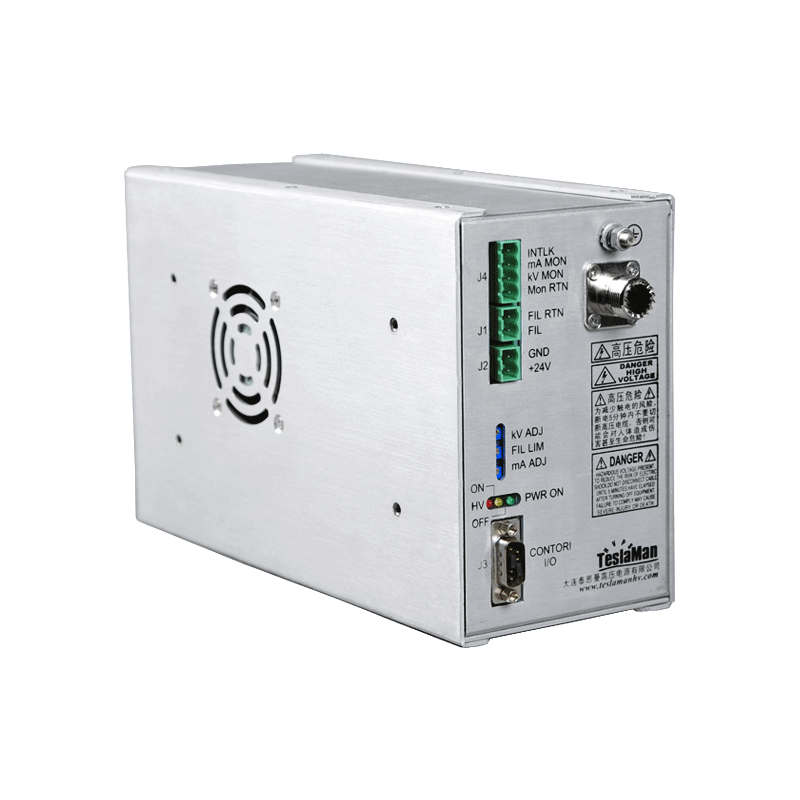
High voltage power supplies in synthetic aperture radar systems provide the power for radar transmitters, receivers, and signal processing electronics. The power supplies must generate stable high voltage outputs with appropriate regulation, ripple, and noise characteristics for radar performance. The radiation effects on power supply components can affect output characteristics and potentially degrade radar imaging quality.
Semiconductor devices in high voltage power supplies include power transistors, control integrated circuits, and various support components. Each device type has different radiation sensitivity characteristics. Power MOSFETs may experience threshold voltage shifts and leakage current increases. Control circuits may experience parameter drift and functional degradation. The radiation evaluation must characterize effects on all critical components.
Threshold voltage shifts in MOSFETs result from charge trapping in gate oxide layers. The trapped charge shifts the threshold voltage, potentially causing changes in switching characteristics, on-state resistance, and other parameters. The shift magnitude depends on the oxide thickness, radiation dose, and device design. Modern devices with thin oxides generally exhibit smaller shifts than older technologies.
Leakage current increases result from radiation-induced defects at silicon-oxide interfaces and in bulk silicon. The defects create leakage paths that increase standby current and may affect device operation. Excessive leakage can cause thermal management challenges and may eventually lead to functional failure. The leakage increase depends on device design and radiation dose.
Parameter drift in analog circuits affects precision functions such as voltage references, amplifiers, and comparators. The drift can cause changes in output voltage accuracy, regulation performance, and other characteristics. The drift magnitude depends on circuit design and component sensitivity. Precision circuits may require radiation-hardened components or compensation techniques.
Functional degradation in digital circuits affects control and monitoring functions. The degradation can cause timing changes, logic errors, or complete functional failure. Digital circuits in modern technologies generally exhibit good radiation tolerance, but may still experience effects at high doses. The functional evaluation must verify operation throughout the dose range.
Radiation testing methodologies include ground testing using radiation sources that simulate space environments. Gamma ray sources provide uniform ionizing dose for component characterization. Proton and electron beams provide more realistic simulation of space radiation spectra. The testing must cover the expected dose range with appropriate dose rates and annealing conditions.
Test sequences for radiation evaluation typically include pre-radiation characterization, incremental radiation exposure with intermediate measurements, and post-radiation characterization. The incremental measurements reveal the progression of effects with dose accumulation. The post-radiation characterization reveals the final state after full dose exposure. Annealing tests reveal any recovery effects after radiation cessation.
Component selection for radiation tolerance involves choosing devices with adequate radiation performance for the mission requirements. Radiation-hardened devices provide enhanced tolerance through design modifications. Commercial devices may provide adequate tolerance for lower dose applications if properly evaluated. The selection must balance radiation performance against other requirements such as electrical performance, availability, and cost.
Design mitigation techniques reduce radiation effects through circuit design approaches. Compensation circuits can correct for parameter drift in critical functions. Redundant circuits can provide backup if primary circuits fail. Design margins can accommodate expected parameter changes without functional impact. The mitigation design must address the specific effects expected for the components used.
Shielding approaches reduce radiation exposure through physical barriers that attenuate radiation particles. Metal shielding can reduce dose rates for sensitive components. The shielding effectiveness depends on the radiation type, energy, and shielding material. Shielding design must balance radiation protection against mass constraints in spacecraft applications.
Mission planning considerations include the expected radiation dose over mission lifetime and the margin between expected dose and component tolerance. The mission duration determines the total dose accumulation. The orbit selection affects the dose rate. The margin provides confidence in reliable operation throughout the mission.
Reliability analysis for radiation effects must account for the statistical distribution of radiation effects across component populations. Individual components may exhibit different radiation response characteristics. The analysis must ensure that sufficient margin exists to accommodate worst-case effects within the component distribution. Statistical methods provide confidence bounds for reliability predictions.
Environmental factors beyond radiation can interact with radiation effects. Temperature can affect radiation response and annealing behavior. Thermal cycling can cause mechanical stress that interacts with radiation-induced changes. Electromagnetic interference can affect circuit operation in conjunction with radiation effects. The evaluation must consider these interactions.
Integration with spacecraft systems requires coordination between power supply radiation performance and overall spacecraft radiation management. The power supply radiation tolerance must meet spacecraft requirements. The power supply shielding must be compatible with spacecraft thermal and structural design. The power supply testing must satisfy spacecraft qualification requirements.
Continued advancement in radiation-hardened electronics technology enables improved performance in space applications. New device technologies may offer enhanced radiation tolerance. Advanced design techniques provide improved mitigation capabilities. Better understanding of radiation effects enables more accurate prediction and design. These developments continue to advance the capabilities of high voltage power supplies for spaceborne synthetic aperture radar systems.