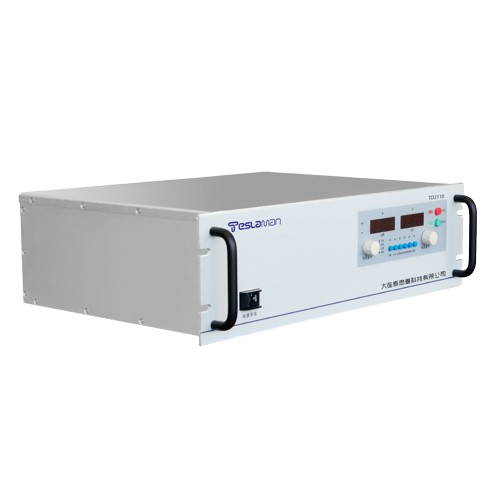
Aging Test High Voltage Power Supply System Design for Polymer Electroluminescent Devices
Polymer electroluminescent devices have emerged as promising candidates for next-generation display and lighting applications due to their potential for flexible, large-area light emission with simplified manufacturing processes compared to conventional inorganic devices. These devices operate through electroluminescence mechanisms in organic or polymer semiconductors where high electric fields drive charge injection, transport, and recombination to generate light emission. Understanding device lifetime and degradation behavior requires comprehensive aging tests that subject devices to sustained operation under controlled conditions. High voltage power supply systems for aging tests must provide stable, precisely controlled electrical stimulation over extended durations while enabling continuous monitoring of device degradation.
The fundamental principle of polymer electroluminescence involves applying high electric fields across thin polymer layers to generate light emission through recombination of injected charge carriers. Holes injected from the anode and electrons injected from the cathode transport through the polymer layers under the influence of the electric field. When opposite carriers meet, recombination occurs with photon emission if the energy conditions are favorable. The emission intensity, color, and efficiency depend on the applied voltage, device structure, and material properties.
Device lifetime characterization through aging tests provides critical information for application development and reliability assessment. Lifetime measurement determines the operational duration before performance degradation reaches specified failure thresholds. Degradation analysis identifies the mechanisms responsible for performance decline and their progression rates under various conditions. The test results inform device design optimization, material selection, and application reliability predictions.
High voltage requirements for polymer electroluminescent devices typically range from tens to hundreds of volts depending on device thickness, material properties, and desired luminance. The test voltage must match intended operating conditions for realistic aging assessment while providing controlled stress for accelerated lifetime evaluation. Voltage precision affects test consistency and the ability to compare results across different devices and conditions.
Voltage stability requirements for aging tests are substantially more stringent than for normal device operation due to the extended test durations. Voltage fluctuations can cause variations in current density, luminance, and degradation rates that complicate lifetime assessment. The power supply must maintain voltage within tight tolerances throughout test durations that may extend to thousands of hours. Long-term stability is essential for meaningful test results.
Current monitoring during aging tests provides valuable information about device electrical degradation. Current density changes indicate variations in charge injection, transport, or recombination efficiency. Current fluctuations may suggest the development of shorts, the formation of insulating regions, or interface degradation. Continuous current monitoring enables correlation of electrical changes with luminance degradation.
Optical monitoring during aging tests tracks light emission performance degradation over time. Luminance measurement quantifies the light output reduction that characterizes device aging. Color measurement detects spectral shifts that may indicate material degradation or layer intermixing. Spatial uniformity measurement identifies local degradation regions that may not be apparent from overall luminance measurement. The optical monitoring must be continuous or sufficiently frequent to capture degradation dynamics.
Temperature control during aging tests significantly affects degradation rates and mechanisms. Elevated temperature testing accelerates degradation through thermally activated processes, enabling rapid lifetime assessment for screening and development purposes. The temperature must be precisely controlled and uniformly distributed across test samples for consistent accelerated aging. Temperature cycling tests evaluate thermal stress effects on device reliability and interface stability.
Environmental control during aging tests addresses factors beyond temperature that affect degradation. Humidity control prevents moisture-related degradation that can dramatically reduce device lifetime. Ambient atmosphere control enables testing under inert atmospheres that exclude oxygen and moisture for comparison with normal operating conditions. The environmental control must maintain specified conditions throughout extended test durations.
Test duration requirements for comprehensive lifetime assessment may extend to thousands of hours for realistic operational lifetime projection. The extended duration places exceptional reliability requirements on the power supply system that must operate continuously without maintenance or adjustment. The long-term reliability must be verified through accelerated life testing of the power supply system itself.
Multi-device testing capabilities enable simultaneous aging of multiple samples for statistical assessment and comparative studies. Identical test conditions across multiple devices enable determination of lifetime distributions and failure statistics. Different test conditions across device groups enable comparative studies of material, structure, or operational parameter effects. The multi-device capability must maintain consistent conditions across all test positions.
Data acquisition systems capture monitoring data throughout extended test durations for comprehensive degradation analysis. Continuous data capture enables detailed temporal analysis of degradation progression and identification of degradation phases. Data storage must accommodate the large volumes of data generated by monitoring multiple parameters across many devices over thousands of hours. The data systems must operate reliably throughout the test duration without data loss.
Test sequence control manages the progression of aging tests from initiation through completion. Automated control enables consistent test execution without manual intervention that could introduce variability. The sequence must include device initialization, steady operation, periodic measurement intervals, and controlled shutdown. The control system must handle normal operation and fault conditions appropriately.
Safety considerations for extended high voltage operation focus on protecting personnel and equipment from electrical hazards. The high voltage must be isolated from personnel access through appropriate barriers and interlocks. The safety measures must operate reliably throughout extended unattended operation. The safety design must meet applicable electrical safety standards for testing equipment.
Integration with device characterization systems enables comprehensive aging assessment beyond continuous monitoring. Pre-aging characterization establishes baseline device characteristics for comparison with post-aging measurements. Periodic characterization during aging enables tracking of degradation progression. Post-aging characterization reveals the final degradation state and failure modes. The integration must enable seamless device transfer between aging and characterization systems.
Testing and verification of aging test systems require comprehensive evaluation of control, monitoring, and reliability capabilities. Extended duration testing verifies system reliability for long-term operation. Accuracy testing verifies monitoring precision for meaningful degradation measurement. Environmental testing verifies performance stability under test conditions. The verification program must establish confidence in system performance for reliable aging tests.
Continued advancement in polymer electroluminescent technology drives ongoing development of aging test systems with enhanced capabilities. Better understanding of degradation mechanisms enables more targeted testing protocols. Advanced monitoring technologies enable more detailed degradation characterization. Integration with data analytics enables automated lifetime prediction and failure mode identification. These developments continue advancing the capabilities of aging test systems for polymer electroluminescent device development.