Dielectric Elastomer Energy Harvester High Voltage Power Supply Maximum Power Point Tracking and Energy Management
Dielectric elastomer energy harvesters represent an emerging technology for converting mechanical energy into electrical energy through the cyclic deformation of soft capacitive materials. These systems operate on the principle of variable capacitance energy conversion, where stretching of the dielectric elastomer decreases capacitance while charge is maintained, resulting in increased voltage and harvestable electrical energy. The high voltage operation required for efficient energy harvesting, typically hundreds to thousands of volts, necessitates specialized power supply electronics that implement maximum power point tracking and manage the bidirectional energy flow inherent in the harvest cycle.
The energy conversion cycle of a dielectric elastomer harvester involves charging the elastomer at high capacitance when stretched, mechanically releasing the stretch to reduce capacitance while maintaining charge, and then discharging at higher voltage to harvest energy. The energy harvested per cycle depends on the dielectric constant, the change in capacitance, the operating voltage, and the efficiency of the power electronics. Maximizing the harvested energy requires optimization of the operating voltage and the timing of charge and discharge operations relative to the mechanical deformation cycle.
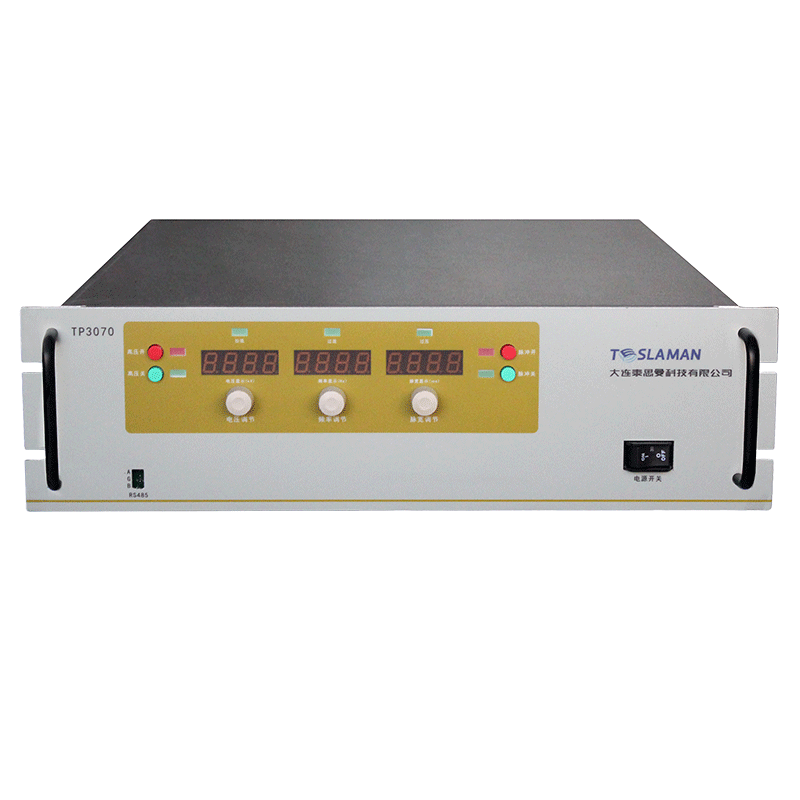
High voltage power supplies for dielectric elastomer harvesters differ fundamentally from conventional power supplies in that they must support both sourcing and sinking of energy. During the charging phase, the power supply must deliver high voltage to the elastomer. During the harvesting phase, the power supply must accept energy from the elastomer and convert it to a usable form for storage or load supply. This bidirectional operation requirement adds complexity to the power supply design compared to unidirectional supplies.
Maximum power point tracking for dielectric elastomer harvesters optimizes the operating voltage to maximize the harvested energy under varying mechanical and electrical conditions. The optimal operating voltage depends on the mechanical excitation amplitude and frequency, the elastomer properties, and the load characteristics. Unlike solar photovoltaic systems where maximum power point tracking is well established, dielectric elastomer harvesters present unique challenges due to the dynamic nature of the mechanical energy source and the bidirectional power flow.
The implementation of maximum power point tracking requires real-time measurement of harvested power and adjustment of operating parameters. For dielectric elastomer harvesters, the relevant parameters include the initial charge voltage, the discharge threshold voltage, and the timing of charge and discharge operations relative to the mechanical cycle. Perturbation and observation algorithms, commonly used in photovoltaic applications, can be adapted to the dielectric elastomer context by systematically varying operating parameters and measuring the resulting power output.
The energy management system must balance the harvested energy against the parasitic losses in the power electronics. The switching converters, high voltage components, and control circuits all consume power that reduces the net harvested energy available for useful purposes. At low mechanical excitation levels, the parasitic losses may exceed the harvested energy, requiring intelligent control that suspends harvesting operations when net energy production is negative.
High voltage generation circuits for dielectric elastomer harvesters must achieve high efficiency at the relatively low power levels typical of energy harvesting applications. Conventional high voltage supplies designed for higher power applications often have poor efficiency at the milliwatt power levels relevant to small-scale energy harvesting. Specialized circuit topologies and component selections optimize efficiency across the operating range of interest.
Charge recovery represents a critical aspect of dielectric elastomer energy harvesting efficiency. The energy stored in the elastomer capacitance at the end of the harvest cycle can be recovered and stored rather than dissipated, significantly improving overall conversion efficiency. Regenerative circuits that return the stored energy to a storage capacitor or battery enable efficient operation, but add complexity and cost to the power supply system.
The high voltage requirements of dielectric elastomer operation create safety and insulation challenges. Voltages of hundreds or thousands of volts present shock hazards and require appropriate insulation and protection measures. The soft, deformable nature of the dielectric elastomer material creates unique insulation challenges compared to rigid electronic components. Fail-safe circuit designs that limit voltage and current to safe levels protect both the system and operators.
Energy storage for harvested energy must accommodate the intermittent nature of mechanical energy sources. Mechanical vibrations, human motion, and environmental energy sources vary in amplitude and frequency, resulting in variable harvesting rates. Energy storage elements, typically supercapacitors or rechargeable batteries, buffer the harvested energy and provide stable power to the load. The sizing of energy storage components involves trade-offs between capacity, size, cost, and the ability to support peak load requirements.
Load management strategies optimize the utilization of harvested energy under variable supply conditions. Priority-based load scheduling, load shedding during low energy availability, and adaptive power management enable the system to maintain critical functions while gracefully degrading non-essential functions when energy supply is limited. These strategies are particularly important for autonomous systems that must operate indefinitely without external power sources.
System integration considerations for dielectric elastomer energy harvesters include the mechanical-to-electrical energy conversion interface, power electronics, energy storage, and load management. The power supply design must be compatible with the electrical characteristics of the dielectric elastomer, which can exhibit significant capacitance variation and non-linear behavior under large deformation. Integration with sensors and control systems enables intelligent harvesting that adapts to changing conditions and optimizes performance over the operational lifetime of the system.
The development of dielectric elastomer energy harvesting systems continues to advance through improvements in materials, mechanical design, and power electronics. Higher energy density elastomers, more efficient power converter topologies, and smarter energy management algorithms are extending the range of applications where these systems can provide useful amounts of energy. The high voltage power supply, with its maximum power point tracking and energy management functions, plays a central role in realizing the potential of this emerging energy harvesting technology.