Coaxial Electrospinning Preparation of Hollow Structure Nanofiber High Voltage Power Supply Process Parameter Research
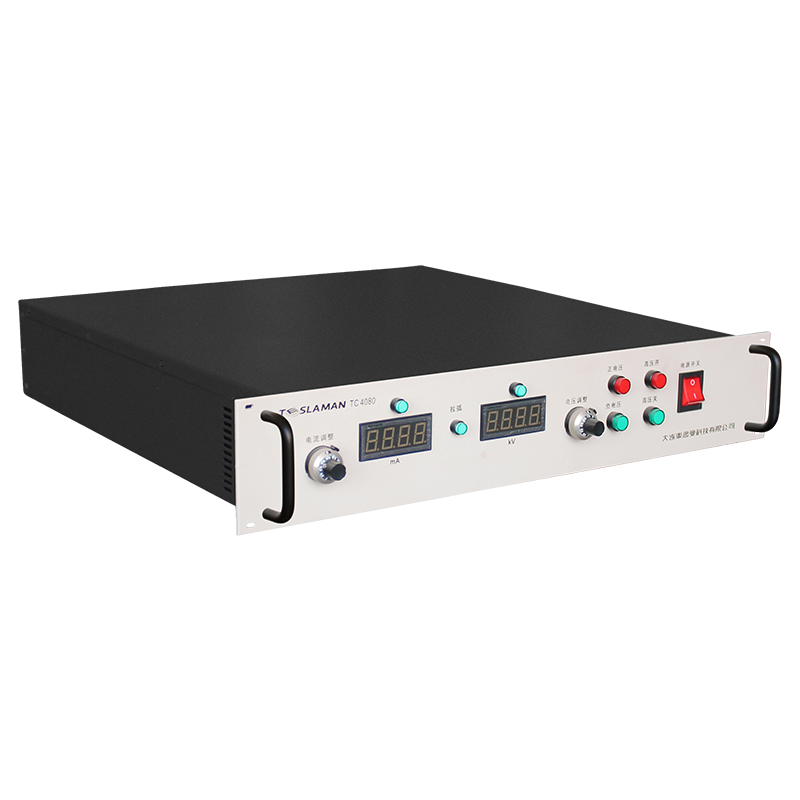
Coaxial electrospinning represents an advanced manufacturing technique for producing hollow structure nanofibers through the application of high voltage electric fields to concentric fluid streams. This process enables fabrication of tubular nanofibers with controlled diameters and wall thicknesses for applications in drug delivery, tissue engineering, catalysis, and filtration. The high voltage power supply serves as the critical energy source that establishes the electric field driving the electrospinning process, with process parameters significantly influencing fiber morphology and properties.
The coaxial electrospinning configuration employs two concentric needles through which separate fluid solutions flow simultaneously. The inner needle carries a core fluid that forms the eventual hollow cavity, while the outer needle carries a shell solution that solidifies into the fiber wall. High voltage applied to the needle assembly charges both fluid streams, inducing charge separation and electrostatic repulsion forces that overcome surface tension and initiate jet formation.
Electric field strength at the needle tip depends on the applied voltage, needle geometry, and distance to the grounded collector. Typical operating voltages range from 10 to 30 kilovolts, with needle-to-collector distances of 10 to 30 centimeters. Field strengths of 1 to 5 kilovolts per centimeter at the fluid surface generate the electrostatic forces necessary for Taylor cone formation and jet initiation. Voltage control precision affects the stability of the electrospinning process and the uniformity of resulting fibers.
Power supply current capability determines the charge injection rate into the spinning fluids. Coaxial electrospinning typically draws currents of microamperes to tens of microamperes from the high voltage supply. While total current remains low, the power supply must maintain stable voltage under varying load conditions as the jet dynamics modulate the effective impedance of the electrospinning system. Current limiting protection prevents arc discharge under fault conditions while allowing normal current flow during stable operation.
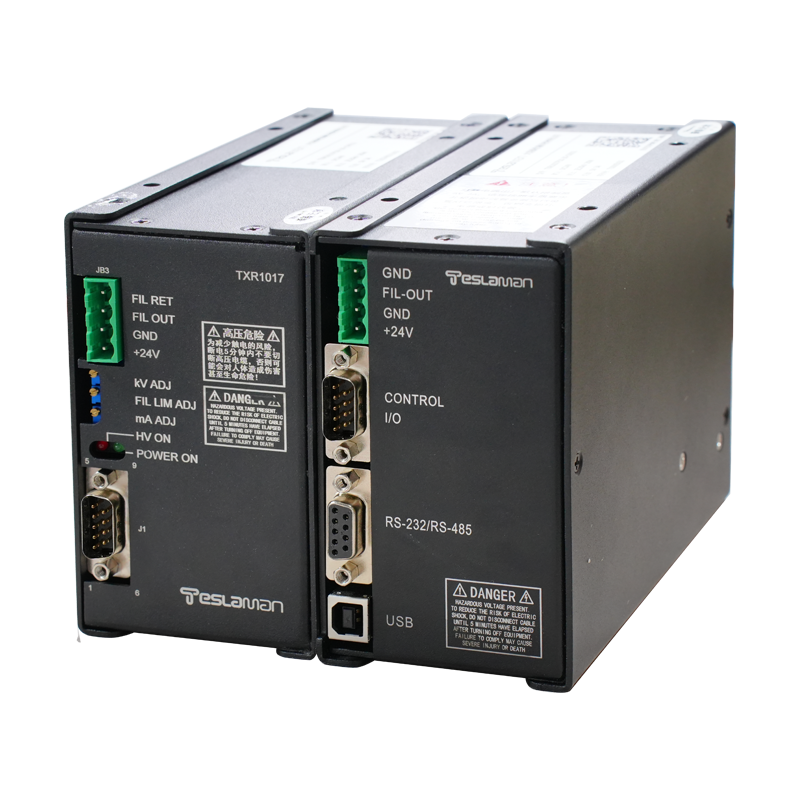
Voltage ripple and noise from the power supply can destabilize the electrospinning jet, causing intermittent operation or irregular fiber morphology. Linear regulated high voltage supplies provide the cleanest output waveforms with minimal ripple, while switched mode supplies offer higher efficiency at the cost of increased high-frequency noise. Filtering networks at the supply output reduce switching frequency components that might interfere with the electrospinning process. Selection between supply topologies involves trade-offs between output quality, efficiency, and cost.
Process parameters under high voltage influence include the electric field strength, charge density in the spinning jet, and electrostatic stretching force on the fiber. Higher applied voltages generally produce smaller fiber diameters through increased stretching forces, but excessive voltage causes jet instability and bead formation. Optimal voltage ranges depend on solution properties including viscosity, conductivity, and surface tension, requiring experimental determination for each polymer-solvent system.
Core solution properties determine the eventual hollow structure characteristics. Sacrificial core fluids removed through dissolution or evaporation after fiber collection leave hollow cavities in the fiber centers. Alternatively, permanent core materials can remain encapsulated within the fiber structure for sustained release applications. Core flow rate relative to shell flow rate influences the inner diameter and wall thickness of hollow fibers. High voltage field interactions with the core-shell interface affect the core positioning and concentricity of the resulting hollow structure.
Shell solution properties govern the spinnability and mechanical characteristics of the fiber wall. Polymer concentration in the shell solution affects solution viscosity and chain entanglement density, critical parameters for fiber formation. Conductivity enhancers added to the shell solution increase charge carrying capacity, intensifying electrostatic stretching forces. Surface tension modifiers reduce the cohesive forces that resist jet extension. The high voltage field distribution interacts with solution conductivity to determine charge distribution on the jet surface.
Ambient conditions including temperature, humidity, and air flow affect solvent evaporation rates and fiber solidification. Temperature control stabilizes solution viscosity and evaporation kinetics. Humidity management prevents moisture absorption that could alter solution properties or cause pore formation in fiber walls. Air flow control minimizes environmental perturbations that could destabilize the electrospinning jet. The high voltage power supply must operate reliably under ambient condition variations encountered in laboratory or production environments.
Collector design influences fiber deposition patterns and alignment. Rotating drum collectors produce aligned fiber mats suitable for applications requiring anisotropic properties. Static plate collectors collect randomly oriented fiber networks. Patterned collectors with conductive and insulating regions deposit fibers in controlled patterns through field shaping effects. The high voltage potential difference between needle and collector determines the field distribution driving fiber deposition.
Multi-needle configurations increase throughput for production scale coaxial electrospinning. Parallel operation of multiple coaxial needles from a common high voltage supply requires careful attention to voltage distribution across needles. Individual current monitoring at each needle enables detection of needle clogging or process instability. Needle spacing must prevent electric field interactions that could cause jet repulsion or attraction between adjacent spinning sites.
Process monitoring and control systems maintain consistent fiber quality during extended production runs. Camera systems observe Taylor cone formation and jet stability, providing feedback for voltage adjustment. Flow rate controllers maintain constant solution delivery rates as reservoir levels change. Current measurement provides indirect indication of charge density and jet stability. Closed-loop control systems adjust voltage and flow parameters to maintain target current levels and jet characteristics.
Safety considerations for coaxial electrospinning include protection against high voltage shock and solvent vapor exposure. Interlocked enclosures prevent operator access to high voltage conductors during operation. Ventilation systems remove volatile organic solvent vapors generated during fiber formation. Emergency shutdown circuits rapidly de-energize the system upon detection of fault conditions. Personal protective equipment requirements address both electrical and chemical hazards present in the electrospinning environment.