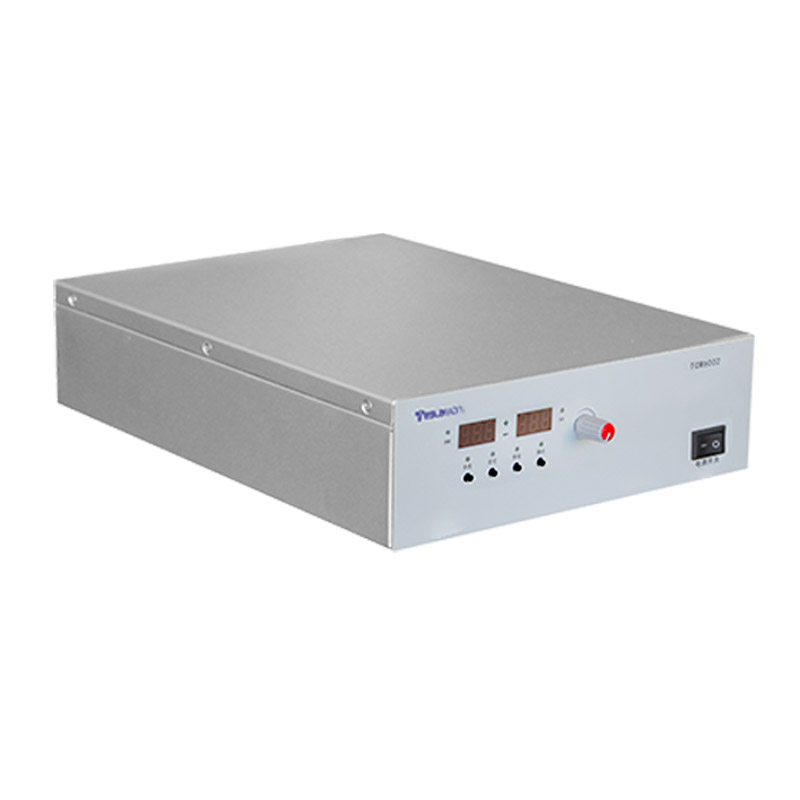
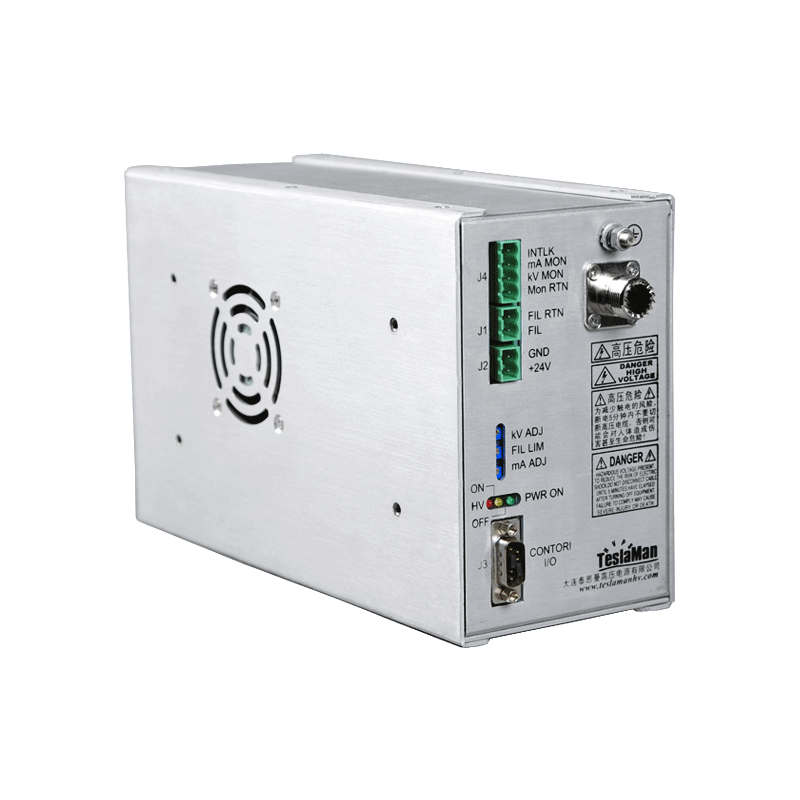
High Voltage Power Supply Embedded System Implementation of Complex Nonlinear Load Adaptive Matching Function
The implementation of adaptive matching functions in high voltage power supplies addresses the challenge of driving complex nonlinear loads encountered in plasma systems, pulsed power applications, and specialized industrial processes. Nonlinear load characteristics vary with operating conditions, voltage levels, and time, presenting difficulties for conventional power supply designs optimized for resistive or constant impedance loads. Embedded system control enables real-time adaptation to changing load conditions, maintaining optimal power transfer and stable operation.
Nonlinear load behavior manifests as impedance that depends on applied voltage, current, or frequency. Gas discharge loads exhibit negative differential resistance regions where current increases while voltage decreases, requiring current limiting to prevent runaway conditions. Capacitive loads present impedance that varies inversely with frequency. Ferromagnetic loads display hysteresis effects that depend on the magnetic field history. Pulsed loads present time-varying impedance during transient events. These diverse nonlinear behaviors demand sophisticated control strategies.
Embedded systems for power supply control combine microprocessor or digital signal processor cores with analog-to-digital converters, pulse width modulation generators, and communication interfaces. Processing capabilities enable real-time calculation of control algorithms, load parameter estimation, and adaptive parameter adjustment. Memory resources store control program code, calibration data, and operating history for diagnostic purposes. Communication ports enable remote monitoring, parameter adjustment, and integration with higher-level control systems.
Load impedance measurement under operating conditions provides the feedback necessary for adaptive matching. Voltage and current sensors with sufficient bandwidth capture the waveforms applied to and flowing through the load. Digital signal processing algorithms extract amplitude and phase information, enabling calculation of complex impedance at the fundamental frequency and harmonic frequencies. Real-time impedance estimation enables rapid detection of load changes requiring matching network adjustment.
Matching network topologies for high frequency applications include L-networks, Pi-networks, and transformer-based designs. Each topology offers different capabilities for impedance transformation and harmonic filtering. Variable elements in matching networks enable adaptive adjustment, with options including variable capacitors using motor drives or switched capacitor arrays, variable inductors using saturable reactors or switched inductors, and transformers with adjustable coupling. Selection depends on frequency range, power level, and required tuning range.
Control algorithms for adaptive matching range from simple proportional-integral-derivative controllers to sophisticated optimization routines. Gradient descent methods adjust matching network elements to minimize reflected power measured at the power supply output. Perturbation and observation methods make small adjustments to matching elements and evaluate the effect on power transfer, converging on optimal settings. Model-based control uses mathematical models of the matching network and load to predict optimal settings given measured load parameters.
Implementation challenges include the speed of convergence for adaptive algorithms, the presence of multiple local optima in the matching parameter space, and the need to avoid excessive tuning element movement during adaptation. Slow convergence may allow load changes to outpace matching adjustment, resulting in suboptimal operation. Local optima may trap simple algorithms at suboptimal matching settings. Excessive tuning element movement causes mechanical wear and may introduce transient disturbances into the power delivery.
Safety considerations in adaptive matching systems include protection against impedance extremes that could damage power supply components. Open circuit and short circuit conditions may arise from load failure or disconnection. Overvoltage protection prevents voltage excursions beyond ratings of power semiconductors and capacitors. Overcurrent protection limits current during low impedance conditions. Fault detection algorithms identify abnormal load conditions and initiate protective shutdown or fallback to safe operating modes.
Temperature effects on matching network elements require compensation in precision applications. Capacitor values change with temperature due to dielectric constant variation and dimensional changes. Inductor values vary with temperature effects on core permeability and wire resistance. Temperature sensors on critical components enable temperature compensation algorithms that adjust matching network parameters to account for thermal drift. Active thermal management maintains component temperatures within acceptable ranges for stable operation.
Electromagnetic compatibility requirements constrain the design of embedded control systems in high voltage power supplies. Switching noise from power conversion circuits may interfere with sensitive analog measurement circuits. Ground loops introduce noise and offset errors into low-level sensor signals. Shielding, filtering, and careful layout mitigate electromagnetic interference effects. Digital control algorithms must tolerate noise and transients on sensor inputs without losing stability or generating inappropriate control outputs.
Software development for embedded power supply control follows established practices for real-time systems. Development tools include compilers, debuggers, and simulation environments for code development and testing. Real-time operating systems or bare-metal programming approaches each offer advantages depending on application requirements. Code review and testing procedures verify correct operation under all expected conditions. Version control and documentation practices enable maintenance and updates throughout the product lifecycle.
Integration with facility control systems enables coordinated operation of high voltage power supplies with process equipment. Industrial communication protocols including Modbus, EtherNet/IP, and PROFINET provide standardized interfaces for data exchange. Supervisory control and data acquisition systems monitor power supply status, adjust operating parameters, and record performance data for process optimization. Remote diagnostic capabilities enable troubleshooting and parameter adjustment without on-site visits.