Positive Negative Switching High Voltage Power Supply Switching Efficiency Research in Electrostatic Spraying Equipment
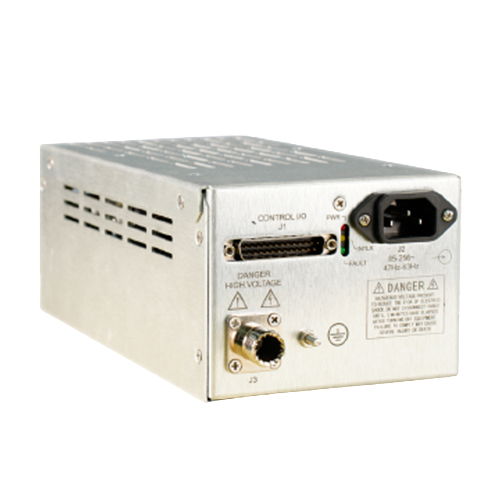
Electrostatic spraying equipment utilizes high voltage to charge liquid or powder particles, producing enhanced deposition efficiency and coverage uniformity compared to non-electrostatic application methods. The high voltage power supply in such systems must provide rapid polarity switching capability to accommodate different coating materials, substrate characteristics, and process requirements. Research into switching efficiency addresses the power loss, thermal management, and performance optimization aspects of polarity transition in electrostatic spraying applications, directly affecting coating quality and process economics.
The fundamental principle of electrostatic spraying involves applying charge to particles as they leave the spray device. The charged particles follow electric field lines to the grounded or oppositely charged workpiece, providing wraparound coverage on complex shapes and reducing overspray and material waste. Positive charging applies a positive charge to particles, which then deposit on negatively charged or grounded substrates. Negative charging reverses the polarity, applying negative charge to particles. The choice between positive and negative charging depends on factors including the workpiece material, coating material, and ambient conditions. Optimal polarity selection maximizes deposition efficiency and coating quality.
Polarity switching capability enables optimization of the charging process for different coating materials and substrates. Some materials exhibit better charging characteristics with positive polarity, while others charge more efficiently with negative polarity. Corrosion considerations may favor one polarity over another depending on the electrode materials and environmental conditions. The ability to switch polarity during operation enables experimentation to determine optimal settings for specific applications, and may allow in-process optimization for complex coating scenarios. Polarity optimization can significantly improve coating quality and reduce material waste.
Switching efficiency research examines the energy losses occurring during polarity transitions. When the power supply output changes from positive to negative voltage, the output capacitance must be discharged from one polarity and charged to the opposite polarity. The energy stored in the output capacitance equals one-half times the capacitance times the voltage squared. This energy is dissipated as heat during discharge unless recovered through regenerative circuit topologies. For frequent switching applications, these energy losses can represent significant power consumption and heat generation. Efficiency optimization requires characterization of switching losses under various operating conditions.
The switching speed required for electrostatic spraying applications ranges from milliseconds to seconds depending on the process requirements. Rapid switching enables polarity changes between coating passes or even during a single pass. Slower switching may be acceptable when polarity changes occur only between different coating jobs or materials. Faster switching generally requires more complex and costly power electronics but enables more flexible process control. The switching speed achievable depends on the output capacitance, the available charging and discharging currents, and the acceptable voltage overshoot during transitions. Switching speed characterization enables prediction of process timing.
H-bridge power converter topologies enable bidirectional current flow required for polarity switching. Four power semiconductor switches arranged in bridge configuration can connect the output to either polarity and provide current flow in either direction. Pulse-width modulation control of the switches enables precise output voltage control and efficient power conversion. The switching losses in the semiconductor devices contribute to overall power dissipation and thermal load. Research into advanced semiconductor materials including silicon carbide and gallium nitride aims to reduce switching losses and enable higher efficiency and faster switching. Device selection must balance efficiency, cost, and reliability.
Soft switching techniques reduce switching losses by ensuring that switches change state when voltage or current is near zero. Resonant converter topologies exploit circuit resonance to create zero-voltage or zero-current switching conditions. These techniques can significantly improve efficiency, particularly at high switching frequencies. However, resonant converters may have limitations in terms of voltage regulation range and dynamic response. Application requirements determine the optimal balance between efficiency, complexity, and performance. Resonant circuit design must account for component tolerances and temperature effects.
Thermal management considerations become significant for switching power supplies operating at high power levels. Power semiconductor devices generate heat during both conduction and switching, with switching losses dominating at high frequencies. Heat sinks, forced air cooling, or liquid cooling remove heat from the devices to maintain acceptable junction temperatures. The thermal design must accommodate worst-case operating conditions including maximum ambient temperature, maximum output power, and maximum switching frequency. Thermal protection circuits prevent damage from overheating, but sustained operation at high temperatures reduces device reliability and lifetime. Thermal modeling enables prediction of device temperatures under various operating conditions.
Output filter design for switching power supplies must balance multiple requirements including ripple reduction, response speed, and size. Larger filter capacitors and inductors reduce output ripple but increase stored energy that must be dissipated during polarity changes. The filter also affects the switching speed, as the filter time constant determines how quickly the output voltage can change. Research into advanced filter topologies and control algorithms aims to minimize filter size while achieving required performance levels. Filter design must account for load characteristics and switching frequency.
Load characteristics in electrostatic spraying applications present unique challenges for power supply design. The effective load includes the capacitance of the spray device and workpiece, the resistance of the ionized air path, and the varying impedance during spray operation. The load may change rapidly as spray devices move relative to the workpiece, as coating thickness builds up, or as ambient conditions change. The power supply must maintain stable output despite these load variations, requiring robust control algorithms and adequate current capability. Load characterization enables prediction of voltage stability under various operating conditions.
Electromagnetic compatibility requirements constrain the design of switching power supplies. Fast voltage transitions generate electromagnetic interference that can affect nearby electronic equipment. Conducted emissions on power input lines and radiated emissions from output cables must be limited to comply with regulatory standards. Filter components and shielding techniques reduce electromagnetic interference but add cost and complexity to the design. The switching frequency and waveform shape also influence interference characteristics, with slower transitions generating less high-frequency content but also limiting switching speed. EMC design must balance interference suppression with switching performance.
Research into switching efficiency also addresses the measurement and characterization of switching losses. Calorimetric methods measure the actual power dissipation by measuring the temperature rise of cooling systems. Electrical methods calculate losses from voltage and current waveforms during switching transitions. Simulation tools model the switching process to predict losses and optimize circuit parameters. Comparison of theoretical predictions with measured results validates models and guides design improvements for future generations of electrostatic spraying power supplies. Measurement accuracy must be sufficient to detect incremental improvements in efficiency.