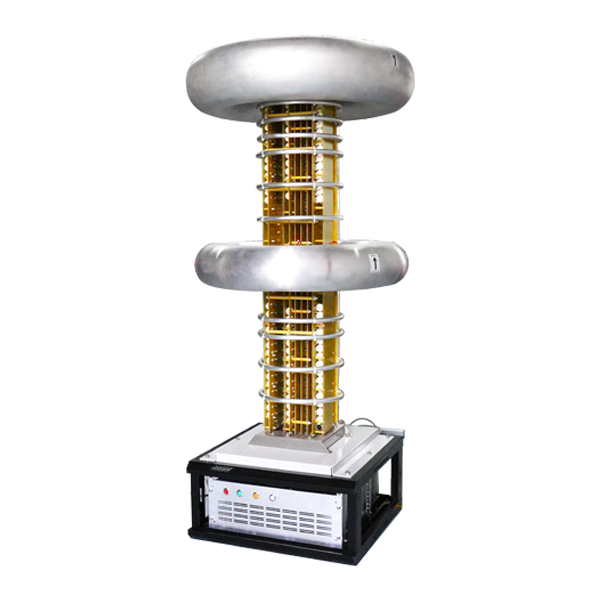
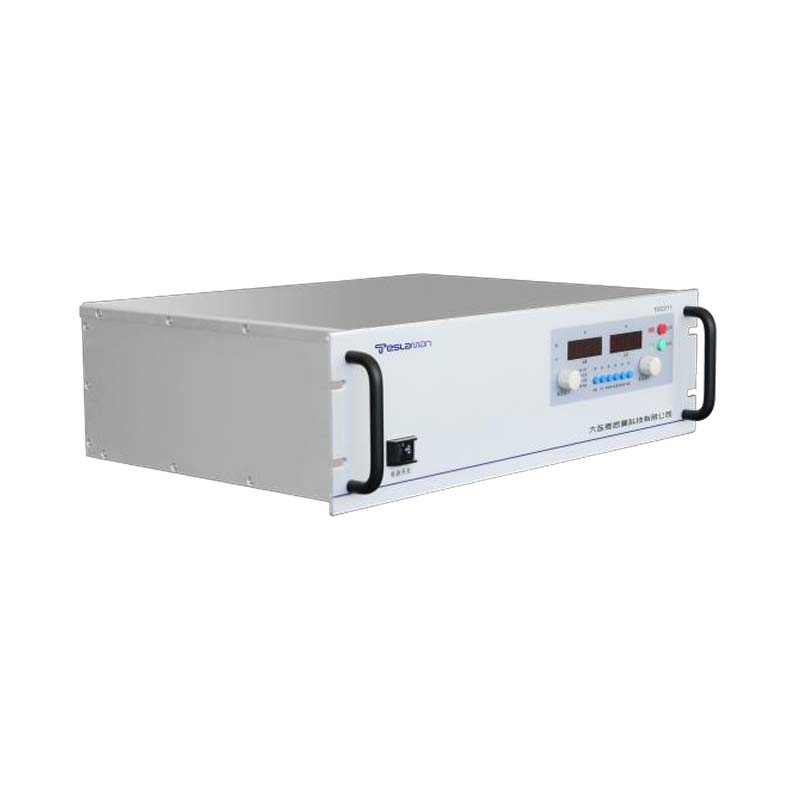
Polarity-Switchable High Voltage Power Supply Applications in Laboratory Multi-Function Test Platforms
Laboratory multi-function test platforms require high voltage power supplies capable of rapidly switching between positive and negative output polarities to accommodate diverse testing requirements. This polarity-switchable capability enables single instruments to serve multiple applications that would otherwise require dedicated power supplies for each polarity, improving laboratory efficiency and reducing equipment costs. The design and application of polarity-switchable high voltage supplies presents unique challenges that distinguish them from conventional fixed-polarity designs.
The fundamental challenge in polarity-switchable high voltage power supply design lies in managing the voltage transient that occurs during polarity reversal. At the instant of switching, the output capacitance must be discharged from the initial voltage through zero and charged to the opposite polarity voltage. This process involves energy transfer that must be carefully controlled to prevent stress on output components and minimize the time required for the transition. The rate of voltage change during polarity reversal affects both power supply component stress and test article safety, requiring optimization for each application class.
Output stage topology selection critically influences polarity-switching performance and reliability. Designs employing full-bridge output inverter configurations enable bipolar operation through control of switching sequence without mechanical polarity reversal mechanisms. The high-frequency transformer couples the inverter output to voltage multiplier circuits that generate the high voltage output. During polarity reversal, the inverter control algorithm must transition smoothly between positive and negative output states while maintaining appropriate transformer flux balance and preventing saturation.
Mechanical polarity switching employing high-voltage relays provides an alternative approach that may be preferred in certain applications. Relays capable of switching kilovolt-level potentials require substantial contact spacing and arc suppression features that limit switching speed and cycle life. However, mechanical switches provide complete galvanic isolation between states that may be advantageous in applications requiring isolation from ground or between test circuits. The maintenance requirements and finite lifetime of mechanical switches must be weighed against their simplicity and isolation characteristics.
Protection circuits for polarity-switchable power supplies must account for the unique fault conditions that can occur during polarity transitions. Output short circuits occurring during the zero-crossing portion of the reversal cycle present different characteristics than faults at full voltage. The protection circuitry must rapidly detect fault conditions at any output voltage level and respond appropriately to prevent damage to power supply components or test articles. Arc detection algorithms optimized for fixed-polarity supplies may require modification for polarity-switching applications.
The calibration and verification of polarity-switchable high voltage power supplies requires attention to potential differences between positive and negative polarity performance. Voltage accuracy, ripple amplitude, and current limiting characteristics may differ slightly between polarities due to asymmetries in rectifier characteristics or transformer behavior. Calibration procedures should verify performance in both polarities and document any differences that might affect test results.
Applications in dielectric testing frequently require polarity reversal to evaluate asymmetric breakdown characteristics of materials and components. Certain insulation systems exhibit significantly different breakdown voltages for positive versus negative polarity stresses, making polarity-switching capability essential for comprehensive characterization. The ability to alternate polarity during testing sequences without manual reconnection improves test efficiency and reduces opportunities for connection errors that could compromise test validity.
Electrophoresis and electrochemical applications often require polarity reversal for specific process steps or for cleaning electrode surfaces between runs. Laboratory platforms serving multiple researchers with different protocol requirements benefit from polarity-switchable power supplies that can accommodate diverse applications without hardware modification. The programming interface for such supplies must provide straightforward commands for polarity selection and reversal timing to facilitate integration with automated test sequences.
Capacitor charging applications present unique challenges for polarity-switchable power supplies because the stored energy must be dissipated before polarity can be reversed. Supplies intended for capacitor charging service must include provision for controlled discharge of the test capacitor before polarity switching or provide clear operator guidance to ensure discharge is complete before reversal. The energy handling capability of internal discharge circuits must be matched to the maximum capacitor energy expected in the intended applications.
Interface and control system design for polarity-switchable supplies must clearly indicate the current output polarity state to prevent operator confusion or test article damage. Display systems showing both magnitude and polarity, rather than magnitude alone, reduce the risk of connecting test articles with incorrect polarity assumptions. Remote control interfaces should provide both status indication and positive confirmation of polarity change commands to ensure proper execution in automated test systems.
Thermal management during polarity switching presents design challenges distinct from continuous operation. The energy dissipated during reversal cycles adds to the steady-state thermal load of output components, potentially requiring enhanced cooling provisions for applications involving frequent switching. The thermal time constant of output components determines the maximum safe switching frequency for a given thermal design, establishing practical limits for pulse testing applications.
Output filter design for polarity-switchable supplies must balance requirements for low ripple in steady state, acceptable voltage transition characteristics, and fault current limiting. Capacitive filter components store energy that must be transferred during polarity reversal, affecting transition time and component stress. Inductive filter components affect the rate at which current can change during transitions and influence transient response during load steps. Optimal filter design depends on the specific application requirements for ripple, transition speed, and fault protection.
The continuing evolution of laboratory test requirements toward higher voltages, faster polarity switching, and more precise control will drive further development of polarity-switchable high voltage power supply technology. Advanced semiconductor devices, sophisticated control algorithms, and improved thermal management techniques will enable new generations of supplies with enhanced performance and reliability for demanding laboratory applications.