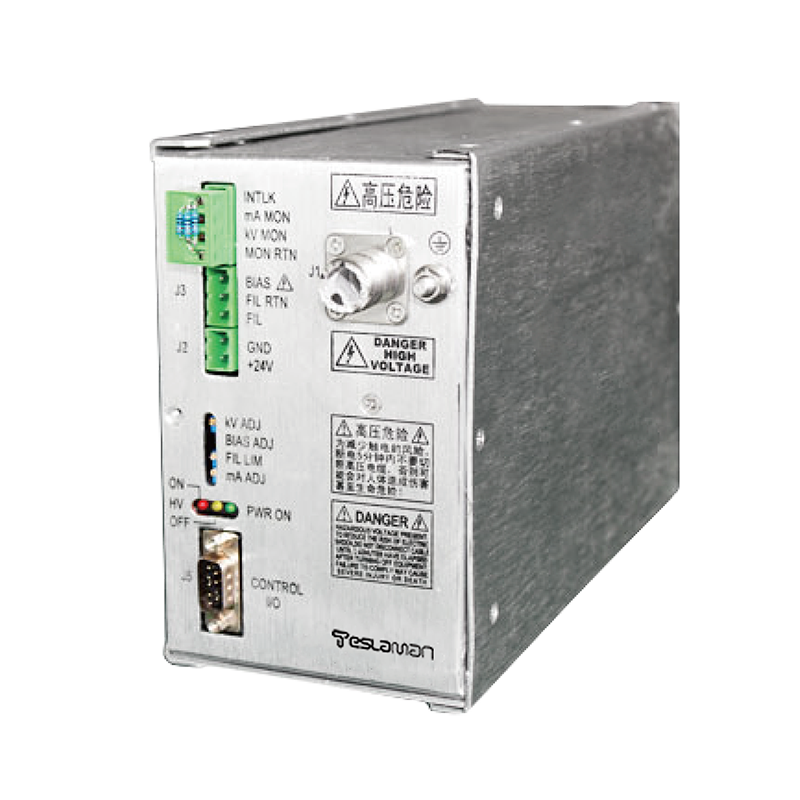
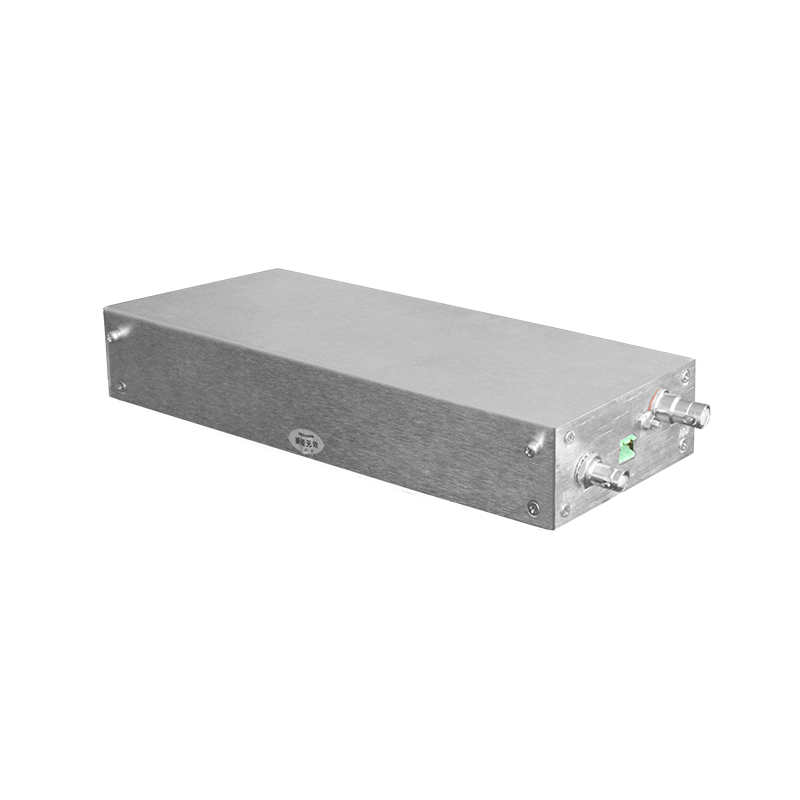
Mass Spectrometer High Voltage Power Supply High Voltage Support in Proteomics Research
Mass spectrometry in proteomics research represents one of the most demanding applications for high voltage power supplies, requiring exceptional stability, precision, and reliability. The complexity of proteomics samples and the need for reproducible quantification place stringent requirements on the electrical systems that support mass spectrometer operation. Understanding these requirements enables optimal power supply specification and configuration for proteomics applications.
The voltage stability requirements for mass spectrometry in proteomics exceed those of most other applications. Mass resolution and accuracy depend directly on the stability of accelerating and deflecting voltages throughout the mass analyzer. Variations in these voltages cause peak broadening and mass accuracy degradation that can compromise protein identification and quantification. State-of-the-art mass spectrometers require voltage stability better than 10 parts per million over time scales ranging from milliseconds to hours to achieve optimal performance for proteomics applications.
Multiple high voltage outputs with precisely defined relationships support different mass spectrometer components. Ion source voltages, acceleration voltages, electrostatic analyzer voltages, and detector voltages must all maintain stable ratios to achieve proper mass separation. Power supplies with multiple outputs must ensure that these ratios remain stable across temperature variations and over extended operating periods. Tracking between outputs often matters more than absolute voltage accuracy for proteomics mass spectrometry.
Temperature stability of high voltage components critically influences mass spectrometry performance for proteomics applications. Temperature variations cause drift in component parameters that translates directly to voltage drift. Sophisticated thermal management systems maintain power supply components at constant temperatures regardless of ambient temperature variations or internal heating effects. The thermal design must account for heat generation patterns specific to proteomics mass spectrometry operating conditions.
The wide dynamic range required for proteomics samples creates varying load conditions that power supplies must accommodate. Proteomics samples contain proteins and peptides spanning concentration ranges of six or more orders of magnitude. As different components elute from chromatographic separations and enter the mass spectrometer, ion currents vary dramatically. Power supplies must maintain stable output across these varying current demands without introducing noise or transients that could compromise detection of low-abundance species.
Orbitrap mass analyzers require particularly precise high voltage supplies that maintain stable electric fields for ion detection. The principle of Orbitrap operation depends on maintaining precise radial electric fields that confine ions in stable orbital trajectories. Voltage variations cause changes in orbital frequencies that degrade mass resolution and accuracy. Power supplies for Orbitrap instruments must meet stringent requirements for both low-frequency stability and high-frequency noise performance.
Quadrupole mass filters in proteomics mass spectrometers require precisely controlled RF and DC voltage components. The RF amplitude determines mass range, while the DC offset provides mass resolution. These voltages must maintain stable relationships throughout extended analysis runs that may last many hours for complex proteomics samples. Temperature stability of RF generation components particularly influences quadrupole performance.
Time-of-flight mass spectrometry for proteomics requires high voltage pulsing capabilities with precise timing characteristics. The extraction pulse that initiates time measurement must have extremely fast rise times and minimal jitter to achieve high mass resolution. Power supplies for time-of-flight instruments must provide pulsed output characteristics while maintaining the stability required for quantitative proteomics measurements.
Ion mobility separation systems increasingly integrated into proteomics mass spectrometers create additional high voltage requirements. These systems use electric fields to separate ions based on mobility through a buffer gas, adding another dimension of separation that improves proteomics analysis. The electric fields for ion mobility must coordinate with other mass spectrometer voltages to enable proper ion transfer between separation stages.
Electron multiplier detectors for proteomics mass spectrometry require stable high voltage bias supplies that influence detector gain and stability. The gain of electron multipliers depends exponentially on the applied voltage, making detector sensitivity highly sensitive to voltage variations. Power supplies for detector bias must provide extremely stable output with minimal ripple to enable quantitative measurements across the wide dynamic range of proteomics samples.
Noise performance of high voltage power supplies directly affects detection limits for low-abundance proteins and peptides in proteomics samples. Electrical noise on high voltage outputs couples to ion trajectories and detector signals, creating baseline noise that obscures low-intensity signals. Advanced filtering and shielding techniques minimize noise to levels that support detection of proteins present at low copy numbers in biological samples.
The reproducibility requirements for quantitative proteomics place stringent demands on power supply consistency between instruments and over time. Large-scale proteomics studies often combine data from multiple instruments, requiring that instruments produce consistent results. Power supply calibration procedures and stability specifications must support inter-instrument reproducibility requirements. Regular performance monitoring and recalibration help maintain consistency throughout long-term proteomics studies.
Sample preparation considerations influence mass spectrometry operating conditions and power supply requirements for proteomics applications. Different sample preparation methods create samples with varying characteristics that affect ionization efficiency and mass spectrometer loading. Power supplies must accommodate the range of conditions encountered with different sample types without requiring retuning. Understanding sample preparation effects helps in optimizing power supply parameters for specific proteomics workflows.
Data analysis methodologies for proteomics mass spectrometry create requirements for data quality that influence power supply specifications. Statistical analysis methods require reproducible mass measurements across multiple samples and instruments. Power supply stability directly affects data quality through its influence on mass accuracy and resolution. Understanding data analysis requirements helps in specifying appropriate power supply performance for specific proteomics applications.
Workflow optimization in proteomics mass spectrometry must consider power supply operating parameters along with other factors. Chromatographic separation parameters, ion source conditions, and detector settings all interact with power supply settings to affect overall workflow performance. System-level optimization approaches that consider these interactions enable better overall performance than optimizing each component independently. Collaboration between mass spectrometry users and power supply engineers helps in developing optimized workflows.
Regulatory requirements for clinical proteomics applications create specific power supply reliability and documentation requirements. Clinical applications require validated systems with documented performance characteristics and appropriate quality control procedures. Power supply selection and configuration must support regulatory compliance requirements. Understanding regulatory frameworks helps in designing proteomics mass spectrometry systems appropriate for clinical use.
Instrument performance validation procedures for proteomics mass spectrometry must address power supply stability requirements. Performance qualification tests verify that instruments meet specifications for mass accuracy, resolution, and sensitivity. Power supply stability directly affects these performance parameters. Validation protocols must include appropriate power supply verification procedures. Understanding validation requirements helps in maintaining instrument performance for proteomics applications.