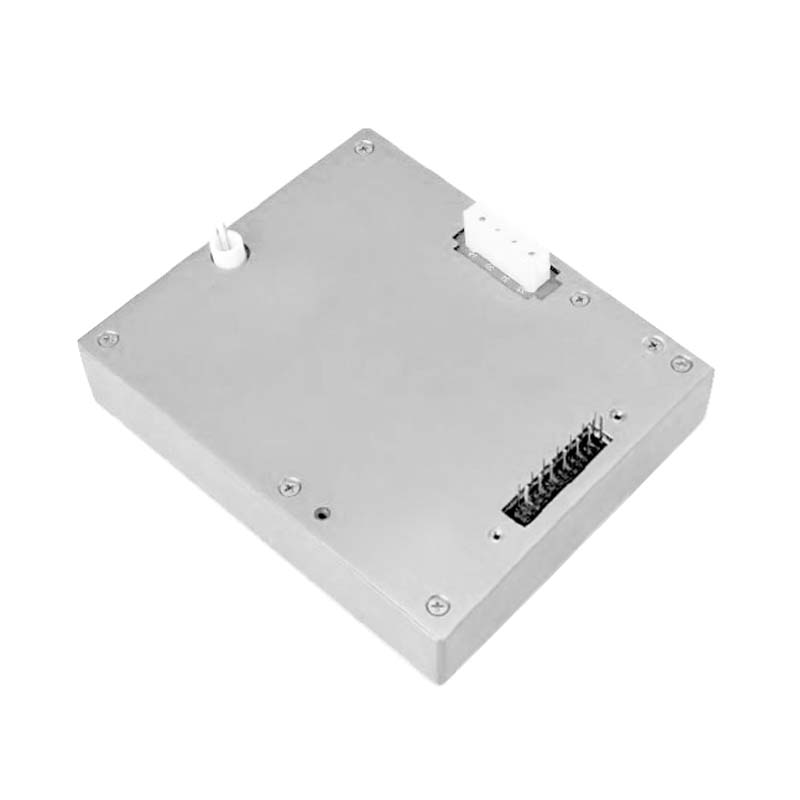
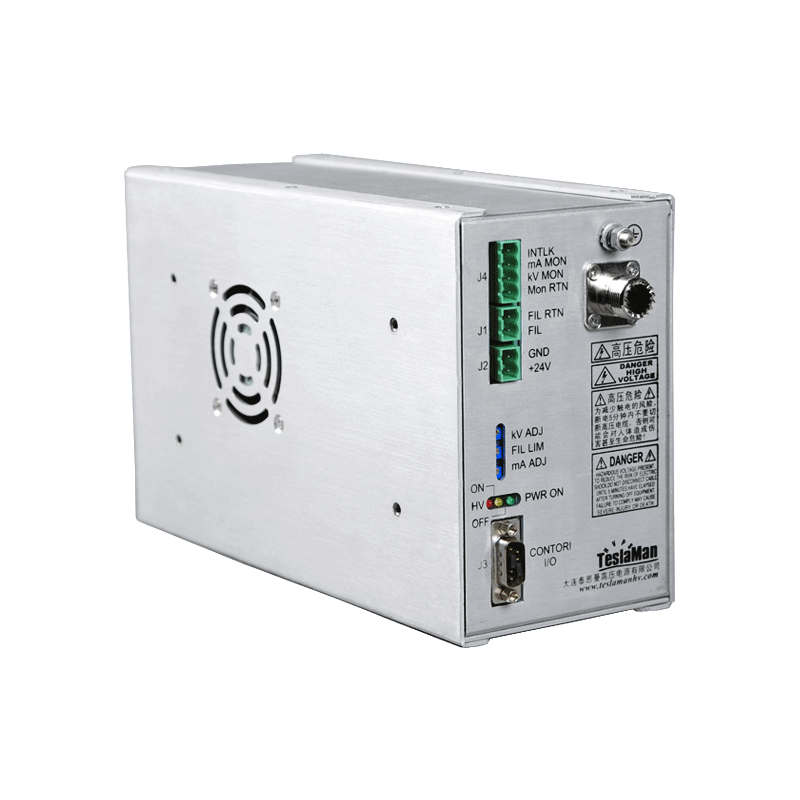
High-Voltage Bias of Electron Beam System Supply in Vacuum Melting Furnaces
Vacuum melting furnaces use electron beams to melt and refine high-purity metals and alloys, including titanium, superalloys, and refractory metals that react with air at high temperature. The electron beam is generated by an electron gun that operates at a high negative potential, and the high-voltage supply that provides this potential determines the beam stability, the melting power, and the quality of the ingot. A vacuum arc remelting or electron beam melting furnace may use multiple electron guns, each with an independent high-voltage supply, and the coordinated operation of these supplies shapes the thermal profile of the melt pool.
The electron gun is biased at a high negative voltage, typically in the range of tens of kilovolts, and the workpiece or the water-cooled crucible is at ground potential. The electrons are emitted from a heated cathode, accelerated by the potential difference, and focused by an electromagnetic lens system onto the melt surface. The high-voltage supply must provide a clean, stable voltage because the beam energy determines the penetration of the electrons and hence the depth of the melt pool. Voltage fluctuations translate directly into fluctuations of the melting power and the thermal distribution.
The melting process requires a precise control of the beam power to maintain the melt pool at the desired temperature and to avoid overheating that could cause the evaporation of volatile alloying elements. The supply regulates the beam power through the combination of the accelerating voltage and the beam current, and the process controller adjusts both parameters according to the melting recipe. The beam current is controlled by the bias voltage of the electron gun grid, and the supply provides the auxiliary voltages for the grid and the focusing elements.
Arc events are a significant disturbance in electron beam melting. A momentary arc between the beam column and the melt can cause a rapid current surge that must be interrupted quickly to protect the gun and the workpiece. The supply detects the arc by the fast change of the output current and voltage, and the protection circuit interrupts the beam within microseconds. The interruption is followed by a controlled restart that re-establishes the beam without disturbing the melt pool excessively. The arc rate is monitored, and an increasing arc rate indicates a developing problem in the gun or the process.
The high-voltage section of the supply is contained in a sealed enclosure filled with an insulating medium, and the feedthrough to the vacuum chamber is a critical component. The feedthrough must withstand the full voltage and carry the beam current while maintaining the vacuum seal. The design of the feedthrough balances the dielectric strength, the current rating, and the thermal performance, and the component is qualified by type tests and by operating experience. The partial discharge level of the feedthrough is monitored as an indicator of insulation health.
The control system of the supply integrates with the furnace automation. The furnace controller manages the melting sequence, the beam scanning pattern, and the withdrawal rate of the ingot, and the supply provides the beam power according to the commanded setpoints. The communication between the supply and the furnace controller is deterministic, and the measured values are exchanged at a rate that supports the closed-loop control of the process. The process data are recorded for each heat, providing the traceability required for the quality certification of the ingot.
Thermal management of the supply is important because the melting process runs at high power for long durations. The losses of the power semiconductors and the transformer are removed by a cooling system that maintains the internal temperature within the design limits. The cooling circuit is monitored for flow and temperature, and an alarm is issued if the cooling performance degrades. The thermal design also considers the heat radiated from the furnace, and the supply cabinet is located and shielded accordingly.
Reliability is a commercial requirement in the melting industry. A failure of the supply during a heat can result in the loss of the entire melt, which is a costly event for high-value alloys. The supply is therefore designed with redundant subsystems for the critical functions, and the failure modes are analyzed to ensure that no single failure leads to an unsafe condition or to the loss of the melt. The maintenance plan is based on the operating hours and the recorded diagnostics, and the spare modules are stocked to minimize the downtime.
Electromagnetic compatibility is considered in the layout of the furnace installation. The beam scanning system and the vacuum pump drives generate electromagnetic disturbances, and the supply must operate correctly in this environment. The supply is enclosed in a shielded cabinet, the cables are routed with separation between power and signal paths, and the grounding follows a scheme that prevents the coupling of noise into the measurement chain. The immunity of the supply is verified by type tests in an electromagnetic compatibility laboratory.
Process validation for a new alloy or a new ingot size begins with a series of trial heats. The beam parameters are varied systematically, and the resulting ingot quality is evaluated by chemical analysis and metallographic examination. The correlation between the beam parameters and the ingot quality defines the process window, and the supply is then operated within this window for the production heats. The recorded beam parameters provide the evidence for the quality records of each ingot.
In summary, the high-voltage bias supply for electron beam melting furnaces integrates stable beam delivery, fast arc protection, precise power control, and comprehensive diagnostics into a rugged production package. The result is a supply that maintains the beam stability required for the production of high-quality ingots while protecting the gun and the melt from the consequences of arc events. Every improvement in the voltage stability, every refinement of the arc response, and every enhancement of the process integration contributes directly to the quality and yield of the melting operation. The engineering effort continues as vacuum melting technology extends to larger ingots, more reactive alloys, and more demanding quality standards.