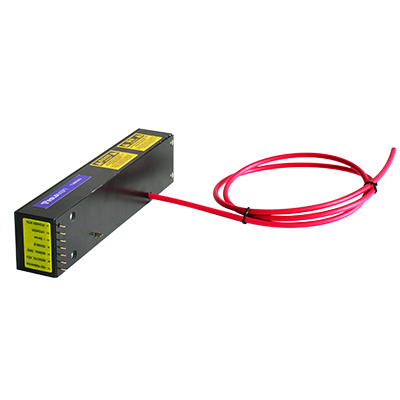
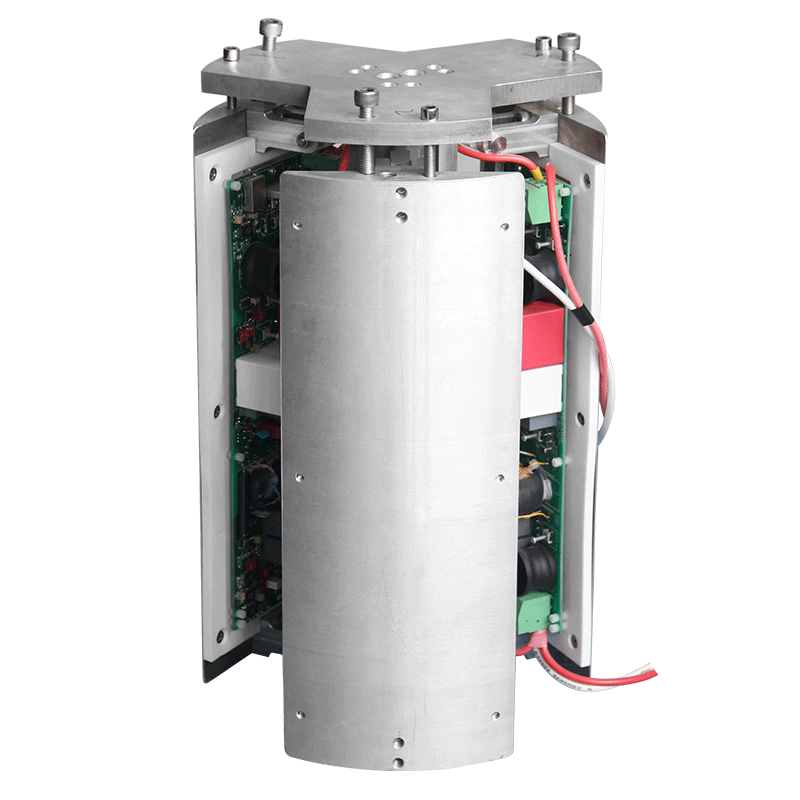
Compact Power Module of High-Voltage Supply in Industrial Pulse Discharge Equipment
Industrial pulse discharge equipment is used for a wide range of material processing and testing applications, including surface modification, electrostatic separation, high-energy pulse forming, and dielectric testing. These systems generate high-voltage pulses with fast rise times and high repetition rates, and the compact power module that charges the pulse-forming network is a central component of the equipment. The module must combine high power density, precise charge control, and reliable operation in a small footprint that can be integrated into portable and space-constrained machines.
The charge module converts the mains or battery input to a high direct voltage that is stored in the pulse-forming capacitors. The charge voltage determines the energy of each pulse, and the charge current determines the repetition rate that the equipment can sustain. The module regulates the charge voltage with a precision that is defined by the application, and the regulation loop terminates the charge at the exact setpoint to avoid overvoltage of the capacitor. The discharge of the capacitor through the load switch generates the output pulse, and the module then recharges the capacitor for the next pulse.
The high power density of the compact module is achieved through a high-frequency switching topology. The switching frequency is chosen to minimize the size of the magnetic components and the filter elements while keeping the losses within the thermal budget. The semiconductor switches are selected for low conduction and switching losses, and the gate drive circuits are designed for fast and reliable switching. The transformer is wound with high-frequency litz wire and insulated for the full output voltage.
Thermal management is a dominant design constraint in a compact module. The power losses are concentrated in a small volume, and the cooling system must extract the heat efficiently to keep the junction temperatures within the ratings. The module uses a combination of conduction cooling through the baseplate and forced-air or liquid cooling depending on the power level. The thermal path from the semiconductor junctions to the cooling medium is designed with minimal thermal resistance, and the thermal performance is verified by thermal imaging during the type tests.
The charge control loop is designed for accuracy and repeatability. The output voltage is measured through a precision divider, and the regulation loop adjusts the charge current to bring the voltage to the setpoint. The loop includes a soft-start function that limits the inrush current at the beginning of each charge cycle, and the charge profile can be programmed to match the requirements of the load. The measured charge voltage and the charge time are recorded for each pulse, providing the data for the process monitoring.
Repetitive operation exposes the module to thermal cycling and to the electrical stress of the repeated charge and discharge cycles. The components are selected with derating factors that account for the cyclic loading, and the solder joints and the connections are designed for the expected number of cycles. The module includes a cycle counter and a thermal history recorder, and the maintenance schedule is based on the accumulated operating data.
The compact module is designed for integration into a variety of equipment enclosures. The mechanical layout is modular, with the power stage, the control board, and the auxiliary circuits arranged as separate sections that can be serviced independently. The connectors are standardized, and the control interface follows a common protocol that simplifies the integration with different system controllers. The module is protected against the environmental conditions of the equipment, including vibration, dust, and temperature variations.
Application-specific settings enhance the versatility of the module. The charge profile, the regulation bandwidth, and the protection thresholds are configurable through the control interface, allowing the same hardware to serve different pulse discharge applications with different voltage and repetition requirements. A configuration memory stores the active settings, and the settings can be switched between pre-programmed profiles without powering down the module. This flexibility reduces the number of module variants that a system manufacturer must stock and simplifies the field upgrade of the equipment. The configuration interface also provides a readback of the active settings, so the system controller can verify that the module is operating with the intended parameters before the production sequence starts. The readback function is used during the commissioning of the equipment and during the periodic process audits.
Protection functions are comprehensive in a pulse power module. Overvoltage protection prevents the capacitor from being charged beyond the safe limit, and overcurrent protection limits the charge current in the event of a fault. The module also includes an overtemperature protection that reduces the charge rate or stops the charge if the temperature exceeds the limit. The protection functions are implemented with independent circuits that operate even if the main controller fails.
Reliability is essential for production equipment that runs continuously. The module is built with high-grade components, and the design follows the derating rules that ensure a long service life. The monitoring system records the operating parameters and issues a warning when a parameter approaches the limit. The diagnostics support the preventive maintenance, and the modular construction allows a rapid replacement of the failed section.
Electromagnetic compatibility is a consideration in the integration of the module. The high-frequency switching generates conducted and radiated emissions, and the module includes input filters and a shielded enclosure to meet the applicable limits. The immunity of the module is verified against the disturbances generated by the pulse discharge itself, and the control interface is protected against the common-mode noise of the discharge circuit.
In summary, the compact high-voltage power module for industrial pulse discharge equipment integrates high power density, precise charge control, comprehensive protection, and modular construction into a small package. The result is a module that provides the charging performance required for reliable pulse generation while fitting into the space-constrained equipment of industrial applications. Every improvement in the power density, every refinement of the charge control, and every enhancement of the thermal design contributes directly to the capability and the reliability of the pulse discharge equipment. The engineering effort continues as pulse power technology extends to higher repetition rates, higher voltages, and more demanding industrial processes.