Energy Delivery of Excimer Laser High-Voltage Supply in Laser Lift-Off Process
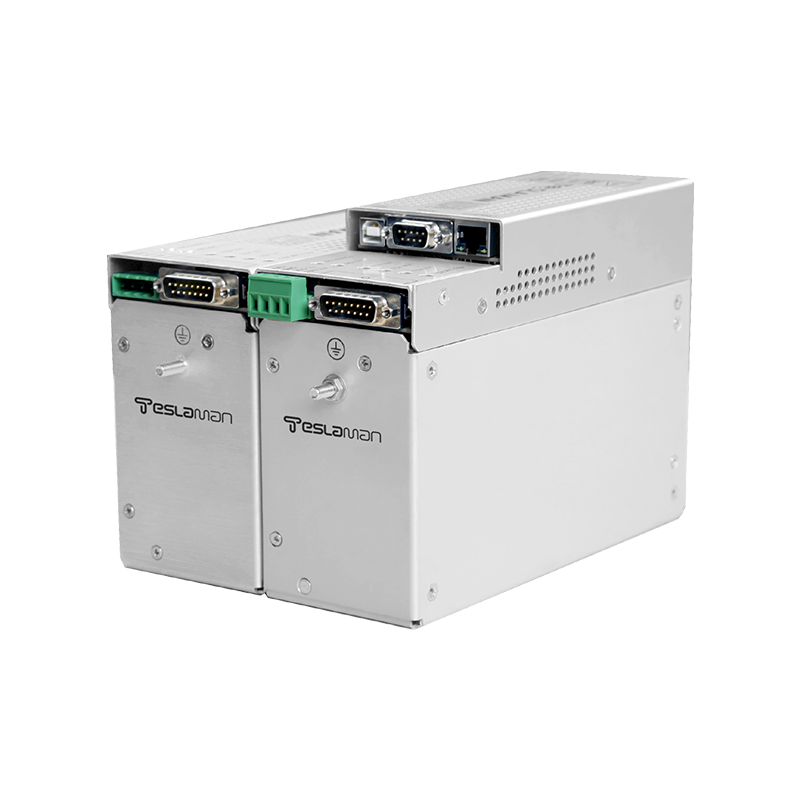
Energy delivery of an excimer laser high-voltage supply determines the process quality of laser lift-off in optoelectronic manufacturing. Laser lift-off separates a device layer from a transparent substrate by directing pulsed ultraviolet radiation through the substrate, and the beam energy density must be controlled within a narrow window to achieve complete separation without damaging the device. The high-voltage supply charges the discharge capacitor to a defined level for each pulse, and the pulse energy depends on the accuracy and repeatability of the charging voltage. A supply that delivers consistent energy from pulse to pulse ensures uniform separation across the whole substrate.
The first requirement is the charging voltage accuracy. The supply charges the capacitor bank to the set-point before each discharge, and the tolerance of the final voltage determines the pulse-to-pulse energy consistency. Temperature effects, component aging and line variations must be compensated so that the energy does not drift during a long production run. The charging circuit operates in a controlled mode that avoids overshoot, because an excessive voltage can push the discharge into a regime where the energy is no longer predictable.
The second requirement is the repetition rate capability. The supply must recharge the capacitor within the interval between pulses, so that the laser can operate at the required frequency without interruption. The charging time depends on the available power and the efficiency of the charging circuit, and the design balances these factors against the thermal capability of the components. At high repetition rates, the thermal load on the charging stage increases, and the cooling system must remove the heat to maintain stable performance.
The third requirement concerns the interaction between charging and discharge. After the discharge, the capacitor voltage drops and the charging cycle begins again, and the control system must synchronize the charging with the firing sequence. The energy measurement verifies that each pulse delivers the expected amount, and deviations trigger a correction in the charging set-point. The recovery of the voltage to the required level within the cycle time is a key indicator of the supply performance.
The control architecture regulates the charging voltage in a closed loop and manages the timing through a digital sequencer. The charging current profile is controlled to optimize the speed and the stress on the capacitor, and the voltage is measured with high accuracy at the end of the charging phase. Fault protection covers overvoltage, overcurrent and abnormal discharge conditions, and the interlock logic coordinates the supply with the laser safety system. The event log records the charging and firing data for each pulse sequence.
Insulation and component selection follow the demands of repetitive high-energy pulses. The capacitor bank is designed for the required lifetime at the operating voltage and repetition rate, and the discharge path has low inductance to produce the fast pulse needed by the laser. The charging diode and the switching elements are selected for the repetitive current stress, and the thermal design removes the heat from the losses. Creepage and clearance distances are sized for the peak voltages that appear during normal operation and fault conditions.
Verification covers charging accuracy, repetition capability and energy consistency. The charging voltage is measured over a wide range of set-points and operating temperatures, and the pulse energy is evaluated over long sequences to confirm that drift remains within specification. The recovery time is measured at the maximum repetition rate, and the thermal behavior is verified under continuous operation. Acceptance testing includes a burn-in period during which the supply operates at rated conditions and the performance is recorded.
Integration with the laser system follows defined interfaces. The supply receives the firing command and provides the charging status, and the timing synchronization ensures that the discharge occurs at the correct moment relative to the optical system. The safety interlocks connect the supply, the laser head and the enclosure access, so that high voltage cannot be present when the system is opened. The communication interface supports recipe management, so that different lift-off processes use the appropriate energy settings.
The application value of consistent energy delivery appears in the yield of the lift-off process. Uniform pulse energy produces complete separation across the substrate, while energy variations leave regions where the device layer remains attached or where the interface is damaged. The repeatability of the supply also reduces the need for frequent process adjustments, which increases the throughput of the production line. The diagnostic functions support quick identification of problems, minimizing the downtime caused by power equipment issues.
Maintenance focuses on the capacitor bank, the charging stage and the cooling system. The capacitor condition is monitored through the charging behavior and the insulation resistance, and replacement is scheduled before the end of the rated lifetime. The cooling system is checked for flow rate and temperature, and the filters are cleaned at defined intervals. The recorded pulse statistics provide the data for condition-based maintenance, so that the supply is serviced when the performance shows signs of degradation.
Operational records provide the basis for continuous improvement of the lift-off process. The pulse statistics, charging behavior and thermal data are stored for every production run, and the analysis of these records reveals developing trends before the process result is affected. The correlation between the supply performance and the separation quality supports the tuning of the energy settings for different substrate and device combinations. Standardized documentation and fault tables reduce the training effort and speed up the resolution of problems. These practices keep the supply aligned with the evolving requirements of the production line and extend the useful life of the equipment.
Development continues toward higher repetition rates, tighter energy control and longer component life. Advanced capacitor technologies and improved charging topologies reduce the losses and extend the service life, while digital control enables adaptive compensation of the aging effects. Real-time energy feedback may allow each pulse to be corrected individually, achieving a level of consistency that supports even more sensitive lift-off applications. The excimer laser high-voltage supply will continue to evolve with these capabilities, supporting the growing demands of optoelectronic manufacturing.